
Green Impact Partners: Betting the Farm on RNG Amid Liquidity Crossroads
Green Impact Partners (GIP) stands at a pivotal moment. The Calgary-based renewable energy developer is racing to secure liquidity through asset sales while pushing forward with its $1.5 billion Future Energy Park (FEP) project—a carbon-negative biofuels venture that could redefine its financial trajectory. Yet, with its credit facility in default and a looming June 30 deadline for a critical asset sale, the company's survival hinges on balancing short-term risks with long-term growth ambitions. Here's why investors must pay attention.
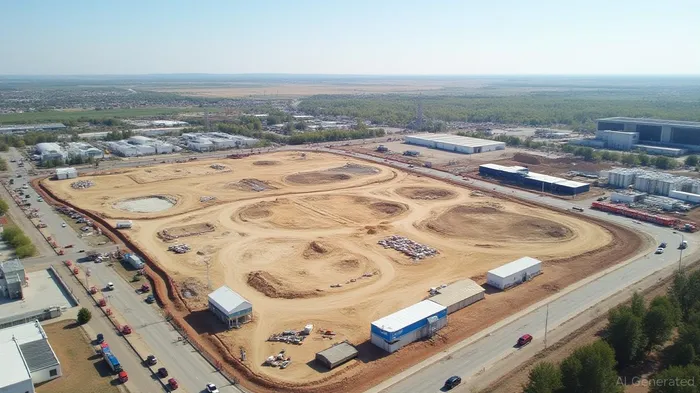
Liquidity Tightrope: The $53M Asset Sale Crucible
GIP's immediate survival depends on closing the sale of its non-core water and recycling assets for $53.25 million by June 30. The transaction, which would fully repay its $100 million credit facility, is contingent on the buyer securing financing—a risk that could derail the company's fragile liquidity. To buy time, GIP negotiated a waiver on its credit default until June 30, coupled with a $2 million short-term loan from CEO Jesse Douglas. However, without the asset sale's closure, GIP's “going-concern” status—flagged by auditors—remains perilous.
Investors are watching closely: a failed asset sale could trigger a forced debt repayment, potentially leading to collapse. The stock's recent volatility reflects this uncertainty, with shares down 40% year-to-date amid regulatory and operational headwinds.
The Future Energy Park: A High-Stakes Gamble
The FEPFEP-- project, designed to convert agricultural waste into renewable natural gas (RNG), ethanol, and carbon credits, represents GIP's best shot at long-term growth. With a targeted Final Investment Decision (FID) for early 2025, the project's success hinges on three pillars:
- Financing: A non-binding equity term sheet with a Japanese partner secures the required 25% equity ($500 million). Still needed: $1.5 billion in project-level debt, which must be locked in before construction begins.
- Regulatory Approval: Alberta's TIER carbon credit program is critical for the FEP's revenue model. Delays here could stall the FID.
- Operational Execution: GIP's Colorado Joint Venture, plagued by design flaws and technical issues, continues to drain resources—a distraction from FEP's progress.
The upside is substantial: the FEP could generate $37–49 million in annual EBITDA once operational, a stark contrast to GIP's $2.1 million loss in 2024. The project's 800 construction jobs and $150 million annual payments to wheat farmers also align with Canada's climate goals, offering a potential tailwind from government incentives.
Risks That Could Derail the Vision
- Financing Gaps: Even with the equity partner, securing 75% project debt in a risk-averse capital market remains uncertain.
- Colorado JV Liabilities: Ongoing disputes with its EPC contractor and mounting losses could divert funds needed for FEP.
- Commodity Volatility: RNG and ethanol prices are tied to oil/gas markets, exposing GIP to macroeconomic swings.
Investment Considerations
GIP's story is a classic “high risk, high reward” scenario. The stock's current valuation reflects extreme uncertainty, but a successful FEP pivot could unlock multi-bagger returns. Key milestones to watch:
- Asset Sale Closure by June 30: A “yes” here stabilizes liquidity.
- FEP FID by Q1 2025: A delayed decision beyond early 2025 raises red flags.
- Colorado JV Resolution: Progress on resolving technical issues will alleviate cash burn.
Advice: For aggressive investors with a long-term horizon, GIP could be a speculative play—provided the company crosses the June 30 finish line. However, the risks of default, financing failure, and operational setbacks are acute. A “Hold” rating is warranted until the asset sale closes and FID is secured. For the risk-averse, this remains a watch-and-wait opportunity.
In the end, GIP's fate rests on executing a high-wire act: turning a liquidity crisis into a springboard for its RNG future. The next 30 days will say if the bet pays off.







Comentarios
Aún no hay comentarios