
Green Horizons in West and Central Asia: Post-Karabakh Summit Investment Opportunities in Renewable Infrastructure and Cross-Border Energy Projects
The 17th Economic Cooperation Organization (ECO) Summit in Karabakh, Azerbaijan, in 2023 marked a pivotal moment for West and Central Asia, signaling a shift toward regional economic integration driven by green energy and trade liberalization. As geopolitical tensions persist, the summit's focus on sustainable development and connectivity has unlocked a new frontier for investors seeking exposure to emerging markets. The agreements reached here—particularly in trade and renewable energy—create a strategic entry point for capital in sectors ranging from solar infrastructure to cross-border power grids.
Trade Liberalization: Laying the Foundation for Regional Supply Chains
The Karabakh summit advanced concrete steps to reduce trade barriers among ECO member states, including Azerbaijan, Türkiye, Iran, Pakistan, and others. A Memorandum of Understanding (MoU) on joint trade activities aims to boost intra-regional trade, with Azerbaijan alone reporting a 10% year-on-year increase in trade with ECO members to $3.5 billion by mid-2023. This momentum is critical for green energy projects, which rely on efficient cross-border supply chains for equipment like solar panels, wind turbines, and energy storage systems.
The Middle Corridor—a strategic transport route linking China to Europe via Azerbaijan, Türkiye, and Iran—is a prime example. By reducing reliance on Russian or Turkish ports, the corridor could slash transit times and costs, making it easier to move renewable energy components. Investors in logistics and infrastructure firms serving this route stand to benefit, as the corridor's development aligns with China's Belt and Road Initiative (BRI) and ECO's vision of a “Green Transition and Mutual Connectivity.”
Green Energy: A Region's Renewable Potential
The summit's emphasis on green energy is not just symbolic. Azerbaijan, which hosted COP29 in 2023, has positioned itself as a leader in renewable projects such as the Aghdam Industrial Park, a solar-powered hub for manufacturing and agribusiness. Meanwhile, Türkiye's offshore wind ambitions and Pakistan's solar farms underscore the region's untapped potential.
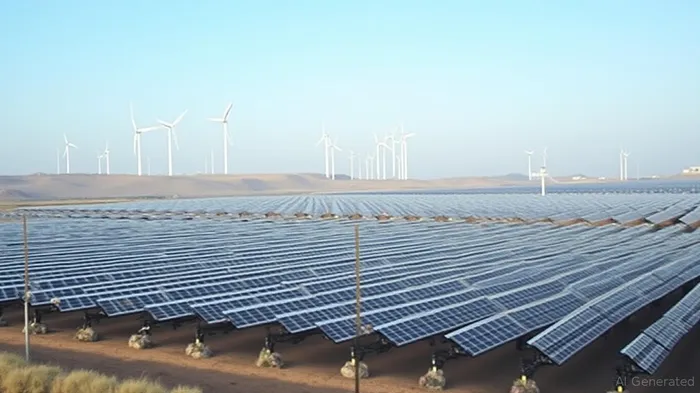
The ECO's proposed regional climate adaptation fund and energy transition initiatives aim to scale these efforts. Investors should focus on three opportunities:
1. Renewable Infrastructure: Companies involved in solar panel manufacturing, wind turbine assembly, and grid modernization could see demand surge as governments prioritize decarbonization.
2. Cross-Border Energy Projects: Pipelines for green hydrogen or regional power grids—like the proposed Central Asia-South Asia Power Pool—offer long-term revenue streams.
3. Sustainability Tech: Startups developing smart grid software or carbon capture solutions may secure funding through ECO-backed green financing mechanisms.
Navigating Risks and Geopolitical Realities
While the summit's agreements are promising, challenges remain. The Lachin Corridor blockade and lingering Armenia-Azerbaijan tensions underscore the fragility of regional stability. Geopolitical rivalries—such as Russia's influence in Central Asia versus Türkiye's ambitions—could disrupt projects. Investors must monitor political risk indices and prioritize partnerships with firms that have local expertise.
The Investment Case: A Green Pivot
The post-Karabakh landscape offers a compelling case for ESG (environmental, social, governance) investors. Regional integration, backed by policy frameworks like the ECO MoU, reduces transaction costs and opens access to a market of over 500 million people. Key sectors to watch:
- Solar and Wind Energy: Countries like Azerbaijan and Türkiye are targeting 50% renewable energy mixes by 2030.
- Hybrid Energy Systems: Combining renewables with natural gas (Azerbaijan's strength) could attract hybrid energy firms.
- Green Bonds: ECO members have issued over $10 billion in green bonds since 2021, signaling investor appetite for sustainable projects.
Conclusion: A Strategic Bet on Regional Sustainability
The Karabakh summit's legacy hinges on turning agreements into action. For investors, the region's green transition represents a dual play: profiting from renewable infrastructure growth while supporting geopolitical stability through economic interdependence.
Recommendation:
- Short-Term: Invest in logistics firms enabling the Middle Corridor and renewable equipment suppliers.
- Long-Term: Allocate capital to cross-border energy projects and sustainability tech startups. Monitor ECO's climate fund rollout for funding windows.
The West and Central Asia region is at a crossroads—one where green energy and trade integration could finally outweigh historical divisions. For the bold investor, this is a horizon worth chasing.







Comentarios
Aún no hay comentarios