
The Green Gold Rush: How Sustainable Food Innovation is Reshaping Global Markets
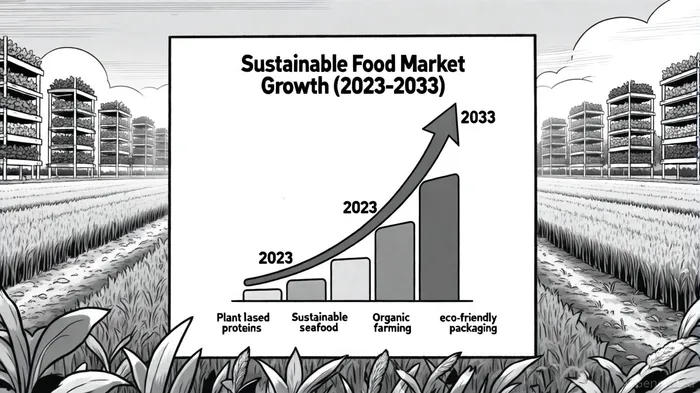
The sustainable food innovation market is no longer a niche sector-it's a seismic shift in global commerce, driven by a confluence of health-conscious consumers and a planet in crisis. By 2025, the market had already reached $109 billion, and projections suggest it will balloon to $183.7 billion by 2033, growing at a compound annual rate of 6.75%, according to a GlobeNewswire report. This isn't just a numbers game; it's a reflection of how deeply intertwined health and environmental sustainability have become in shaping consumer behavior and investor priorities.
The Twin Engines of Demand: Health and Environment
At the heart of this transformation lies a generational pivot toward healthier diets and ecological responsibility. Consumers are increasingly rejecting ultra-processed foods and animal-based products, opting instead for plant-based proteins, regenerative agriculture, and upcycled ingredients, the report found. According to a Market Research Future report, one-third of shoppers now prioritize eco-friendly products, while two-thirds are willing to pay a premium for them. This demand is not merely ethical-it's existential. Climate change, water scarcity, and deforestation have made traditional agriculture models untenable, pushing consumers to seek alternatives that align with their values, the GlobeNewswire report notes.
Investors are taking note. The rise of lab-grown meat, vertical farming, and algae-based proteins isn't just about innovation-it's about survival. For example, cellular agriculture is enabling the production of carbon-negative food products, a critical step in reducing the sector's environmental footprint, the Market Research Future analysis observes. Meanwhile, precision farming and synthetic biology are optimizing resource use, making sustainable practices economically viable for large-scale operations, the same analysis adds.
Investment Trends: Where the Money is Flowing
The investment landscape is equally dynamic. Venture capital and private equity firms are pouring capital into technologies that address both health and environmental pain points. Precision farming, which uses AI and IoT to maximize crop yields while minimizing water and fertilizer use, is a prime example, the GlobeNewswire report highlights. Similarly, vertical farming-where crops are grown in controlled, stacked environments-reduces land use and transportation emissions, making it a darling of impact investors, the report also notes.
Government policies are amplifying these trends. Subsidies for organic farming, tax incentives for waste reduction, and regulations banning harmful additives (like the FDA's 2025 Red No. 3 dye ban, as reported by Food Industry Executive) are creating a regulatory tailwind for sustainable food startups. This policy support is critical, as high production costs remain a barrier to mass adoption, according to the GlobeNewswire assessment. However, as economies of scale kick in and consumer demand outpaces supply, these costs are expected to decline, unlocking profitability for early movers.
Challenges and the Road Ahead
Despite the optimism, challenges persist. High production costs for plant-based proteins and lab-grown meat still deter price-sensitive consumers, the GlobeNewswire report cautions. Supply chain complexities, particularly in sourcing sustainable ingredients, also pose risks. However, these hurdles are not insurmountable. As the market matures, collaboration between tech innovators, policymakers, and traditional agribusinesses will be key to scaling solutions.
For investors, the lesson is clear: sustainable food innovation is not a passing trend but a structural shift. The sector's ability to address both health and environmental crises positions it as a long-term asset class. As one industry analyst put it, "This is the next agricultural revolution-powered by data, driven by purpose, and backed by a planet that can no longer afford to wait." The Market Research Future report echoes this sentiment.







Comentarios
Aún no hay comentarios