
Green Debt's Resilience Amid Political Headwinds
The global transition to climate-aligned infrastructure is encountering a paradox: while political headwinds in the West threaten to slow progress, structural demand for green assets is accelerating, particularly in the Asia-Pacific region. As AI-driven energy consumption surges and clean-tech innovation gains momentum, investors are presented with a compelling case to overweight green bonds and clean-tech equities in 2026. This analysis explores how strategic capital allocation in climate-aligned infrastructure can navigate regulatory challenges while capitalizing on irreversible trends.
Asia-Pacific Leadership in Climate-Aligned Infrastructure
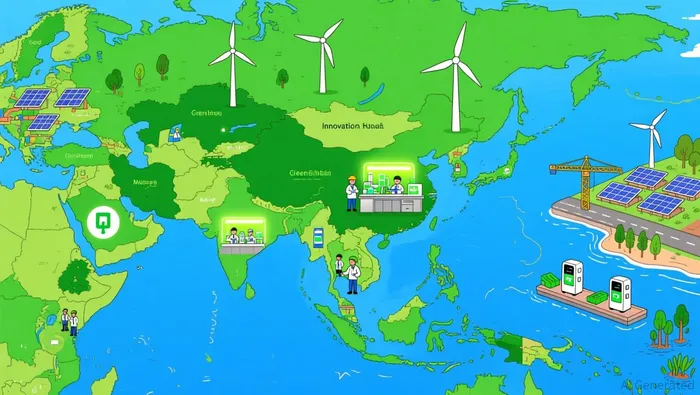
The Asia-Pacific region has emerged as a linchpin of global sustainable finance, with green and sustainable bond issuance surpassing USD 350 billion between 2015 and mid-2025. Hong Kong, a hub for green finance since 2018, has leveraged government incentives and fintech innovation to solidify its leadership. Meanwhile, China's pilot programs in transition finance-spanning sectors like steel, coal, and agriculture-have already mobilized ¥6 billion in transition loans, with plans to expand into shipping and chemicals. These initiatives underscore a structural shift toward decarbonization, supported by the Greater Bay Area and Southeast Asia, where sustainable fund assets exceeded USD 220 billion by mid-2025.
The region's dominance in labeled bond issuance-accounting for two-thirds of sustainable corporate bonds in Asia in 2024-highlights its capacity to scale climate-aligned projects. This momentum is further reinforced by cross-border collaboration, as evidenced by the Climate Bonds CONNECT APAC Conference in Hong Kong, which emphasized frameworks for transition finance and climate adaptation. For investors, the Asia-Pacific's proactive policy environment and robust market infrastructure present a resilient alternative to Western markets grappling with regulatory fragmentation.
AI-Driven Energy Demand and Structural Growth
The exponential rise in AI-driven energy consumption is reshaping global infrastructure priorities. By 2025, data centers accounted for 40% of electricity use in the sector, with AI-specific operations projected to nearly double by 2030. This surge has exposed vulnerabilities in aging grids, particularly in the U.S., where the Department of Energy warns of reliability risks in regions like PJM and ERCOT. However, the crisis has also spurred innovation: energy storage systems, virtual power plants and flexible power purchase agreements (PPAs) are emerging as critical tools to balance demand and supply.
Structural demand for clean infrastructure is outpacing regulatory headwinds in the West. For instance, U.S. states like Texas and Oklahoma have resisted ESG-driven energy restrictions, enacting policies that exclude ESG-sensitive institutions from public contracts. Surprisingly, these measures have not led to higher borrowing costs, suggesting market adaptability. Meanwhile, AI's energy demands are accelerating investments in transmission corridors and grid modernization, as seen in Arkansas and Georgia. These developments indicate that structural demand-driven by AI and electrification-is creating a floor for green infrastructure growth, even amid political uncertainty.
Western Regulatory Challenges and Green Debt Resilience
Western regulatory frameworks, while ambitious in their climate goals, are increasingly at odds with the energy realities of AI-driven economies. The EU's Carbon Border Adjustment Mechanism, set to take effect in 2026, will impose carbon costs on imported goods based on emissions intensity. While this policy risks burden-shifting effects on low-income countries, it also incentivizes cleaner production processes. Export-oriented economies in the Asia-Pacific, such as China, South Korea, and India, are already strengthening domestic carbon pricing mechanisms in response. For investors, this signals a long-term structural shift toward decarbonization, with clean energy equities poised to benefit from CBAM-driven demand for low-carbon technologies.
In the U.S., grid modernization is becoming a political imperative. Despite permitting delays and infrastructure backlogs, states are prioritizing energy affordability and reliability. For example, Dominion Energy's Northern Virginia grid upgrades and PG&E's substation projects highlight the urgency of addressing bottlenecks. These efforts, coupled with the deployment of sodium-ion batteries and VPPs, demonstrate that Western markets are adapting to AI-driven energy demands, albeit with regulatory friction.
Strategic Allocation: Green Bonds and Clean-Tech Equities
The Asia-Pacific's clean-tech equity performance in 2025-2026 reflects the region's ability to harness structural demand. S&P Global Energy projects that global data center electricity use will rise by 17% by 2026, pushing cumulative demand toward 2,200 TWh by 2030. This surge is driving grid modernization spending, with global grid investments projected to reach $577 billion by 2027. Clean-tech equities, such as Vertiv Holdings and SolarEdge Technologies, have outperformed as demand for grid resilience intensifies.
Green bonds remain a cornerstone of climate-aligned infrastructure. In 2026, China's green hydrogen projects are expected to see significant investment, with electrolyzer deployment tripling from 1.5 GW in 2025 to 4.5 GW. Meanwhile, the EU CBAM's emphasis on emissions transparency is likely to favor companies with robust decarbonization strategies, creating a competitive edge for Asia-Pacific issuers. For investors, this dynamic underscores the importance of overweighting green bonds and clean-tech equities in portfolios, as these assets are insulated from short-term regulatory volatility while aligning with long-term structural trends.
Conclusion
Green debt and clean-tech equities are demonstrating resilience amid political headwinds, driven by the Asia-Pacific's leadership in sustainable finance and the structural demands of AI-driven energy consumption. While Western regulatory challenges persist, they are being outpaced by innovations in grid modernization, carbon pricing, and cross-border collaboration. For investors seeking to capitalize on the energy transition, strategic allocation to climate-aligned infrastructure offers a compelling path forward in 2026.







Comentarios
Aún no hay comentarios