
Green Bond Issuance by U.S. REITs: A Strategic Reassessment in a Shifting ESG Landscape
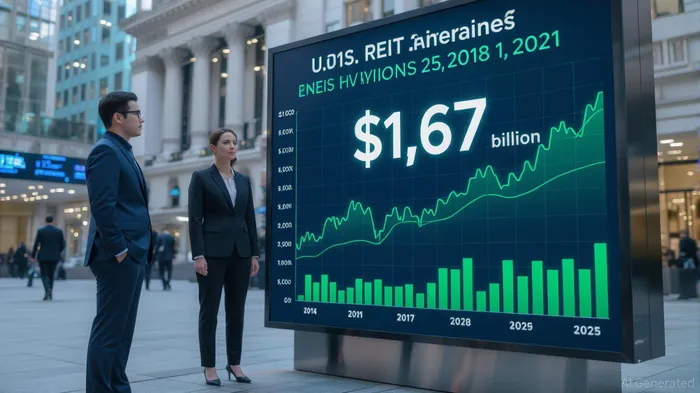
The U.S. real estate investment trust (REIT) sector's embrace of green bonds—a once-celebrated tool for aligning capital with sustainability goals—has entered a period of recalibration. What was a $14.38 billion juggernaut in 2021 has now dwindled to a mere $1.67 billion in the first half of 2025, signaling a profound shift in how ESG (Environmental, Social, and Governance) priorities are being monetized in the real estate space. For investors, this decline raises critical questions: Is the green bond model still viable for U.S. REITs? And how should ESG-aligned investors navigate this evolving landscape?
The Decline: From Green Boom to Strategic Retreat
The data is stark. In 2024, U.S. REITs raised $4.25 billion through green bonds—a 62.9% drop from 2021's peak. By the first half of 2025, only one REIT, EquinixEQIX-- Inc. (NASDAQ: EQIX), had issued green bonds, raising $1.67 billion. This trend reflects a broader cooling in the U.S. green bond market, where financial institutionsFISI-- accounted for just 3.6% of global issuance in 2024 and a paltry 0.1% in Q1 2025.
The decline isn't just quantitative—it's qualitative. U.S. REITs like Kimco RealtyKIM-- (NYSE: KIM) and Boston Properties (NASDAQ: BXP), which once led the charge in green financing, have scaled back their efforts. The reasons? A perfect storm of political backlash against ESG investing, regulatory complexity (e.g., the EU Green Bond Standard's “do no significant harm” criteria), and a market shift toward social and sustainability-linked bonds, which now dominate investor demand.
Why the Retreat? Three Key Drivers
- ESG Backlash and Political Headwinds: The U.S. political climate has turned sharply against ESG-centric policies, with a new administration prioritizing economic growth over climate mandates. This has eroded investor appetite for green bonds, particularly in sectors like real estate, where ESG claims are often harder to quantify.
- Regulatory Complexity: The EU Green Bond Standard (EU GBS) and the Inflation Reduction Act's (IRA) compliance demands have added layers of bureaucracy. While the IRA could still unlock green opportunities, the upfront costs of meeting these standards are deterring smaller REITs from issuing green bonds.
- Shifting Investor Priorities: Investors are now favoring sustainability-linked loans (SLLs) and social bonds, which offer more flexibility in measuring impact. Green bonds, with their rigid reporting requirements, are increasingly seen as outdated.
Implications for ESG-Linked Real Estate Investing
The decline in green bond issuance doesn't mean ESG investing is dead—it's just evolving. For investors, this shift demands a nuanced approach:
- Focus on Sector Leaders: REITs like Equinix and Digital Realty TrustDLR-- (NYSE: DLR) continue to innovate in green financing. Equinix's 2024 offerings, totaling $1.88 billion in euro-denominated green bonds, demonstrate that demand still exists for high-impact projects in sectors like data centers, where energy efficiency is a key selling point.
- Scrutinize Impact Reporting: With transparency remaining a challenge, investors must dig deeper into how REITs allocate green bond proceeds. The days of “greenwashing” are ending, and REITs that can credibly report on energy savings, carbon reductions, and water conservation will stand out.
- Look Beyond the U.S.: While the U.S. market falters, global green bond issuance is surging, particularly in emerging markets. U.S. ESG investors should consider international REITs or green bond ETFs to maintain exposure to sustainable real estate.
Strategic Recommendations for Investors
- Rebalance ESG Portfolios: While green bonds are cooling, sustainability-linked loans and social bonds are gaining traction. Consider reallocating a portion of your ESG portfolio to these instruments, particularly for REITs with strong ESG governance frameworks.
- Target High-Impact Sectors: Data centers (Equinix, Digital Realty), industrial logisticsILPT-- (Prologis, Inc. (NYSE: PLD)), and residential REITs (American Homes 4 Rent (NYSE: AMH)) are better positioned to leverage green financing due to their measurable sustainability metrics.
- Advocate for Clarity: Push for standardized ESG reporting. The lack of uniformity in impact reporting remains a barrier to trust. REITs that adopt the Green Bond Principles (GBPs) or EU GBS should be rewarded with higher valuations.
The Road Ahead: Green Bonds or Green Illusions?
The U.S. REIT sector's retreat from green bonds isn't a death knell for sustainable real estate—it's a signal to adapt. For investors, this means doubling down on REITs that can prove their ESG credentials while navigating the new regulatory landscape. The Inflation Reduction Act and private sector innovation still offer tailwinds, but success will depend on REITs' ability to align capital with tangible environmental outcomes.
If you're thinking about ESG investing in 2025 and beyond, the message is clear: don't abandon green bonds, but don't put all your eggs in that basket either. The future belongs to REITs that can bridge the gap between sustainability and profitability—those that can turn green promises into real, measurable results.







Comentarios
Aún no hay comentarios