
Green Appliance Recycling Infrastructure: A Lucrative Sector Amid Regulatory and Environmental Shifts
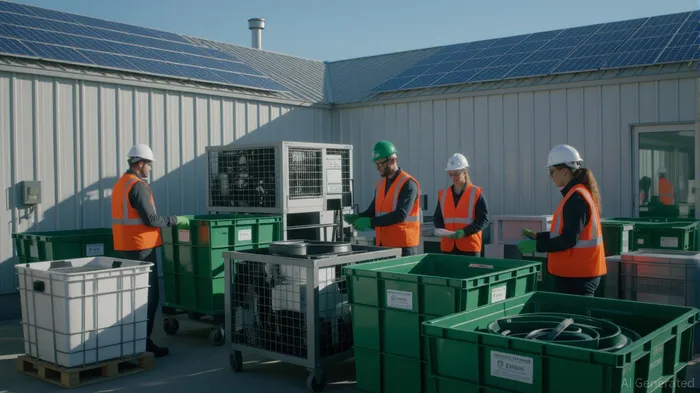
The green appliance recycling infrastructure sector is emerging as a compelling investment opportunity, driven by a confluence of regulatory mandates, technological transitions, and heightened consumer environmental awareness. At the heart of this transformation lies the refrigerant recovery and recycling market, which is being reshaped by the U.S. Environmental Protection Agency's (EPA) evolving policies and the phase-out of high-global-warming-potential (GWP) refrigerants. For investors, this sector represents a unique intersection of environmental responsibility and financial potential.
Regulatory Tailwinds: The EPA's Role in Shaping the Market
The EPA's regulatory framework, particularly the American Innovation and Manufacturing (AIM) Act and Section 608 of the Clean Air Act, is a cornerstone of the sector's growth. The AIM Act mandates the phasedown of hydrofluorocarbons (HFCs), a potent greenhouse gas commonly used in refrigeration systems. By 2025, the production and importation of R-410A—a widely used HFC—will be prohibited in newly manufactured HVAC equipment, forcing the industry to adopt alternatives like R-454B, which has a significantly lower GWP and zero ozone depletion potential [3].
Section 608 of the Clean Air Act further reinforces this shift by requiring certified technicians to handle refrigerant recovery and recycling. These certifications ensure proper handling of refrigerants to prevent environmental harm, creating a demand for trained professionals and compliant infrastructure [4]. While specific 2023–2025 updates to Section 608 under the AIM Act remain unclear, the broader regulatory push toward sustainable refrigerant management is undeniable [4].
A critical development in 2025 is the EPA's proposed rescission of the 2009 Greenhouse Gas Endangerment Finding, which could limit its authority to regulate vehicle emissions but does not affect refrigerant-specific rules [5]. This bifurcation of regulatory focus underscores the resilience of refrigerant recovery mandates, which remain anchored in the AIM Act and Section 608.
Market Dynamics: Transition to Sustainable Refrigerants and Rising Demand
The phase-out of R-410A and R-22 is accelerating the need for refrigerant recovery and recycling services. As older appliances reach end-of-life, managing their refrigerant inventory becomes both a legal requirement and an environmental imperative. For example, R-22, a refrigerant with a GWP of 1,810, is being phased out entirely, creating a surge in demand for certified recovery services to handle existing stockpiles [3].
Simultaneously, the adoption of hydrofluoroolefins (HFOs) and natural refrigerants like R-1234yf is gaining traction in automotive and HVAC applications. These alternatives, with lower GWPs and no ozone depletion potential, are driving demand for specialized recovery and recycling infrastructure [5]. The transition is not merely regulatory but also economic: companies that fail to comply with refrigerant management rules face penalties, while those that adapt stand to capture market share.
Investment Opportunities: Positioning for Growth
While specific companies in certified refrigerant recovery were not identified in the research, the sector's growth is evident in the broader market. For instance, HVAC manufacturers like TraneTT-- are already integrating R-454B into their product lines, signaling industry-wide alignment with EPA mandates [3]. Investors should prioritize firms that:
1. Hold EPA-certified refrigerant recovery licenses, ensuring compliance with Section 608.
2. Offer advanced recycling technologies for HFOs and natural refrigerants.
3. Partner with appliance manufacturers to manage end-of-life refrigerant inventory.
The lack of granular market size data for 2023–2025 does not diminish the sector's potential. Instead, it highlights the need for forward-looking analysis. As the AIM Act's phasedown of HFCs progresses, the refrigerant recovery market is poised to expand, with estimates suggesting a compound annual growth rate (CAGR) of 8–10% over the next five years [3].
Consumer Trends and Environmental Awareness
Consumer demand for sustainable practices is another catalyst. A 2024 survey by the National Association of Home Builders found that 68% of homeowners prioritize appliances with eco-friendly certifications, such as ENERGY STAR [1]. This trend pressures manufacturers and recyclers to adopt greener practices, further boosting the demand for certified refrigerant recovery services.
Conclusion: A Sector Poised for Profitability
The green appliance recycling infrastructure sector is at an inflection pointIPCX--. Regulatory tailwinds from the EPA, coupled with industry transitions to low-GWP refrigerants and consumer demand for sustainability, are creating a robust market for certified recovery and recycling services. While specific companies remain under the radar, the sector's structural growth is clear. Investors who position themselves early in this space—whether through infrastructure providers, certification bodies, or technology innovators—stand to benefit from a market that is both environmentally and economically transformative.





Comentarios
Aún no hay comentarios