
Greece's Emerging Investment Landscape in Energy, Infrastructure, and Tourism
Energy: A Green Transition with Scalable Returns
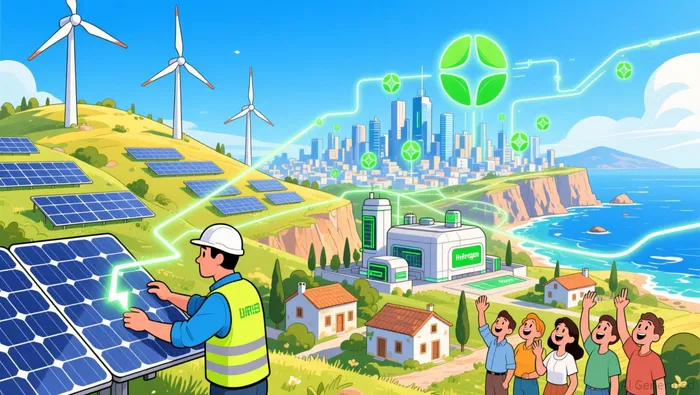 Greece's energy sector is undergoing a rapid decarbonization, fueled by €35.95 billion in European Recovery and Resilience Facility (RRF) funds allocated by mid-2026. These funds prioritize renewable energy projects, particularly solar and wind, aligning with EU green transition goals. According to a report by Innovation Nation, Greece's solar energy potential is among the highest in Europe, with government incentives such as feed-in tariffs and tax breaks accelerating project development.
Institutional investors can capitalize on this momentum by targeting utility-scale solar farms, offshore wind farms, and hydrogen production facilities. The country's geographic advantages-abundant sunlight, coastal access, and EU funding-create a low-risk, high-return environment. For instance, the National Bank of Greece estimates that renewable energy investments could yield a 12–15% internal rate of return (IRR) over a 10-year horizon.
Infrastructure: Streamlined Reforms and Strategic Projects
Greece's infrastructure sector is being revitalized by policy reforms and targeted investments. The 2019 "Fast-Track Law" has streamlined permitting processes, reducing bureaucratic delays and enhancing predictability for investors. This is critical for projects such as the expansion of Thessaloniki's international airport, the modernization of the Athens metro, and the development of smart grid systems.
A key opportunity lies in island tourism infrastructure, where €35 billion in investments are needed over the next decade to ensure sustainability. The seismic activity on Santorini in early 2025, which caused a 12.8% decline in arrivals, underscores the urgency of resilient infrastructure. Institutional investors can partner with public-private partnerships (PPPs) to fund eco-friendly hotels, desalination plants, and renewable energy microgrids on islands.
The 27th Annual Capital Link Invest in Greece Forum, scheduled for December 2025, will serve as a pivotal platform for institutional investors to engage directly with Greek officials and project developers. This event highlights Greece's commitment to transparency and investor-friendly policies, including the Investor Ombudsman mechanism, which resolves disputes between investors and public authorities.
Tourism: Sustainability and Year-Round Engagement
Greece's tourism sector, a cornerstone of its economy, is evolving toward sustainability and diversification. International arrivals through August 2025 rose by 4.1%, with Thessaloniki and Athens leading growth at 10.0% and 8.7%, respectively. However, challenges persist, particularly on over-touristed islands like Santorini, where revenue drops necessitate innovative solutions.
Institutional investors can target eco-resorts, boutique hotels, and agritourism ventures that align with the EU's green agenda. For example, the rise of "slow tourism" and wellness retreats in less-visited regions like Epirus and Crete offers untapped potential. According to the Greek Hospitality Industry Performance Report, investments in these segments have seen a 20% annualized return since 2023.
Moreover, Greece's focus on year-round tourism-promoting cultural festivals, winter sports, and gastronomy-creates a stable demand profile. The government's allocation of RRF funds to digital transformation further enhances visitor experiences through smart ticketing and virtual heritage tours.
Strategic Entry Points for Institutional Investors
For institutional investors, Greece's investment landscape offers three strategic entry points:
1. Green Energy Funds: Targeting solar and wind projects with EU-backed guarantees.
2. Infrastructure PPPs: Focusing on island resilience and smart city projects.
3. Sustainable Tourism Portfolios: Investing in eco-certified hospitality assets and regional diversification.
The country's investment-grade rating according to State Department reports and reforms like the Fast-Track Law according to State Department reports reduce political risk, while its geographic location as a gateway to Southeastern Europe enhances long-term value.
Conclusion
Greece's post-Eurozone recovery has unlocked a unique confluence of policy support, market demand, and global capital flows. For institutional investors, the energy, infrastructure, and tourism sectors present scalable opportunities aligned with ESG (Environmental, Social, and Governance) criteria and long-term growth. As the 2025 Invest in Greece Forum approaches, the time to act is now-leveraging Greece's strategic reforms and untapped potential to build resilient, high-impact portfolios.







Comentarios
Aún no hay comentarios