
The Great Rebalancing: Winners and Losers in the 2025 S&P 500
The S&P 500 in 2025 has been a tale of extremes. For much of the year, artificial intelligence (AI) stocks dominated the headlines and the index, driving returns while leaving other sectors in the dust. But as 2025 winds down, a quiet but significant rebalancing is underway. Investors are rotating out of overvalued growth stocks and into sectors with more attractive valuations and tangible earnings. This shift-driven by profit-taking in AI, a correction in metals, and a resurgence in healthcare and industrials-sets the stage for a more diversified 2026.
The AI Bubble: From Hype to Reality
Information Technology, the engine of the 2025 bull market, now trades at a trailing P/E ratio of 40.59, a level that stretches even for a sector historically prone to froth according to WorldPeratio. This valuation reflects the outsized gains of the "Magnificent Seven" (Mag 7) companies, which accounted for nearly all of the S&P 500's gains in 2024 and 2025. However, the tide is turning. By late 2025, investors began locking in profits, particularly in speculative AI plays.
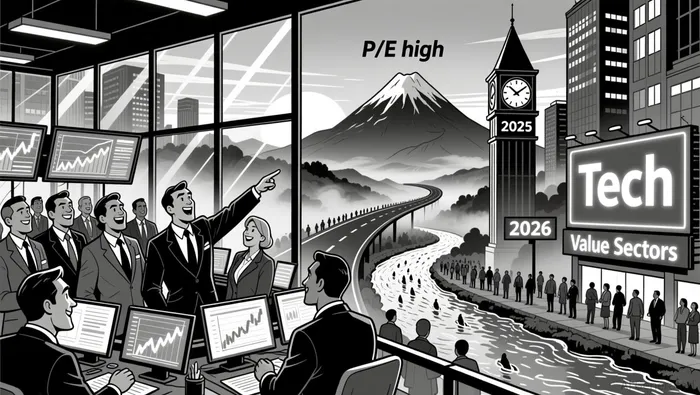
The logic is simple: AI infrastructure spending by hyperscalers like MicrosoftMSFT--, Alphabet, and AmazonAMZN-- remains robust, with a projected $520 billion in 2026 capital expenditures. Yet, the market is starting to price in the reality that AI's growth is slowing. The Mag 7's earnings growth, which hit 37% in 2024, is expected to drop to 23% in 2026, aligning with the broader market's 15% growth forecast. This normalization is not a collapse-it's a recalibration. For investors, the lesson is clear: AI is still a long-term theme, but the days of buying any stock with "AI" in its description are over.
Metals: The Speculative Overbidding Correction
The metals sector, a proxy for inflationary bets and economic uncertainty, also faced a harsh reality check in late 2025. The Materials sector, with a P/E of 24.01, was labeled "overvalued" by analysts according to WorldPeratio, a label justified by speculative overbidding in gold and silver. As margin requirements tightened and macroeconomic clarity improved, investors began unwinding these positions.
This unwind was not driven by a loss of confidence in the long-term narrative of currency debasement or central bank gold buying. Rather, it reflected a tactical shift as markets priced in a more stable economic environment. For 2026, metals may still have a role in a diversified portfolio, but their days as a speculative haven are likely behind them.
Healthcare and Industrials: The Value Comeback
While growth stocks faced profit-taking, value sectors like Healthcare and Industrials gained traction. Healthcare, trading at a "fair" P/E of 24.19 according to Schwab, outperformed in 2025 due to its defensive characteristics and resilience during economic volatility. With the sector posting mid-single-digit YTD returns, investors are increasingly viewing healthcare as a safe harbor in a world of AI-driven volatility according to Schwab.
Industrials, meanwhile, benefited from AI-driven demand for infrastructure and services. Their P/E of 27.18 according to Schwab and modest YTD gains reflect a sector transitioning from cyclical recovery to structural growth. Analysts predict continued strength in 2026 as AI infrastructure spending fuels demand for industrial equipment and logistics according to DividendTalks.
2026 Positioning: Diversification Over Hype
The coming year will likely see the S&P 500 shift toward stability. According to Jay Woods of Freedom Capital Markets, sector leadership will pivot to "slower-growth, more stable" industries like industrials, transportation, and financials. This rotation is not a rejection of AI but a recognition that the market cannot sustain a single-sector boom indefinitely.
For investors, the key takeaway is to balance exposure. While AI infrastructure remains a long-term bet, diversifying into healthcare and industrials can mitigate risk. Additionally, the Federal Reserve's dovish stance-projected to include two more rate cuts in 2026-will support broader market growth, particularly in value sectors.
Conclusion: The New Normal
The 2025 S&P 500 was defined by extremes-sky-high valuations in AI, speculative bets in metals, and a slow but steady rebound in value sectors. As 2026 begins, the market is rebalancing. The winners will be those who adapt: trimming overvalued growth positions, hedging against macroeconomic risks, and capitalizing on the structural tailwinds in healthcare and industrials. The "boring" sectors may soon become the most compelling.







Comentarios
Aún no hay comentarios