
The Great EV Culling: Why China's Survival of the Fittest Spells Opportunity for Investors
China's electric vehicle (EV) market is on the brink of a brutal consolidation, with only 15 of today's 129 brands expected to survive by 2030. This seismic shakeout, as predicted by AlixPartners, will leave behind a handful of giants—dominated by BYD and Li Auto—while smaller players succumb to overcapacity, price wars, and a lack of scale. For investors, the message is clear: the era of indiscriminate EV enthusiasm is over. The next phase belongs to the resilient few and their enablers in the supply chain. Here's how to navigate it.
The Darwinian Race: Who Survives?
The AlixPartners report underscores that survival hinges on three pillars: scale, profitability, and government backing. BYD and Li AutoLI-- already lead this pack. BYD, China's EV behemoth, has achieved full-year profitability for years, with a vertically integrated business model that controls batteries, semiconductors, and AI. Li Auto, despite its recent struggles, has carved out a niche with its focus on premium SUVs and a software-driven ecosystem. 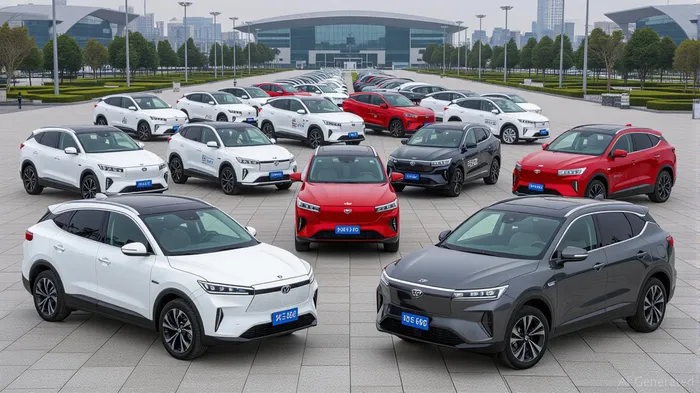 .
.
Meanwhile, laggards like NIONIO-- and XpengXPEV-- face existential threats. Their reliance on high-end markets and unprofitable operations—alongside a crowded mid-range segment—leaves them vulnerable. The tells the story: BYD's valuation towers over peers, while NIO's stock has collapsed 70% since 2021.
Bet on the Supply Chain, Not Just the Brands
The real opportunity lies upstream. The 15 surviving brands will need batteries, autonomous tech, and critical minerals to maintain their dominance. This favors three categories:
- Battery Leaders: CATL (300750.SZ) and BYD's in-house battery division dominate 50% of China's market. CATL's sodium-ion and lithium-sulfur innovations are critical to reducing costs and extending range.
- Autonomous Tech Stacks: Companies like Horizon Robotics and Momenta (backed by Alibaba) are integrating AI into EVs, enabling advanced driver-assistance systems (ADAS) that could differentiate global exports.
- Critical Minerals: Lithium, cobalt, and rare earth suppliers like Ganfeng Lithium (002460.SZ) will profit as demand for batteries surges.
Investors should also monitor government-backed megaprojects, such as the construction of EV export hubs in Guangdong and Chongqing. These zones will centralize production, logistics, and subsidies, creating winners in logistics firms like ZTO ExpressZTO-- (ZTO) and port operators like COSCO (601866.SH).
The Risks: Overcapacity and Regulatory Whiplash
The consolidation won't be painless. China's EV factories operated at just 50% capacity in 2023, with local governments propping up marginal players to preserve jobs and regional economies. This creates two risks:
- Prolonged price wars: Even as regulators call for an end to discounts, competition will shift to subsidies, zero-interest financing, and free software upgrades.
- Debt-driven collapses: Smaller brands with high leverage—like XPeng (XPEV)—risk defaulting if subsidies dry up or demand stagnates.
Avoid companies with weak balance sheets and no path to profitability. The reveal stark divides: BYD's 0.3x ratio contrasts sharply with NIO's 2.1x.
The Playbook: Act Now, or Be Left Behind
The window to capitalize on this consolidation is narrowing. Here's how to position:
1. Buy the Survivors' Supply Chains: CATL and Horizon Robotics offer leverage to the winners without the execution risk of EV manufacturers.
2. Target Export Plays: BYD's $30 billion overseas expansion plan and Li Auto's partnership with Volvo for European exports suggest global demand will favor scale.
3. Avoid Overcapacity Traps: Steer clear of mid-tier brands and their suppliers in low-margin segments like basic battery cells.
The urgency is underscored by AlixPartners' timeline: consolidation will accelerate post-2025 as subsidies shrink and export quotas tighten. The shows early investors already profiting—latecomers may miss the boat.
Final Call: The EV Market Is Now a Zero-Sum Game
China's EV sector is entering its “eat-or-be-eaten” phase. Investors who double down on BYD and Li Auto's ecosystems, while avoiding overcapacity traps, stand to profit as the industry resets. The next five years will separate the innovators from the also-rans—and only those who act now will own the future.





Comentarios
Aún no hay comentarios