
Grayscale's BNB ETF Registration and Its Implications for Crypto Institutional Adoption
Grayscale Investments' recent registration of a Delaware statutory trust for a Binance Coin (BNB) ETF marks a pivotal step in the evolution of cryptocurrency investment vehicles. As the firm navigates the complex regulatory landscape of the U.S. Securities and Exchange Commission (SEC), its strategic moves signal a broader shift toward institutional adoption of digital assets. This analysis explores the regulatory and market implications of Grayscale's BNBBNB-- ETF initiative, contextualizing its significance within the 2025-2026 crypto ecosystem.
Strategic Regulatory Navigation: Delaware as a Launchpad
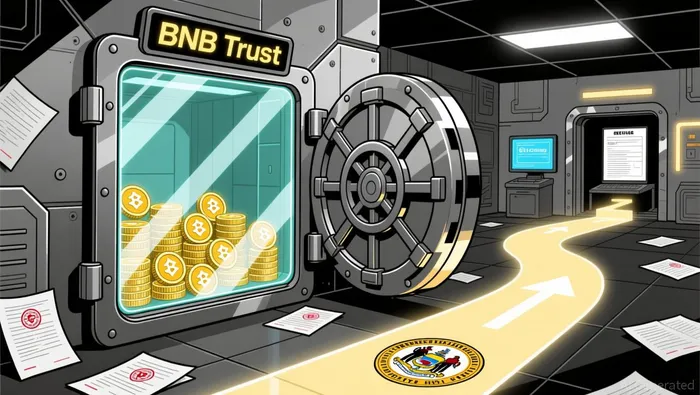
Grayscale's registration of the Grayscale BNB Trust under file number 10465871 with the Delaware Division of Corporations represents a standard but critical precursor to SEC filings. Delaware's favorable legal framework for financial entities has historically served as a staging ground for ETF launches, with approximately 65% of registered entities eventually proceeding to formal SEC applications. This step aligns with Grayscale's prior experience converting its Bitcoin Trust to an ETF in 2024, demonstrating a well-tested playbook for regulatory engagement.
However, the SEC's ongoing scrutiny of BNB's classification as a security remains a key hurdle. The agency's investigation into whether BNB qualifies as an investment contract under U.S. law could delay approval timelines. Grayscale's filings will likely need to address concerns around market surveillance, custody solutions, and investor protections- issues that have historically complicated crypto ETF approvals. The firm's parallel registration of a Hyperliquid (HYPE) ETF further underscores its intent to diversify its crypto product suite while navigating regulatory uncertainty.
Market Impact: Institutional Adoption and Liquidity Dynamics
The potential approval of a Grayscale BNB ETF could catalyze significant institutional inflows into the cryptocurrency market. Institutional investors, which managed over $35 billion in digital assets as of late 2025, have increasingly sought regulated vehicles to access crypto assets. A BNB ETF would provide a familiar, SEC-compliant structure for these investors, reducing barriers to entry and enhancing market legitimacy.
Analysts project that such a product could improve BNB's liquidity and price discovery mechanisms, particularly as institutional-grade custody solutions mature. For context, VanEck and Bitwise have already filed for BNB ETFs in 2025, creating a competitive landscape that could accelerate regulatory clarity. If approved, these products may also spur broader adoption of tokenized assets, as highlighted in Grayscale's 2026 Digital Asset Outlook.
Strategic Implications: A Pivotal Year for Crypto ETFs
Grayscale's actions position 2026 as a critical year for institutional adoption. The firm's Delaware registrations, combined with favorable regulatory developments such as the SEC's approval of generic listing standards for crypto ETFs, suggest a maturing market infrastructure. Institutional investors are likely to view BNB ETFs as a bridge between traditional finance and decentralized ecosystems, particularly as macroeconomic demand for alternative assets grows.
However, regulatory risks persist. The SEC's stance on BNB's security status could delay approvals, and market volatility remains a wildcard. That said, Grayscale's strategic patience-evidenced by its "wait-and-see" approach in early 2026-reflects a calculated effort to align with evolving regulatory frameworks.
Conclusion
Grayscale's BNB ETF registration is more than a procedural step; it is a strategic signal of confidence in the crypto market's institutional future. By leveraging Delaware's regulatory efficiency and addressing SEC concerns, the firm is positioning itself to capitalize on a potential 2025-2026 ETF approval wave. For investors, this development underscores the growing convergence of traditional finance and digital assets, with implications for liquidity, market structure, and regulatory innovation.






Comentarios
Aún no hay comentarios