
Graphite One's Strategic Leap: A 15% Surge Driven by US$5 Million Alaska Native Investment
The recent 15% surge in Graphite One's stock price has sparked renewed interest in the company's strategic positioning within the critical minerals sector. This momentum is directly tied to a $5 million investment from Alaska Native corporations Doyon Limited and Aleut, marking a pivotal step in the development of the Graphite Creek Deposit. The investment, part of a non-brokered private placement of 8,514,024 units at CDN$0.82 per unit, underscores a broader alignment with U.S. and Alaskan policy priorities centered on resource nationalism and supply chain resilience, according to the company's press release.
Strategic Capital Inflow and Indigenous Partnerships
The investment by Doyon and Aleut is not merely financial but deeply strategic. By joining Bering Straits Native Corporation as stakeholders, Graphite One has secured backing from three of Alaska's most influential Native Regional Corporations. This partnership aligns with the corporations' long-term goals of fostering responsible resource development and economic growth in the state, as the press release noted. The proceeds will fund environmental studies, permitting, and corporate operations, critical steps for advancing the Graphite Creek Mine toward commercial production.
This move reflects a growing trend of Indigenous communities leveraging their land rights and resource access to participate in the clean energy transition. As noted in an Investing.com report, such partnerships are increasingly common in regions where critical minerals are embedded in national security and economic strategies. For Graphite One, the investment provides both capital and local expertise, reducing regulatory and operational risks in a sector historically plagued by delays and community opposition.
Resource Nationalism and the Global Critical Minerals Race
The Alaska Native investment must be understood within the context of intensifying resource nationalism. A Nature study highlights how resource-rich nations are asserting control over critical minerals through administrative barriers and export restrictions, destabilizing global supply chains. The U.S., in particular, has prioritized domestic production of minerals like lithium, cobalt, and antimony to mitigate reliance on foreign suppliers.
Alaska's role in this strategy is underscored by recent executive actions emphasizing the development of its natural resources. The White House's 2025 directive to "unleash Alaska's extraordinary resource potential" explicitly targets critical minerals and rare earth elements, framing them as essential for national security. Graphite One's Graphite Creek Deposit, with its high-grade natural graphite, fits squarely into this agenda. The company's plan to integrate Alaska's raw materials with a planned manufacturing facility in Ohio further aligns with the Biden administration's push for localized, secure supply chains.
Federal Support and Alaska's Strategic Minerals
Alaska's critical mineral reserves, including antimony-a key component in defense technologies-have drawn significant federal attention. The U.S. Department of Defense's $43.4 million investment in Alaska's antimony resources under the Defense Production Act Title III program illustrates the mineral's strategic value, according to a DiscoveryAlert article. While Graphite One focuses on graphite, its collaboration with Alaska Native corporations positions it to benefit from the state's broader ecosystem of federal support and mineral expertise.
This synergy between private and public actors is a hallmark of modern resource nationalism. As geopolitical tensions and climate-driven technological shifts drive demand for critical minerals, regions like Alaska are becoming battlegrounds for control over supply chains. Graphite One's ability to secure Indigenous partnerships and federal funding places it at the forefront of this competition.
Implications for Graphite One and the Sector
The $5 million investment is a catalyst for Graphite One's ambitions to become a vertically integrated producer of battery-grade graphite. By anchoring its supply chain in Alaska-a region with favorable regulatory frameworks and historical mining expertise-the company reduces exposure to the volatility of international markets. This strategy also resonates with ESG (Environmental, Social, and Governance) investors, who increasingly prioritize projects with strong community engagement and sustainable practices.
However, challenges remain. Environmental permitting and community consultations are time-sensitive hurdles that could delay timelines. Yet, the involvement of Alaska Native corporations, who have deep-rooted ties to the land, may expedite these processes. As noted in a ScienceDirect analysis, resource nationalism is reshaping global mineral flows, with over 112 national policies emerging since 2000 to secure domestic control. Graphite One's proactive alignment with these trends positions it to capitalize on a sector poised for rapid growth.
Conclusion
Graphite One's strategic leap, fueled by the Alaska Native investment, is emblematic of a sector in transformation. As resource nationalism redefines global supply chains, companies that align with national security priorities and local stakeholders will thrive. For Graphite One, the Graphite Creek Deposit is not just a mine-it is a cornerstone in the U.S. effort to secure a domestic supply of critical minerals. With federal support, Indigenous partnerships, and a clear vision for integration, the company is well-positioned to navigate the challenges of a resource-constrained world.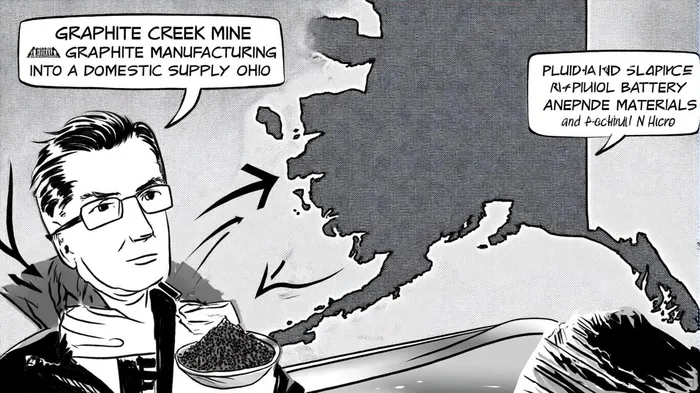







Comentarios
Aún no hay comentarios