
Graphic Packaging: A Sustainable Growth Engine in a Circular Economy
In an era where environmental stewardship and long-term value creation are inextricably linked, Graphic PackagingGPK-- International stands out as a pioneer in aligning its business model with the principles of a circular economy. By prioritizing ESG (Environmental, Social, and Governance) initiatives, the company is not only addressing global sustainability challenges but also positioning itself as a strategic player in a market poised for transformative growth.
Strategic Alignment with ESG Trends
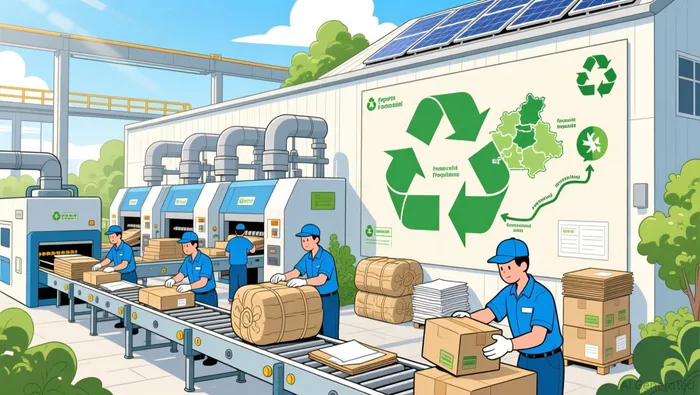
Graphic Packaging's commitment to circularity is evident in its aggressive transition from single-use plastics to paperboard alternatives. According to its 2024 Impact Report, the company has replaced approximately 1 billion plastic packages with paperboard packaging, with 97% of its products now characterized as recyclable. This shift is underpinned by a Design for Environment (DfE) methodology that emphasizes renewable, recycled, and sustainably sourced materials. By 2023, 74% of its paperboard packaging already contained recycled content, and over 50% of the paper feedstocks used in its recycled paperboard facilities came from post-consumer materials.
 The company's ESG performance has earned it recognition as a leader in sustainability. It secured an AA "Leader" rating from MSCI ESG for the third consecutive year in 2025, while EcoVadis placed it in the 91st percentile with a "Committed" sustainability badge. These accolades reflect its ability to manage ESG risks effectively, a critical factor for investor confidence in an industry facing stringent regulatory and consumer demands.
Financial Performance and ESG Synergies
While Graphic Packaging's 2025 financial results showed mixed outcomes, its ESG-driven innovations are beginning to yield tangible benefits. For instance, the company reported $61 million in innovation sales growth in Q2 2025, driven by sustainable packaging solutions such as the PaperSeal™ Shape tray, which reduced plastic use by 82% per unit. Such innovations not only align with global decarbonization goals but also open new revenue streams.
Cost optimization initiatives further underscore the financial rationale for ESG integration. In 2025, the company announced $60 million in cost savings by 2026 through staffing and operational efficiencies. Additionally, the Waco, Texas recycled paperboard facility-set to begin full production by late 2026-is expected to reduce unit costs versus legacy assets, supporting margin expansion. These strategic moves highlight how ESG commitments can drive operational efficiency and profitability.
Investor Confidence and Long-Term Value Creation
Graphic Packaging's ESG achievements have bolstered its appeal to investors. The company's Vision 2030 strategy, which includes net-zero emissions by 2050 and science-based climate targets, aligns with global regulatory trends and investor priorities. This forward-looking approach is reflected in its shareholder returns: in 2025, the company returned $248 million to stockholders through dividends and share repurchases, including a $1.5 billion share repurchase authorization.
Despite quarterly EBITDA declines- such as a 17% drop in Q1 2025 to $353 million-the company's focus on free cash flow generation remains intact. It reaffirmed a target of $700 million to $800 million in free cash flow by 2026, a metric that balances short-term challenges with long-term resilience.
Challenges and the Path Forward
Graphic Packaging is not without hurdles. Limited recycling infrastructure and higher costs for sustainable materials remain barriers to scaling circular economy practices. However, the company's collaborative approach- such as partnerships with retailers like Sainsbury's and Pilgrim's Europe-demonstrates its ability to navigate these challenges while driving industry-wide change.
Conclusion
Graphic Packaging's journey illustrates how ESG integration can serve as both a moral imperative and a strategic advantage. By transforming its product portfolio, optimizing costs, and securing investor trust, the company is building a foundation for sustainable growth. While financial volatility persists, its alignment with circular economy principles and long-term climate goals positions it to thrive in a market where environmental accountability is no longer optional but essential. For investors seeking resilient, forward-thinking companies, Graphic Packaging offers a compelling case study in the power of ESG-driven innovation.





Comentarios
Aún no hay comentarios