
The Graph (GRT): Is 2026 the Inflection Point for Long-Term Value?
The Graph (GRT) has long positioned itself as a foundational layer for decentralized data indexing and querying, enabling developers to build applications that leverage blockchain data. As the crypto market enters 2026, the question of whether GRTGRT-- can transition from a niche infrastructure protocol to a mainstream asset hinges on three critical factors: its fundamental utility, network growth metrics, and institutional adoption catalysts. With mixed price projections and evolving market dynamics, investors must evaluate whether 2026 represents a pivotal inflection point for GRT's long-term value.
Fundamental Utility and Network Growth: A Mixed Picture
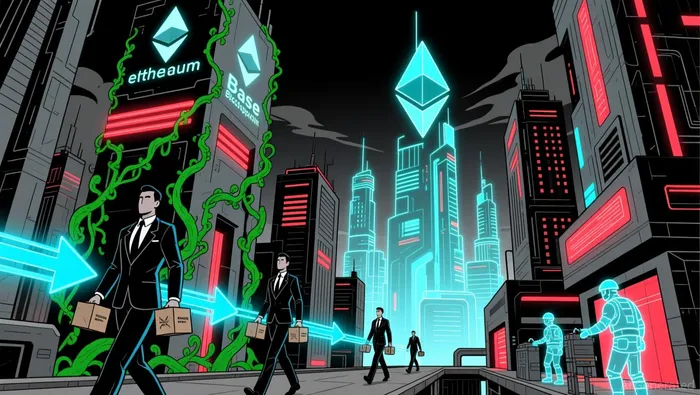
The Graph's Q3 2025 performance reveals a nuanced story. Active Subgraphs-a measure of the protocol's indexing capacity-increased by 7.6% quarter-over-quarter to 15,087, reflecting sustained developer engagement despite a 15.2% decline in new Subgraph deployments. This growth, however, is tempered by a 15.9% drop in query volume to 5.46 billion, with Base overtaking EthereumETH-- Mainnet as the dominant chain for data requests. The divergence between active Subgraphs and query volume suggests a shift in usage patterns, possibly driven by cross-chain activity and the maturation of existing applications.
The project's strategic focus on sustainable growth is evident in its revised Chain Integration Process, which prioritizes chains with real-world usage over speculative networks. Additionally, the introduction of Hypergraph-a local-first framework combining privacy, composability, and usability-positions The GraphGRT-- to cater to consumer-facing applications, expanding its utility beyond traditional blockchain data indexing. These innovations underscore the protocol's adaptability, but their long-term impact will depend on developer adoption and user traction.
Price Projections: A Spectrum of Scenarios
Price forecasts for GRT in 2026 are highly divergent. A neutral scenario projects a decline to €0.01582, a 54.63% drop from current levels, while a bullish outlook anticipates a milder decrease to €0.01986 (-43.04%). Conversely, bearish projections warn of a potential collapse to €0.00694 (-80.09%), driven by token unlocks and macroeconomic headwinds. These forecasts highlight the volatility inherent in crypto markets but also point to key catalysts: the Horizon mainnet upgrade, which launched in late 2025, and the broader adoption of decentralized AI infrastructure.
The Horizon upgrade, a modular blockchain architecture enabling real-time data streams and pre-indexed APIs, is a critical technical milestone. By expanding GRT's use cases beyond indexing, the upgrade could attract enterprise clients and institutional investors seeking scalable data solutions. However, risks such as supply inflation and regulatory uncertainty remain, particularly as token unlocks in 2026 could exacerbate downward pressure on the price.
Institutional Adoption: A Tipping Point in 2026?
Institutional interest in GRT has gained momentum, with Grayscale's inclusion of GRT in its Decentralized AI Fund-a 5.3% weighting-serving as a bellwether. This move signals recognition of GRT's role in AI and data analytics infrastructure, aligning with the growing demand for decentralized solutions in enterprise AI. Furthermore, The Graph's integration with Chainlink's Cross-Chain Interoperability Protocol (CCIP) enables cross-chain GRT transfers, enhancing its utility for staking and fee payments across ArbitrumARB--, Base, and Avalanche.
Regulatory progress also plays a role. The project's participation in the Ethereum Advocacy Alliance underscores its commitment to shaping balanced regulatory frameworks, a critical factor for institutional adoption. Analysts predict that bipartisan crypto legislation in the U.S. in 2026 could further normalize blockchain infrastructure, potentially accelerating GRT's integration into traditional finance.
Strategic Partnerships and Protocol Upgrades: Building a Foundation
The Graph's Q3 2025 roadmap emphasizes cross-chain interoperability and enterprise partnerships. The GIP-6969 proposal advocates for aggressive expansion onto high-growth chains like Base and Hyperliquid, aiming to reduce friction for new users and capture market share. Meanwhile, the ChainlinkLINK-- collaboration enhances data onboarding for institutions, combining secure data delivery with The Graph's querying capabilities. These partnerships address a key pain point for enterprises: the need for transparent, verifiable data infrastructure.
Technologically, the Horizon mainnet's modular architecture and real-time data streams position GRT to compete with centralized data providers in AI and analytics. As enterprises increasingly prioritize decentralized solutions for compliance and security, The Graph's infrastructure could become a critical asset.
Conclusion: A Calculated Entry Before the Tipping Point
The Graph's 2026 trajectory hinges on its ability to balance technical innovation with market adoption. While price projections remain mixed, the protocol's focus on cross-chain interoperability, enterprise AI, and institutional partnerships creates a compelling narrative for long-term value. The inclusion in Grayscale's AI Fund and Horizon's launch are early indicators of a broader shift toward decentralized infrastructure, but risks such as token supply dynamics and macroeconomic conditions cannot be ignored.
For investors, 2026 may represent a strategic entry point-before institutional adoption accelerates and GRT's utility in AI and cross-chain ecosystems becomes fully priced in. The key lies in monitoring network growth metrics, regulatory developments, and enterprise partnerships, which will ultimately determine whether 2026 marks GRT's inflection point.






Comentarios
Aún no hay comentarios