
GRAIL, Inc.: Rebuilding Strategic Value Through Innovation and Global Partnerships
GRAIL, Inc. has emerged from a turbulent chapter in its corporate history to position itself as a pivotal player in the multi-cancer early detection (MCED) market. The company's journey-from its controversial 2021 acquisition by IlluminaILMN-- to its forced divestiture and subsequent strategic repositioning-offers a compelling case study in regulatory resilience and innovation-driven growth.
A Rocky Acquisition and Regulatory Reckoning
In August 2021, Illumina acquired GRAILGRAL-- for $8 billion in a deal that combined GRAIL's Galleri® blood test with Illumina's sequencing technology, aiming to revolutionize cancer screening, according to an Illumina press release. However, the transaction bypassed critical regulatory approvals from the European Commission and U.S. Federal Trade Commission (FTC), leading to a protracted legal battle. By 2023, regulators had imposed a €432 million fine on Illumina and mandated the divestiture of GRAIL to restore competition in the MCED sector, as reported in a pharmaphorum article. This episode underscored the growing global scrutiny of antitrust compliance in high-stakes biotech mergers.
Strategic Rebirth: Partnerships as a Growth Engine
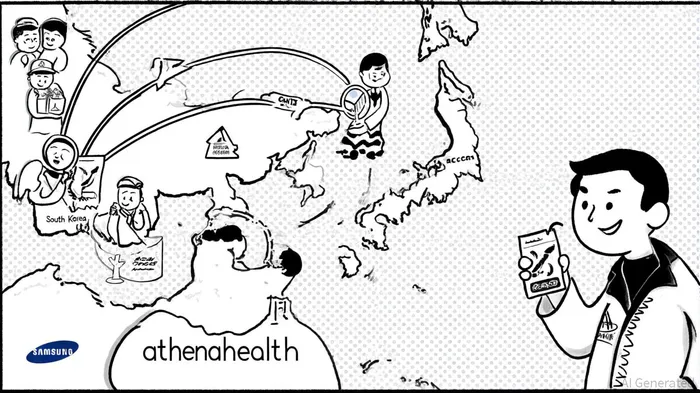
Since becoming an independent public company in late 2024, GRAIL has prioritized strategic collaborations to expand its footprint. Two recent partnerships exemplify this approach:
1. Samsung (October 2025): GRAIL partnered with Samsung to introduce the Galleri test in Asia, a region with high cancer incidence and limited early detection infrastructure. This move taps into Samsung's healthcare distribution networks and GRAIL's proprietary technology, creating a synergy that could capture 30% of Asia's MCED market by 2030, according to Timothy Sykes.
2. athenahealth (April 2025): By integrating the Galleri test into athenahealth's EHR platform, GRAIL streamlined access for 160,000 U.S. healthcare providers, addressing a key barrier to adoption; this digital integration is projected to increase test orders by 40% in 2026, per a StocksToTrade article.
These partnerships reflect GRAIL's dual strategy of scaling geographically while embedding its technology into existing healthcare workflows.
Market Positioning and Competitive Advantages
GRAIL's Galleri test remains a technological differentiator, capable of detecting over 50 cancer types from a single blood sample-a feat unmatched by competitors like Exact Sciences or Freenome. According to a Bloomberg report, the global MCED market is expected to grow at a 25% CAGR through 2030, driven by aging populations and rising healthcare costs. GRAIL's first-mover advantage, combined with its partnerships, positions it to capture a significant share of this growth.
However, challenges persist. The company must navigate pricing pressures from payers and competition from startups leveraging AI for cancer detection. Its reliance on Illumina's sequencing technology-despite the latter's reduced ownership stake-also raises questions about long-term cost structures.
Regulatory Environment and Future Outlook
The Illumina-GRAIL saga has set a precedent for stricter antitrust enforcement in biotech. As noted by Reuters, regulators now demand clearer behavioral remedies in mergers, a trend that could limit consolidation in the sector. For GRAIL, this means operating in a landscape where independence is both a constraint and an opportunity. The company's focus on partnerships rather than acquisitions aligns with this new reality.
Conclusion
GRAIL's post-divestiture strategy demonstrates a shift from aggressive consolidation to measured expansion. By leveraging partnerships with tech giants and healthcare platforms, the company is addressing scalability and accessibility challenges that once hindered its growth. While regulatory and competitive risks remain, GRAIL's technological edge and strategic agility make it a compelling long-term investment for those betting on the future of precision oncology.





Comentarios
Aún no hay comentarios