
Grab's Profitability Surge: Riding the Wave of Delivery Demand
The ride-hailing and delivery giant Grab has emerged as a beacon of resilience in Southeast Asia’s digital economy, with its latest financial results underscoring a sharp upturn in profitability. Driven by surging demand for its delivery and mobility services, Grab reported record revenues and Adjusted EBITDA in Q1 2025, positioning it to capitalize on long-term growth trends. Let’s dissect how Grab is transforming traffic and delivery demand into sustained financial strength.
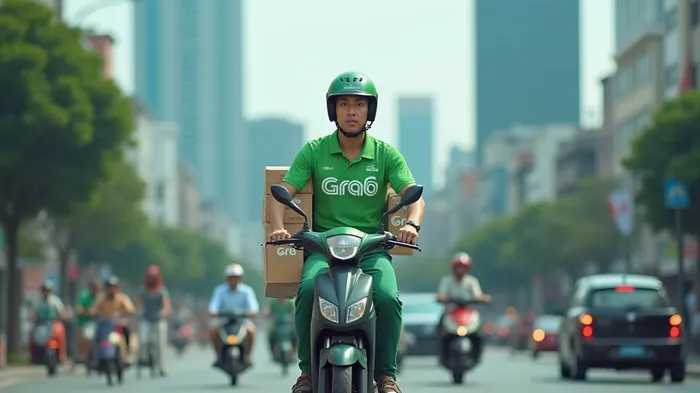
Delivery Dominance: The Engine of Growth
Grab’s Deliveries segment is the star performer, with Gross Merchandise Value (GMV) soaring 16% year-over-year to $3.129 billion in Q1 2025. This growth was fueled by a 17% rise in Monthly Transacting Users (MTUs) to a record high, even during the seasonally soft first quarter. A key catalyst was GrabMart, the company’s grocery and essentials delivery service, which achieved faster GMV growth than the overall Deliveries segment. During Ramadan—a period of heightened demand for home-cooking—GrabMart’s March GMV hit a new monthly record, showcasing Grab’s ability to adapt to cultural shifts.
The delivery ecosystem’s success extends beyond GMV. Advertising revenue, which now accounts for 1.7% of Deliveries GMV (up from 1.3% in 2024), has become a profit lever. The number of monthly active advertisers on Grab’s self-serve platform jumped 49% YoY to 191,000, while average advertiser spend rose 30%, demonstrating strong merchant engagement. This synergy between user growth and monetization pushed Deliveries revenue 18% higher to $415 million, outpacing all expectations.
Mobility Momentum: A Foundation of Reliability
While Deliveries leads the charge, Grab’s Mobility segment remains a steady contributor. Mobility GMV rose 17% YoY to $1.804 billion, supported by a 20% increase in MTUs and 25% more transactions. The platform’s focus on driver retention—90% of drivers stayed active monthly—has reduced reliance on costly surge pricing, which fell 10 percentage points YoY. In Singapore, Grab’s newly secured street-hail operator license is boosting vehicle supply, while partnerships with autonomous vehicle firms like Motional hint at a future where technology further streamlines operations.
Financial Fortitude: Profitability Takes Center Stage
The numbers tell a compelling story of efficiency. Grab’s Adjusted EBITDA surged to $106 million (a $44 million YoY improvement), with On-Demand segment profitability hitting 2.0% of GMV, up 46 basis points from 2024. Cost discipline is key: Regional corporate expenses fell 5% YoY to $86 million, and while incentives rose slightly to 10.1% of GMV, this reflects strategic investments in user acquisition rather than unsustainable spending. The company even turned a $10 million net profit, marking a $125 million YoY turnaround from losses.
Cash and Confidence: Building for the Future
Grab’s liquidity is robust, with $6.2 billion in cash, bolstered by deposits in its banking arm (GXS Bank and GX Bank) that grew $207 million quarter-over-quarter to $1.432 billion. This financial flexibility allows Grab to fund initiatives like AI-driven route optimization and green mobility partnerships, while maintaining its $460–$480 million full-year Adjusted EBITDA guidance, a $40 million upgrade from prior expectations.
Conclusion: A Counter-Cyclical Play in a Volatile Market
Grab’s Q1 results paint a clear picture: it’s not just surviving—it’s thriving. With On-Demand GMV up 16% YoY, record user engagement, and a $157 million trailing Adjusted Free Cash Flow, the company is proving its ecosystem model’s staying power. The GrabMart and Advertising synergies, coupled with Mobility’s operational efficiency, create a virtuous cycle of growth. Even in a macroeconomic downturn, Grab’s focus on affordability (e.g., reducing surge pricing) and AI-driven cost cuts positions it as a counter-cyclical player.
Investors should note the 13th consecutive quarter of Adjusted EBITDA expansion and the $10 million net profit milestone—signs of a business maturing beyond its startup phase. With Southeast Asia’s digital economy still underpenetrated and Grab’s banking services unlocking new revenue streams, the company is well-equipped to deliver on its $480 million EBITDA target. For those betting on resilient, cash-generative tech firms in emerging markets, Grab’s Q1 performance is a strong buy signal.







Comentarios
Aún no hay comentarios