
GQG Partners' Asset Growth and Strategic Positioning: Capital Inflow Trends and Long-Term Fund Sustainability
GQG Partners Inc. (ASX:GQG) has emerged as a standout player in the global investment management sector, driven by robust capital inflows and strategic adaptability. Between 2023 and 2025, the firm's funds under management (FUM) surged from $120.6 billion to a record $172.4 billion, fueled by net inflows that nearly doubled in 2024 to $20.2 billion and an additional $8 billion in the first half of 2025, according to the half‑year earnings call. This exponential growth underscores GQG's appeal in a market increasingly prioritizing quality growth and value equity strategies, as noted on GQG's ESG page. However, the firm's long-term sustainability faces nuanced challenges, particularly in its institutional channel and environmental, social, and governance (ESG) commitments.
Capital Inflow Trends: A Double-Edged Sword
GQG's asset growth has been nothing short of remarkable. By 2024, FUM expanded by 27% to $153 billion, and by January 2025, it had climbed further to $160.4 billion per the earnings call. The first half of 2025 added another $8 billion in net inflows, pushing FUM to $172.4 billion, as reported in that same earnings call. These figures reflect strong investor confidence in GQG's core strategies, including its US Equity and Global Quality Growth portfolios, which have consistently outperformed benchmarks over multiple time horizons, according to the DitchCarbon profile.
Yet, this growth masks a critical vulnerability: the institutional channel has experienced seven consecutive quarters of outflows, a trend attributed to redemption pressure rather than performance issues, per GQG's ESG page. While retail and other segments have offset these losses, the institutional segment's struggles highlight a potential risk for long-term stability. Institutional investors, often larger and more risk-averse, may signal broader market skepticism about GQG's ability to retain high-net-worth clients during volatile periods.
Strategic Positioning: ESG Integration and Sustainability Gaps
GQG's strategic emphasis on ESG principles positions it as a forward-thinking firm in an industry increasingly scrutinized for its environmental impact. The company integrates ESG factors into its investment decision-making, viewing them as essential for long-term value creation, according to the firm's ESG page. Its equity strategies, such as Global Equity and Emerging Markets Equity, have demonstrated resilience, with returns outperforming indices like the S&P 500 over 1-, 3-, and 5-year periods, as noted by DitchCarbon.
However, GQG's sustainability initiatives lack the depth required to align with global climate benchmarks. According to DitchCarbon, the firm has not disclosed specific carbon emissions data, joined the Science Based Targets initiative (SBTi), or committed to science-aligned climate goals. While its industry-financial intermediation-has inherently low carbon intensity, this absence of proactive climate action raises questions about its preparedness for regulatory shifts and investor demands for transparency, a point also highlighted in the earnings call.
Long-Term Fund Sustainability: Balancing Growth and Governance
GQG's financial metrics reinforce its short-term strength. Operating margins improved to 76.1% in H1 2025, up 90 basis points from the prior year, while net revenue rose 11% to $403 million, figures disclosed in the earnings call. The firm's debt-free balance sheet and $100 million cash position further bolster its resilience. However, long-term sustainability hinges on addressing two key areas:
- Institutional Channel Revitalization: GQG must innovate to reverse the institutional outflow trend. This could involve enhancing client engagement, diversifying product offerings, or leveraging its ESG framework to attract institutional investors prioritizing sustainable finance.
- ESG and Climate Accountability: To meet evolving ESG standards, GQG should establish measurable climate targets, participate in recognized frameworks like SBTi, and disclose emissions data. Such steps would not only mitigate reputational risks but also align with global regulatory trajectories.
Conclusion
GQG Partners' asset growth and capital inflow trends reflect a firm adept at capitalizing on market demand for quality growth strategies. Its strategic focus on ESG integration is a positive step, but the absence of concrete climate commitments and institutional channel challenges pose risks to long-term sustainability. For GQG to maintain its upward trajectory, it must balance its operational strengths with proactive governance reforms. Investors will likely reward these efforts with continued inflows, but the path to sustained success requires addressing both institutional and environmental vulnerabilities.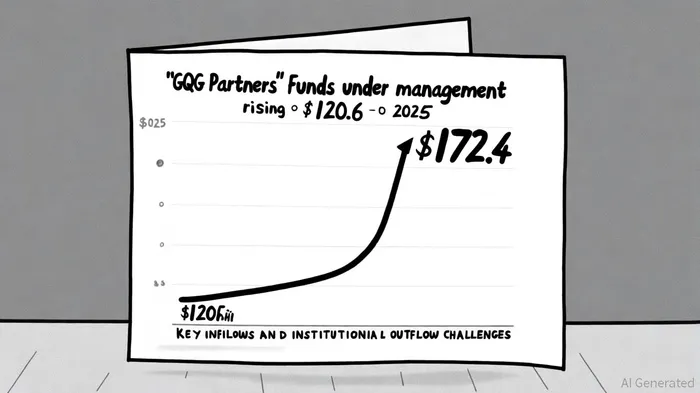







Comentarios
Aún no hay comentarios