
GPU Clusters and AI Infrastructure Investments Drive Market Growth in 2026
Recent developments in the global AI and data center infrastructure landscape have underscored the growing importance of GPU clusters and high-performance computing. As artificial intelligence applications expand into enterprise and sovereign use cases, demand for specialized hardware is surging. In the first half of 2026, major infrastructure transactions and private equity investments have focused on compute and data center expansion, particularly for AI workloads. Apollo-managed funds, for example, led a $3.5 billion capital solution for a GPU-intensive compute infrastructure project involving xAIXAI-- and Valor Equity Partners.
The demand for next-generation GPU clusters is also pushing data center operators to overhaul their power infrastructure. The average rack density has surged to 12 kW in 2024, with AI-specific clusters now requiring up to 120 kW of power per rack. This has driven significant capital investment in switchgear, UPS systems, and advanced cooling solutions. 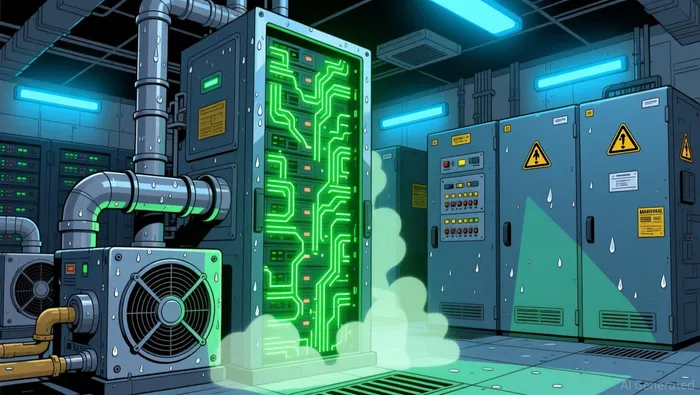 The offsite data center power infrastructure market is projected to reach US$79.76 billion by 2035.
Several firms are also adapting their infrastructure to meet the demands of autonomous AI systems. Quali recently expanded its Torque platform to include agentic control-plane capabilities, enabling more adaptive governance for GPU-intensive AI workloads. This evolution reflects a shift from static automation to systems that continuously adapt and reconfigure based on changing conditions.
Why Did This Happen?
The rise in AI-driven workloads has fundamentally altered data center design and capital allocation strategies. Traditional automation tools are proving insufficient for managing autonomous AI environments, where systems operate independently and require real-time governance. This has led to a shift in market priorities, with operators now seeking infrastructure that supports grid independence and sustainability. Lithium-ion-based UPS solutions, for instance, are gaining traction due to their higher power density and faster recharge capabilities compared to older lead-acid systems.
In addition, AI-specific hardware like NVIDIA’s DGX B200 chassis is pushing the boundaries of power requirements, necessitating new infrastructure solutions such as advanced switchgear and microgrid-ready systems. These physical constraints are a primary driver behind the market’s growth trajectory.
What Are Analysts Watching Next?
Market participants are closely monitoring the performance of AI chip manufacturers and infrastructure providers. NVIDIANVDA-- remains a key focus due to its leadership in GPU technology and its recent strategic moves, including the acquisition of Groq and a $100 billion investment in OpenAI. Analysts have noted that NVIDIA’s ability to generate massive cash flows and sustain its growth story will be critical in 2026. Despite current valuations appearing cheap relative to expected revenue targets, concerns remain about the company's spending patterns, particularly on investments that some view as speculative.
Meanwhile, the Chinese semiconductor industry is also gaining attention. Moore Threads and MetaX, two domestic GPU developers, have completed IPOs in 2025, signaling a potential shift in the global AI hardware landscape. These companies are positioning themselves as alternatives to Western competitors like NVIDIA, leveraging regulatory reforms and increased capital availability in mainland China.
What Are the Investment Implications?
The AI infrastructure sector is attracting both private equity and institutional capital. For instance, KKR and Oak Hill Capital recently invested $1.9 billion in European data center firm Global Technical Realty, advised by Simpson Thacher. Similarly, Digi Power X has announced the deployment of its ARMS 200 modular data center platform and the completion of its first NVIDIA B200 GPU cluster. The firm is now preparing to launch its GPU-as-a-Service platform, NeoCloudz, to serve AI startups and enterprises according to company announcements.
Investors are also tracking liquidity positions and debt management strategies. Digi Power X, for example, maintains a strong current ratio and is debt-free, giving it a competitive edge in the capital-intensive AI infrastructure space. ApolloAPO--, on the other hand, has taken a long-term approach, with its $3.5 billion capital solution for Valor and xAI emphasizing quarterly cash distributions and asset ownership.
How Is the Sector Adapting to AI's Growth?
The sector is undergoing a structural transformation to support the increased computational demands of AI. This includes not only hardware upgrades but also rethinking how power is delivered and managed. For example, TSMC has developed silicon photonics technology to address GPU overheating, while SK Hynix is producing high-bandwidth memory (HBM) that exceeds current market demand. These innovations are essential for maintaining performance as AI models grow in complexity and scale.
Moreover, the shift from traditional automation to agentic AI is prompting infrastructure providers to build systems capable of continuous decision-making. Quali’s Torque expansion is a case in point, offering governance tools that interpret workload intent and enforce compliance in real time. This aligns with the broader trend of AI systems becoming more autonomous and less reliant on human intervention.
What Lies Ahead for AI Infrastructure Markets?
The coming year is expected to bring continued investment in GPU clusters and next-generation data centers. Market forecasts predict that AI hardware spending will reach $1 trillion by 2030, with NVIDIA and other chipmakers positioned to benefit from sustained demand. However, this growth will depend on the stability of macroeconomic conditions and the ability of firms to manage capital efficiently according to market analysis.
At the same time, regulatory and environmental factors are influencing infrastructure planning. Green power solutions, such as SF6-free switchgear and high-efficiency transformers, are becoming standard in new builds. These systems are not only more sustainable but also better suited to handling the variable loads of modern AI workloads.
Overall, the AI infrastructure market is entering a new phase of development, driven by technological innovation, regulatory shifts, and growing global demand. As companies like NVIDIA, Apollo, and Digi Power X continue to shape the landscape, investors and analysts will remain focused on how these trends translate into long-term value and market leadership.





Comentarios
Aún no hay comentarios