
GoviEx Uranium's Muntanga Project and Its Strategic Path to Production: ESG Compliance as a Catalyst for Uranium Sector Re-entry and Investment Readiness
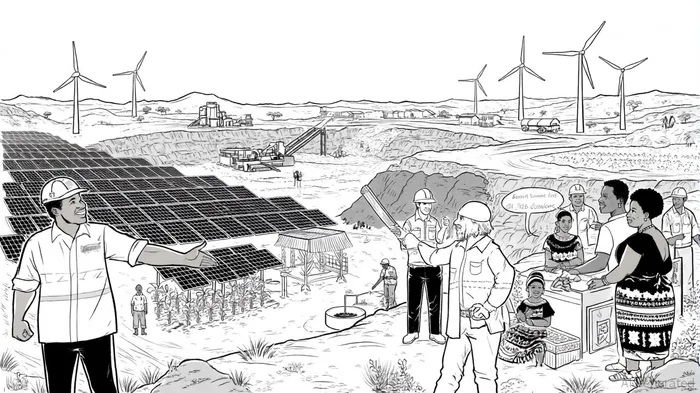
In an era where environmental, social, and governance (ESG) criteria are reshaping global investment landscapes, the uranium sector faces a dual challenge: addressing historical reputational risks while aligning with decarbonization goals. GoviEx Uranium's Muntanga Project in Zambia offers a compelling case study of how rigorous ESG integration can catalyze sector re-entry and unlock investment readiness. By aligning with international standards such as the International Finance Corporation (IFC) performance criteria and prioritizing community engagement, the project exemplifies a forward-looking approach to responsible mining in a resource-critical industry.
ESG as a Strategic Imperative
GoviEx's 2024 Sustainability Report underscores a deliberate shift toward ESG-driven operations, particularly for the Muntanga Project. The company has adopted renewable-energy infrastructure to reduce fossil fuel reliance and lower greenhouse gas emissions, a critical step in aligning with global decarbonization targets[1]. This strategy is not merely symbolic; it reflects a calculated effort to meet the expectations of stakeholders, including lending institutions and host communities, who increasingly demand transparency and accountability[2]. For instance, the project's stakeholder engagement plan has directly informed its Resettlement and Compensation Action Plan (RCAP), ensuring that social concerns are addressed proactively[3]. Such measures mitigate risks of operational delays and reputational damage, which have historically hindered uranium projects.
Third-Party Validation and IFC Alignment
A cornerstone of GoviEx's ESG strategy is its alignment with IFC standards, a globally recognized benchmark for sustainable development. The Muntanga Project's Feasibility Study, filed in March 2025, explicitly references adherence to IFC environmental and social performance standards[4]. This alignment is not incidental but strategic: IFC compliance is often a prerequisite for securing financing from multilateral institutions and private equity firms prioritizing ESG metrics[5]. The submission of the Environmental and Social Impact Assessment (ESIA) to Zambia's Environmental Management Agency (ZEMA) further validates this approach. While final approval is pending, the draft ESIA received no objections from ZEMA, signaling regulatory confidence in the project's compliance with both local and international norms[6].
Community-Centric Development and Long-Term Viability
GoviEx's ESG initiatives extend beyond regulatory compliance to tangible community benefits. In Zambia's Sikoongo Village and Dambilo community, the company has implemented water infrastructure projects and agricultural training programs focused on non-chemical fertilizers[7]. These efforts align with the project's socioeconomic development policy, which seeks to ensure that local populations derive direct benefits from mining activities. Such initiatives are critical in a sector where community opposition has often stalled projects. By fostering trust and demonstrating shared value, GoviEx enhances the Muntanga Project's social license to operate—a factor increasingly scrutinized by investors.
Financial Viability and ESG-Driven Investment Appeal
The Muntanga Project's financial metrics further reinforce its investment potential. The Feasibility Study projects an after-tax net present value (NPV8%) of USD 243 million and an internal rate of return (IRR) of 20.8%, figures that rival those of conventional uranium projects[8]. These returns are underpinned by the project's low technical risk profile, stemming from industry-standard processing methods and Zambia's favorable infrastructure and regulatory environment[9]. Crucially, ESG compliance amplifies this appeal. As noted by Daniel Major, GoviEx's CEO, the project's alignment with IFC standards and its proactive mitigation of climate-related risks position it as a “responsible” asset in a sector grappling with ESG scrutiny[10].
Conclusion: A Model for Sector Re-entry
GoviEx's Muntanga Project illustrates how ESG compliance can transform uranium mining from a high-risk, low-trust sector into an attractive investment opportunity. By integrating renewable energy, engaging stakeholders, and securing third-party validations, the company addresses historical criticisms while aligning with global sustainability goals. As the project advances toward construction—anticipated once financing is secured—the Muntanga Project may serve as a blueprint for responsible uranium development, demonstrating that ESG rigor and profitability are not mutually exclusive but complementary. For investors, this represents a rare convergence of ethical and financial value creation in a resource-critical industry.







Comentarios
Aún no hay comentarios