
Government Transparency and Cybersecurity Risks in U.S. Regulatory Bodies: The SEC’s Lost Gensler Texts and Systemic FOIA Compliance Flaws
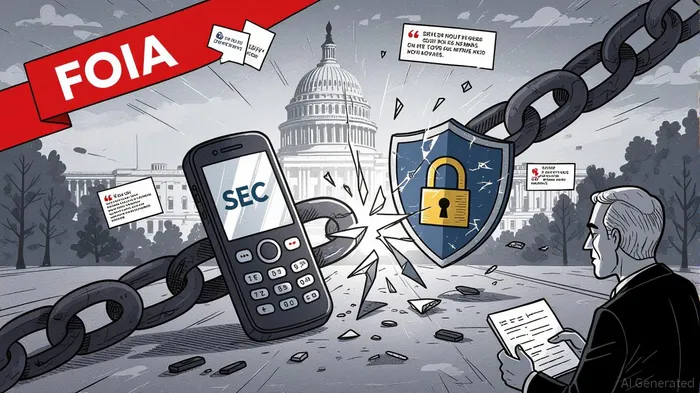
The U.S. Securities and Exchange Commission (SEC) has long positioned itself as a guardian of market integrity and investor protection. However, the recent loss of nearly a year of text messages from former SEC Chair Gary Gensler—spanning October 2022 to September 2023—has exposed critical vulnerabilities in its cybersecurity protocols and compliance with the Freedom of Information Act (FOIA). This incident, attributed to avoidable technical and procedural failures, underscores systemic risks to transparency and public trust in U.S. financial oversight.
A Technical and Procedural Failure
According to a special review by the SEC’s Office of Inspector General (OIG) (Report No. 587), Gensler’s government-issued phone was wiped in August 2023 after going inactive for 62 days, exceeding the agency’s 45-day device-wipe policy. A rushed attempt to restore the device instead triggered a factory reset, permanently deleting messages that may have included federal records related to regulatory actions, including crypto asset trading platform discussions and White House meetings [1]. The OIG concluded that the loss stemmed from poor documentation, inadequate inventory management of mobile devices, and insufficient system logging procedures [1].
This failure is particularly ironic given the SEC’s recent adoption of rules requiring public companies to disclose material cybersecurity incidents and risk management strategies [3]. The agency’s inability to safeguard its own data raises questions about its capacity to enforce such standards across the private sector.
FOIA Compliance and the Erosion of Public Trust
The lost texts could have been critical for responding to FOIA requests, which are a cornerstone of government transparency. Under FOIA, agencies must proactively preserve records that may be subject to public disclosure. The SEC’s mishap highlights a potential gap in its compliance with these obligations.
Exemption 4 of FOIA, which allows the withholding of confidential commercial information, relies on the government’s ability to protect sensitive data submitted in confidence [3]. If the SEC cannot ensure the integrity of its own records, it risks undermining the trust of entities that share information with the agency. For instance, companies disclosing cybersecurity risks under SEC mandates may now question whether the agency can safeguard their data from internal lapses, such as accidental deletion or mismanagement.
The National Archives and Records Administration (NARA) has been notified of the incident, but its role in overseeing FOIA compliance does not extend to direct intervention in agency-specific operational failures [4]. This lack of oversight further exacerbates concerns about accountability.
Reputational Risks and Investor Implications
The reputational fallout for the SEC is significant. As a key arbiter of financial market rules, the agency’s credibility hinges on its ability to enforce transparency and accountability. The loss of Gensler’s texts—potentially containing insights into regulatory decisions—could fuel perceptions of opacity, particularly in politically charged areas like ESG (Environmental, Social, and Governance) rulemaking [1]. Critics have already accused the SEC of overreach in its ESG mandates, arguing that such rules prioritize social agendas over investor protection [1].
For investors, the incident raises broader concerns about the reliability of regulatory frameworks. If the SEC cannot maintain basic cybersecurity hygiene, how can it be trusted to enforce complex disclosure requirements? This uncertainty may lead to increased scrutiny of SEC-mandated disclosures, potentially driving up compliance costs for public companies and dampening market confidence.
A Call for Systemic Reform
The SEC’s failure is not an isolated incident but a symptom of systemic issues in federal cybersecurity practices. Agencies must adopt robust mobile device management systems, enforce strict documentation protocols, and conduct regular audits to prevent similar lapses. Additionally, the SEC should proactively address FOIA compliance by implementing automated record-keeping solutions and training staff on the legal implications of data loss.
Conclusion
The loss of Gensler’s texts is a wake-up call for U.S. regulatory bodies. It exposes vulnerabilities in cybersecurity practices, FOIA compliance, and public trust—issues that transcend the SEC and reflect broader challenges in government transparency. For investors, the incident underscores the importance of monitoring regulatory credibility and the potential ripple effects on market stability. As the SEC navigates its 2025 priorities, its ability to rebuild trust will depend on tangible reforms that align its actions with its mandate to protect investors and maintain fair markets.
Source:
[1] Audit, Evaluation, and Other Reports, [https://www.sec.gov/office-inspector-general/reports-publications/audit-evaluation-other-reports]
[2] SEC Adopts Rules on Cybersecurity Risk Management, [https://www.sec.gov/newsroom/press-releases/2023-139]
[3] FOIA Update: Protecting Business Information, [https://www.justice.gov/archives/oip/blog/foia-update-protecting-business-information]
[4] Text, [https://www.govinfo.gov/content/pkg/CFR-2025-title15-vol1/html/CFR-2025-title15-vol1.htm]







Comentarios
Aún no hay comentarios