
Government Shutdowns and the Stock Market: A Historical Analysis of Resilience and Investor Behavior
The U.S. government shutdown has long been a political flashpoint, yet its impact on equities tells a story of resilience rather than collapse. Historical data reveals that markets, particularly the S&P 500, have consistently shrugged off the short-term noise of shutdowns, often posting gains in the weeks and months following resolution. For investors, understanding this pattern-and the behavioral shifts that accompany it-is critical to avoiding panic-driven decisions.
Market Resilience: A Historical Perspective
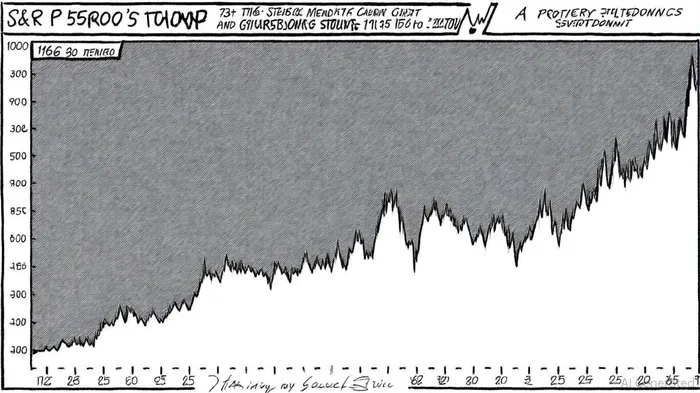
According to a Fool.com analysis, the S&P 500 has gained an average of 0.3% during government shutdowns since 1976, with positive performance in over half of the instances. Notably, the index surged 10.3% during the 35-day 2018–2019 shutdown and rose 3.1% during the 16-day 2013 shutdown, figures that underscore a key insight: shutdowns rarely disrupt long-term economic fundamentals. Most closures are short-lived, with the median duration just four days, and their economic effects are typically temporary, the Fool.com analysis finds.
The market's resilience stems from its ability to discount political uncertainty. As CNBC notes, investors recognize that shutdowns are often predictable, allowing them to adjust portfolios in advance. Furthermore, broader forces-such as Federal Reserve policy and corporate earnings-tend to overshadow the drama of political gridlock. For example, during the 2018–2019 shutdown, the S&P 500's gains were driven by strong corporate earnings and accommodative monetary policy, not the resolution of the government funding dispute, according to the Fool.com analysis.
Investor Behavior: Flight to Safety and Sector Rotation
When shutdowns occur, investors often shift to safe-haven assets. Data from Morgan Stanley indicates that U.S. Treasury yields typically decline by an average of 2.2 basis points during shutdowns, pushing bond prices higher. This "risk-off" behavior is amplified in prolonged closures, as seen in the 2025 shutdown, where the CBOE Volatility Index (VIX) spiked initially but stabilized as the crisis persisted, according to Fidelity Institutional.
Sector performance reveals nuanced patterns. Defense and government-contractor stocks, which rely heavily on federal spending, tend to underperform during shutdowns due to procurement freezes. During the 2018–2019 closure, defense stocks lagged the S&P 500 as contract delays disrupted operations, as reported by Morgan Stanley. Conversely, technology stocks, less tied to federal contracts, have shown remarkable resilience. In October 2025, the technology sector ETF (XLK) rose 0.98% amid the shutdown, reflecting sustained private-sector demand, per a YCharts blog.
Financials, however, face unique challenges. The financial sector ETF (XLF) fell 0.89% during the 2025 shutdown, mirroring historical trends where banks grapple with delayed regulatory approvals and reduced consumer spending, as the YCharts blog documents. Healthcare stocks, meanwhile, exhibit mixed results. While the sector outperformed in 2013, it underperformed in 2025 due to paused federal payments and operational disruptions, according to the YCharts blog.
Broader Economic Implications
Though shutdowns temporarily reduce GDP growth-by roughly 0.2 percentage points per week-their long-term economic impact is minimal, a position outlined by American Century. The 2025 shutdown, for instance, did not trigger global market turbulence, as international investors focused on domestic conditions rather than U.S. political stalemates. Small-cap stocks, often overlooked in shutdown analyses, have not shown consistent volatility compared to broader indices, suggesting that localized economic effects are limited, American Century notes.
Strategic Implications for Investors
For long-term investors, the takeaway is clear: market timing during shutdowns is fraught with risk. As Morgan Stanley and other advisors observe, investors are generally advised to avoid major portfolio adjustments based on short-term political events. Instead, maintaining a diversified portfolio and focusing on fundamentals-such as earnings growth and interest rate trends-remains the optimal strategy.
Opportunities may arise in sectors like defense and healthcare, which experience short-term dislocations during shutdowns. For example, defense stocks have occasionally outperformed the S&P 500 in post-shutdown recoveries, as seen in 1995 and 2013, a pattern highlighted by American Century. However, these opportunities require careful analysis rather than knee-jerk reactions.
Conclusion
History demonstrates that U.S. government shutdowns, while disruptive in the short term, rarely derail the broader market. The S&P 500's track record of recovery, coupled with investors' tendency to seek safety and adapt to uncertainty, reinforces the case for staying the course. As the 2025 shutdown illustrates, markets are more influenced by monetary policy and corporate performance than by political theatrics. For investors, patience and discipline remain the best tools in navigating these periodic storms.







Comentarios
Aún no hay comentarios