
The U.S. Government Shutdown and the Looming Data Void: Implications for Inflation and Fed Policy
The Data Void and the Fed's Reliance on Private-Sector Alternatives
The absence of official data has forced the Federal Reserve to pivot to private-sector sources, a strategy that introduces both opportunities and limitations. For instance, PriceStats, a web-scraping platform, reported a 2.66% annual inflation increase in September 2025, while Adobe's data indicated a 2.9% decline in online prices during the same period, as Investopedia reported. These conflicting signals highlight the fragmented nature of alternative metrics, which lack the comprehensiveness of government statistics. As Bloomberg noted, the Fed has also turned to state-level jobless claims and the Beige Book for anecdotal insights, but these tools cannot fully replicate the granularity of official employment reports, as Bloomberg reported.
The reliance on private data has significant implications for inflation expectations. According to a Reuters report, the Fed's dual mandate-stable prices and maximum employment-is now clouded by the absence of timely CPI and PCE data, which are critical for calibrating rate decisions, as Reuters reported. This uncertainty has led to internal debates within the Fed, with policymakers delaying decisions on rate cuts until the data void is resolved, as Bloomberg reported. For example, the December 2025 meeting faced heightened scrutiny due to the delayed October CPI report, creating a ripple effect across financial markets, as Investopedia noted.
Strategic Risks to Asset Allocation and Investor Behavior
The data void has also triggered a reevaluation of asset allocation strategies. Investors, historically conditioned to "buy the dip" during political crises, have shifted toward safe-haven assets like gold and Treasury Inflation-Protected Securities (TIPS), as Invesco reported. According to Morgan Stanley, gold prices surged by 8% in October 2025 as uncertainty over the shutdown's duration intensified, as Morgan Stanley reported. Similarly, TIPS markets faced re-pricing pressures due to delayed CPI data, with some analysts predicting a shift to 12-month CPI trends if the shutdown persists, as JPMorgan noted.
Equity markets, however, have shown resilience. The S&P 500 has averaged a 4.4% gain during past shutdowns, with sectors like defense and healthcare exhibiting mixed performance, as Morgan Stanley reported. For instance, defense stocks outperformed the broader index in the 2025 shutdown, driven by fiscal support and geopolitical risks, while healthcare lags reflected concerns over delayed subsidies, as Morgan Stanley reported. Investors are also diversifying across asset classes, with a notable shift toward non-U.S. equities and precious metals like silver and platinum as a hedge against dollar devaluation, as ML reported.
Central Bank Policy and the Long-Term Risks of Data Gaps
The Fed's reliance on private-sector data underscores a broader vulnerability in the U.S. economic infrastructure. As highlighted by the Peterson Institute for International Economics, private data sources struggle to capture service-sector inflation, which constitutes 64% of the CPI, as PIIE reported. This gap risks misaligned monetary policy, particularly if the Fed overreacts to incomplete information. For example, a premature rate cut based on skewed data could exacerbate inflationary pressures in the long run, as Investopedia noted.
Moreover, the shutdown's economic drag-estimated at 1.8–2.0 percentage points of GDP-has forced the Fed into a more cautious stance, as EY reported. With each week of closure shaving 0.1 percentage points off GDP growth, policymakers are now prioritizing contingency planning over aggressive rate adjustments, as EY reported. This hesitancy has created a policy vacuum, with markets pricing in a 60% probability of a 25-basis-point rate cut by year-end, according to CME FedWatch data, as NB reported.
Conclusion: Preparing for a New Era of Policy Uncertainty
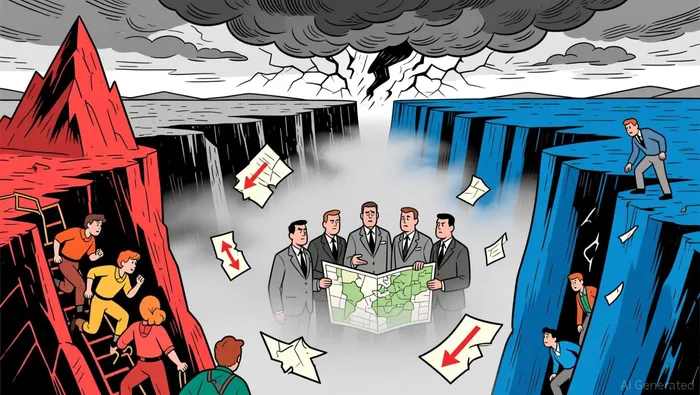
The 2025 government shutdown has exposed the fragility of data-dependent policymaking in a politically polarized environment. While private-sector alternatives offer temporary solutions, they cannot fully replace the reliability of official statistics. For investors, the lesson is clear: diversification, discipline, and a focus on safe-havens are critical in navigating the "data fog." For the Fed, the crisis underscores the need to invest in robust contingency frameworks to mitigate future disruptions.
As the shutdown enters its final stretch, the coming weeks will test the resilience of both markets and policymakers. The path forward will depend not only on resolving the political impasse but also on restoring trust in the data that underpins economic stability.







Comentarios
Aún no hay comentarios