
Government Shutdown and Its Impact on Crypto Markets: Systemic Risk and Safe-Haven Demand
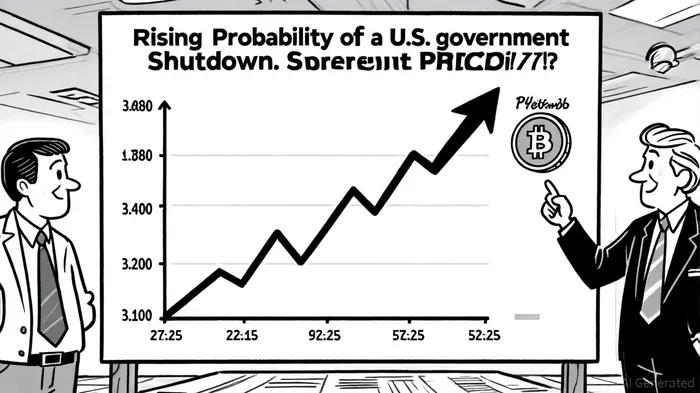
The U.S. government shutdown looms like a storm cloud over the cryptocurrency market, amplifying systemic risks and reshaping investor behavior. As of September 2025, EthereumETH-- (ETH) has plummeted below $4,000, and BitcoinBTC-- (BTC) has dipped under $112,000, driven by a 63% probability of a shutdown before October 1, per Polymarket data[1]. This volatility underscores a critical question: How do government shutdowns interact with crypto's dual role as both a speculative asset and a potential safe-haven?
Systemic Risk: Regulatory Stagnation and Market Spillovers
Government shutdowns exacerbate systemic risks by paralyzing regulatory agencies. The SEC and CFTC, pivotal in shaping crypto policy, would operate at limited capacity, delaying decisions like the approval of a Bitcoin ETF[3]. This regulatory vacuum creates uncertainty, as seen in 2023 when shutdown fears disrupted market expectations[4].
Moreover, cryptocurrencies are inherently interconnected with traditional markets. Studies reveal spillover effects between crypto and equity indices in Europe, the U.S., and China, meaning crypto's volatility can ripple into broader financial stability[1]. For instance, the 2025 downturn in ETHETH-- and BTCBTC-- coincided with risk-averse flows into stablecoins and cloud mining platforms like GoldenMining, which promise steady returns amid chaos[1]. However, stablecoins themselves are not immune—research highlights their vulnerability to bank runs, especially when reserves include risky assets like Bitcoin[5].
Safe-Haven Demand: A Mixed Bag
While crypto is often touted as a hedge against uncertainty, its safe-haven credentials remain contested. During the 2013 shutdown, Bitcoin surged 80% as investors fled traditional assets[2]. Yet, in 2018–2019, Bitcoin's price fluctuated without a clear upward trend, reflecting inconsistent demand[2].
Recent empirical studies reinforce this duality. A 2024 analysis using GARCH models found that Bitcoin and Ethereum only demonstrated weak safe-haven properties during extreme bearish markets, such as the 2020–2021 pandemic[1]. Meanwhile, TetherUSDT-- outperformed gold in portfolio performance during the same period, suggesting stablecoins may fill the safe-haven gap more effectively than native cryptos.
The current shutdown scenario mirrors these patterns. As investors seek refuge, platforms offering stable income—like cloud mining—have seen surges in adoption[1]. However, this demand is not a panacea. The decentralized nature of crypto means volatility persists, and systemic risks, such as contagion from stablecoin collapses, remain unaddressed[5].
Investor Implications: Navigating the Storm
For investors, the shutdown environment demands a nuanced strategy. While crypto's speculative allure persists, the focus should shift toward mitigating downside risks. Diversification into stablecoins or regulated income-generating platforms may offer temporary respite, but long-term exposure to volatile assets like ETH or BTC requires caution[1].
Regulatory clarity post-shutdown will be critical. A resumption of SEC and CFTC operations could either stabilize markets with clearer guidelines or deepen uncertainty if policy delays persist[3]. Investors should monitor Polymarket's shutdown probability and CPI/jobs report resumption dates, as these will shape macroeconomic sentiment[4].
Conclusion
The interplay between government shutdowns and crypto markets is a study in contrasts. Systemic risks rise as regulatory paralysis amplifies uncertainty, while safe-haven demand flickers inconsistently. For now, crypto remains a double-edged sword—offering both refuge and peril. Investors must weigh these dynamics carefully, balancing short-term hedges with long-term resilience.







Comentarios
Aún no hay comentarios