
GoPro's 360 Video Gambit: A Disruptive Force in the VR/AR Ecosystem
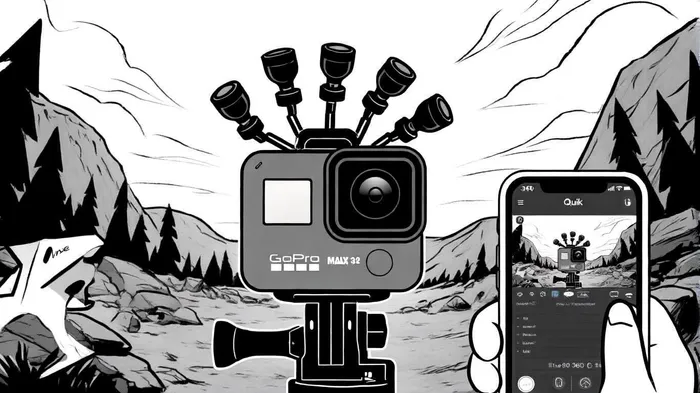
The VR/AR media ecosystem is on the cusp of a seismic shift, driven by advancements in 360-degree content creation and AI-powered tools. At the forefront of this transformation is GoProGPRO--, a company long synonymous with action cameras, which is now redefining its role as a disruptor in immersive media. With the launch of the MAX2 360 camera and a suite of software innovations, GoPro is positioning itself to capitalize on a market projected to surpass $85 billion by 2033[1]. This strategic pivot—from action cameras to immersive storytelling—could cement GoPro's dominance in a sector where hardware and software convergence is key.
Hardware Innovation: The MAX2 and Beyond
GoPro's MAX2 360 camera represents a leap forward in both technical specifications and user accessibility. Offering True 8K resolution, 10-bit color depth, and GP-Log encoding, the MAX2 captures over 1 billion colors, outpacing competitors by 21% in resolution[2]. Its six-microphone array, coupled with future 360 ambisonic audio support, ensures spatial audio fidelity critical for VR/AR applications[2]. These features, combined with in-camera POV and selfie modes, eliminate the need for post-production editing—a barrier that has historically limited 360 content adoption.
The camera's durability and portability further differentiate it in a market where ruggedness is paramount for creators in extreme environments. Priced at $499.99, the MAX2 is a strategic middle ground between consumer affordability and professional-grade performance, a sweet spot that could attract both enthusiasts and enterprise clients[2].
Software Ecosystem: Bridging Creativity and Accessibility
GoPro's software suite is equally transformative. The ReFrame plugin for DaVinci Resolve democratizes professional editing, while the Quik app's AI-powered object tracking and motion-based editing streamline workflows for novices[2]. Cloud-based editing capabilities address storage and processing bottlenecks, enabling real-time collaboration—a critical feature for virtual production teams.
The company's recent integration of Apple Projected Media Profile (APMP) support in GoPro Player for macOS ensures compatibility with the Apple Vision Pro headset, aligning with Apple's growing influence in the AR/VR space[2]. This move not only future-proofs GoPro's content for next-gen devices but also taps into Apple's ecosystem of creators and developers.
Strategic Positioning in a Competitive Landscape
While Meta, Sony, and emerging startups like Varjo dominate the VR/AR hardware market, GoPro's focus on 360 video content creation fills a niche. According to a report by Platform Executive, the immersive media market is expanding rapidly, driven by gaming, enterprise training, and virtual social experiences[1]. GoPro's recent Emmy® Award for 360 technology underscores its leadership in this domain[3], a credential that could sway professional clients and studios.
The company's AI-driven auto-editing features also counter the threat posed by smartphone manufacturers, who are increasingly integrating 360 and VR capabilities into their devices. By automating complex tasks like stitching and stabilization, GoPro reduces the technical barrier to entry, making immersive content creation accessible to a broader audience[2].
Financial and Market Implications
GoPro's shift toward a hardware-software ecosystem is already paying dividends. The company generated 25% of its total revenue from subscription services in 2025, reflecting a strategic pivot toward recurring revenue streams[4]. This model, combined with its expansion into high-growth markets like India and Southeast Asia, positions GoPro to tap into the $104 billion creator economy[4].
However, challenges remain. The VR/AR market is highly competitive, with Meta's Quest 3 and Apple Vision Pro setting new benchmarks for hardware integration. GoPro's success will depend on its ability to maintain innovation cycles and forge partnerships with content platforms and studios.
Conclusion: A High-Stakes Bet on Immersive Storytelling
GoPro's foray into 360 video content creation is more than a product launch—it's a calculated bet on the future of visual storytelling. By combining cutting-edge hardware with AI-driven software, the company is addressing the pain points of both amateur and professional creators. As the VR/AR market accelerates, GoPro's ecosystem approach could disrupt traditional players, provided it continues to innovate at the same pace. For investors, the MAX2 and its accompanying tools represent not just a product line, but a gateway into a $382.87 billion VR market by 2033[1].





Comentarios
Aún no hay comentarios