
Google's Universal Commerce Protocol: Betting on the Agentic Commerce S-Curve
The core bet GoogleGOOGL-- is making with its Universal Commerce Protocol is not just on a new feature, but on a fundamental technological S-curve. It's positioning itself to own the infrastructure layer for what analysts call "agentic commerce"-a paradigm where AI agents, not human users, drive the entire shopping journey. This isn't an incremental upgrade to e-commerce; it's a rethinking of the customer flow from the ground up.
The market opportunity is staggering. Projections suggest agentic commerce could generate up to $3 trillion to $5 trillion in global B2C retail revenue by 2030. This represents a potential market expansion of historic proportions, moving faster than past digital revolutions because agents can instantly traverse the same online paths humans use. The shift is from a user-initiated search model to an intent-driven, agent-executed flow. Instead of you typing a query, an AI agent anticipates your need, navigates options, negotiates deals, and executes the purchase-all in alignment with your preferences but acting independently.
Google's new protocol aims to standardize this complex, multi-step process. By creating an open, unified system, it acts as the foundational "rail" for cross-platform agent interactions. The goal is to eliminate the current friction where each retailer or platform builds its own proprietary agent connections. As Google's commerce lead noted, it's very important to have a standardized way so we can scale these things. The Universal Commerce Protocol, developed with major retailers like Shopify and Walmart, is designed to let agents work seamlessly across discovery, buying, and post-purchase support without requiring unique integrations for each retailer.
This move is a direct strategic play to secure Google's centrality in the next commerce paradigm. If agentic commerce accelerates as expected, the company that provides the essential, open protocol for agent-to-retailer interaction will be the indispensable infrastructure layer. Google is betting that by setting the standard now, it will capture the exponential growth of this new S-curve.
Google's Infrastructure Bet: Securing the Center of the Ecosystem
Google's strategy is to leverage its existing dominance as a digital matchmaker and embed itself as the indispensable platform for the agentic commerce S-curve. This isn't about building a new search engine; it's about controlling the critical data and transaction flow between AI agents and the physical world of retail. The company is stitching its Universal Commerce Protocol directly into its core commerce infrastructure, creating a seamless, closed loop.
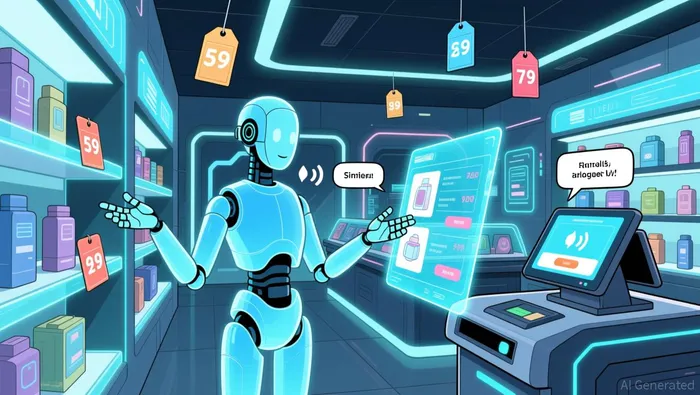
The most direct integration is with Google Pay and the Google Wallet. The protocol is designed to let users check out directly from AI search results, using saved payment and shipping details. This moves the entire transaction-from intent discovery to final purchase-within Google's ecosystem. By standardizing this flow, Google aims to capture the valuable transaction data and fees that typically flow to other platforms, effectively making itself the central nervous system for agent-driven commerce.
To pre-empt competitors and lock in the retail base, Google is building deep partnerships with major players. The protocol was announced with retailers like Target and Walmart, and expanded partnerships are already in motion. The Home Depot is integrating Google Cloud's AI to power its "Magic Apron" assistant, while Kroger is deploying Google's Gemini Enterprise for Customer Experience to create a new personal shopping assistant. These aren't just technology deals; they are strategic embeds that aim to have Google's AI tools become the default interface for these retailers' customers. This pre-emptive embedding ensures Google's protocol is the first choice when a retailer's own AI agent needs to execute a purchase.
Viewed through a historical lens, this is Google's classic playbook extended to a new paradigm. The company has long acted as the matchmaker for the web, connecting users to information and services. Now, it is extending that role to connect AI agents to retailers. By setting the open standard for agent-to-retailer interaction, Google positions itself to control the critical data layer-the user's intent, the agent's recommendations, and the transaction itself. The goal is to become the essential infrastructure layer, much like the web browser or the mobile operating system, for the next phase of commerce.
Adoption Drivers and Financial Implications
The success of Google's Universal Commerce Protocol hinges on a critical adoption hinge: retailers' willingness to standardize. The data shows a strong tailwind. A recent survey found that 89% of companies are either actively using AI or running pilot programs, and a significant portion of these are planning increased investment. Specifically, over 60% of retailers plan to increase their AI infrastructure investment in the next 18 months. This massive, pre-existing push for AI creates fertile ground for a protocol that promises to streamline agent integration. Google's partnerships with major retailers like Target and Walmart are a direct bet on this momentum, aiming to lock in the early-adopter base before the standard becomes entrenched.
A major catalyst for rapid adoption is the planned integration of the Universal Commerce Protocol into Google's AI Mode in Search. This move could capture a significant share of the explosive AI-driven traffic already flowing to seller sites. Last year's holiday season provided a stark preview: AI shopping became mainstream, with a notable surge in AI-driven traffic to retailer sites. The protocol's ability to facilitate direct checkout from these AI search results would convert that discovery traffic into measurable transactions, giving Google a direct cut and reinforcing the value of its infrastructure.
Yet this aggressive expansion faces a structural headwind within Google's own core business. The company's dominant advertising revenue is under pressure from the very AI tools it is deploying. AI Overviews, which now appear in 13% of global searches, are cutting into organic click-through rates. Studies show they can reduce CTR for top-ranking pages by 34.5%. This creates a tension: Google is building the AI infrastructure that drives commerce, but that same infrastructure is currently cannibalizing the traditional search ads that fund its empire. The Universal Commerce Protocol is a long-term play to offset this by capturing transaction fees and data, but the near-term financial impact will be a balancing act between these competing forces.
Catalysts, Risks, and What to Watch
The path for Google's Universal Commerce Protocol is now set with clear milestones and significant risks. The near-term catalysts are concrete and measurable. First, watch for the rollout of UCP-enabled direct checkout in AI Mode in Search. This integration is the critical test of whether Google can convert its massive AI-driven discovery traffic into direct transactions, capturing both the fee and the user data. Second, monitor the number of major retailers adopting the standard. Early partnerships with Shopify, Target, and Walmart are promising, but the protocol's value hinges on network effects. The broader the adoption, the more indispensable it becomes for any AI agent trying to buy.
The paramount risk is fragmentation. The agentic commerce standard is not a Google monopoly. OpenAI and Stripe have already launched their own Agentic Commerce Protocol, which is open-source and gaining traction with over a million Shopify merchants. This creates a direct competitor for the same infrastructure layer. If retailers choose Stripe's protocol for its simplicity or OpenAI's for its user base, Google's UCP could become a niche player, unable to capture the critical network effects needed for dominance. The battle for the standard is now a race for early adopters.
Ultimately, the thesis depends on a new monetization model. Google's current ad-driven engine is under pressure from the AI tools it's deploying. The Universal Commerce Protocol represents a potential paradigm shift in revenue: moving from ad clicks to transaction fees or premium services for the infrastructure layer. The real test will be whether Google can monetize this new S-curve without cannibalizing its core business. The early signs are there-a protocol designed for scale, partnerships with major retailers, and a direct path to checkout. But the company must now execute on the rollout and fend off competing standards to turn this infrastructure bet into a durable profit stream.





Comentarios
Aún no hay comentarios