
Google's Quantum Leap: Five Years to Breakout or Hype?
Generado por agente de IAHarrison Brooks
martes, 25 de marzo de 2025, 1:51 pm ET2 min de lectura
GOOGL--
In the ever-evolving landscape of technology, few fields have captured the imagination and investment as quantum computingQUBT--. Google's quantum exec, Hartmut Neven, has boldly predicted that the "real breakout" in quantum computing is just five years away. This claim, while ambitious, is backed by significant technological advancements and milestones that have been achieved in recent years. However, the path to a quantum future is fraught with challenges and ethical considerations that cannot be overlooked.
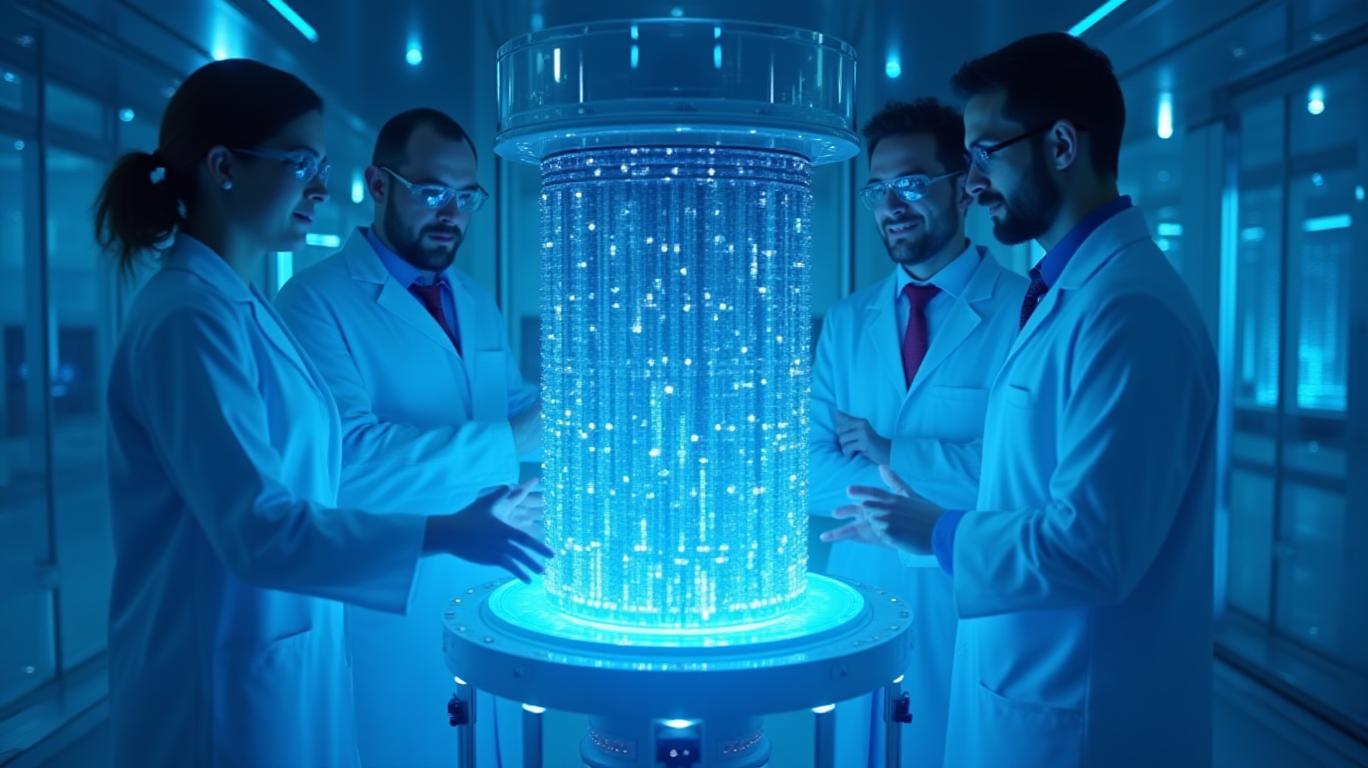
The current state of quantum computing, as detailed in recent breakthroughs, shows significant progress towards the projections made by Google's quantum exec. One of the key areas of progress is the development of the Willow chip, which has achieved a major breakthrough in quantum error correction. The Willow chip can reduce errors exponentially as it scales up, achieving a breakthrough in quantum error correction that the field has pursued for almost 30 years. This is a significant step towards building a commercially relevant quantum computer. As stated by GoogleGOOGL--, "Willow can reduce errors exponentially as we scale up using more qubits. This cracks a key challenge in quantum error correction that the field has pursued for almost 30 years."
Another key area of progress is the performance of the Willow chip in benchmark computations. The Willow chip performed a standard benchmark computation in under five minutes that would take one of today’s fastest supercomputers 10 septillion (that is, 1025) years. This demonstrates the potential of quantum computing to solve complex problems beyond the reach of classical computers. As mentioned, "Willow performed a benchmark computation in under five minutes that would take one of today’s fastest supercomputers 10 septillion (that is, 1025) years — a number that vastly exceeds the age of the Universe."
However, there are still challenges to overcome. For example, achieving a low error rate will require each logical qubit to be made of around 1,000 physical qubits, which is a significant overhead. Further improvements in error-correction techniques could bring that overhead down, perhaps as low as 200 qubits. As stated by Google, "Achieving such a low error rate will require each logical qubit to be made of around 1,000 physical qubits, the company estimates — although further improvements in error-correction techniques could bring that overhead down, perhaps as low as 200 qubits, Newman says."
The ethical implications of quantum computing are also a cause for concern. As with any disruptive technology, there is a risk that the benefits will be concentrated in the hands of a few powerful corporations, while the broader societal impacts are not fully considered. For example, the development of quantum computing could lead to significant job displacement in industries that rely on classical computing. Additionally, the potential for quantum computing to be used for malicious purposes, such as breaking encryption, is a real and present danger.
In conclusion, while the progress made in quantum computing is undeniable, the path to a quantum future is fraught with challenges and ethical considerations. It is essential that policymakers, corporations, and society as a whole work together to ensure that the benefits of quantum computing are shared equitably and that the risks are mitigated. Only then can we truly harness the power of quantum computing to benefit society as a whole.
QUBT--
In the ever-evolving landscape of technology, few fields have captured the imagination and investment as quantum computingQUBT--. Google's quantum exec, Hartmut Neven, has boldly predicted that the "real breakout" in quantum computing is just five years away. This claim, while ambitious, is backed by significant technological advancements and milestones that have been achieved in recent years. However, the path to a quantum future is fraught with challenges and ethical considerations that cannot be overlooked.
The current state of quantum computing, as detailed in recent breakthroughs, shows significant progress towards the projections made by Google's quantum exec. One of the key areas of progress is the development of the Willow chip, which has achieved a major breakthrough in quantum error correction. The Willow chip can reduce errors exponentially as it scales up, achieving a breakthrough in quantum error correction that the field has pursued for almost 30 years. This is a significant step towards building a commercially relevant quantum computer. As stated by GoogleGOOGL--, "Willow can reduce errors exponentially as we scale up using more qubits. This cracks a key challenge in quantum error correction that the field has pursued for almost 30 years."
Another key area of progress is the performance of the Willow chip in benchmark computations. The Willow chip performed a standard benchmark computation in under five minutes that would take one of today’s fastest supercomputers 10 septillion (that is, 1025) years. This demonstrates the potential of quantum computing to solve complex problems beyond the reach of classical computers. As mentioned, "Willow performed a benchmark computation in under five minutes that would take one of today’s fastest supercomputers 10 septillion (that is, 1025) years — a number that vastly exceeds the age of the Universe."
However, there are still challenges to overcome. For example, achieving a low error rate will require each logical qubit to be made of around 1,000 physical qubits, which is a significant overhead. Further improvements in error-correction techniques could bring that overhead down, perhaps as low as 200 qubits. As stated by Google, "Achieving such a low error rate will require each logical qubit to be made of around 1,000 physical qubits, the company estimates — although further improvements in error-correction techniques could bring that overhead down, perhaps as low as 200 qubits, Newman says."
The ethical implications of quantum computing are also a cause for concern. As with any disruptive technology, there is a risk that the benefits will be concentrated in the hands of a few powerful corporations, while the broader societal impacts are not fully considered. For example, the development of quantum computing could lead to significant job displacement in industries that rely on classical computing. Additionally, the potential for quantum computing to be used for malicious purposes, such as breaking encryption, is a real and present danger.
In conclusion, while the progress made in quantum computing is undeniable, the path to a quantum future is fraught with challenges and ethical considerations. It is essential that policymakers, corporations, and society as a whole work together to ensure that the benefits of quantum computing are shared equitably and that the risks are mitigated. Only then can we truly harness the power of quantum computing to benefit society as a whole.

Divulgación editorial y transparencia de la IA: Ainvest News utiliza tecnología avanzada de Modelos de Lenguaje Largo (LLM) para sintetizar y analizar datos de mercado en tiempo real. Para garantizar los más altos estándares de integridad, cada artículo se somete a un riguroso proceso de verificación con participación humana.
Mientras la IA asiste en el procesamiento de datos y la redacción inicial, un miembro editorial profesional de Ainvest revisa, verifica y aprueba de forma independiente todo el contenido para garantizar su precisión y cumplimiento con los estándares editoriales de Ainvest Fintech Inc. Esta supervisión humana está diseñada para mitigar las alucinaciones de la IA y garantizar el contexto financiero.
Advertencia sobre inversiones: Este contenido se proporciona únicamente con fines informativos y no constituye asesoramiento profesional de inversión, legal o financiero. Los mercados conllevan riesgos inherentes. Se recomienda a los usuarios que realicen una investigación independiente o consulten a un asesor financiero certificado antes de tomar cualquier decisión. Ainvest Fintech Inc. se exime de toda responsabilidad por las acciones tomadas con base en esta información. ¿Encontró un error? Reportar un problema




Comentarios
Aún no hay comentarios