
Google's EU Regulatory Adjustments: Balancing Compliance Costs and Investor Confidence in Tech Stock Valuations
In 2025, Alphabet Inc. (Google) finds itself at the center of a regulatory maelstrom in the European Union, where its compliance with the Digital Markets Act (DMA) and AI Act has become a litmus test for how tech giants navigate increasingly stringent global oversight. The European Commission's designation of GoogleGOOGL-- as a "gatekeeper" under the DMA has triggered investigations into its dominance in search, app stores, and advertising, with potential fines reaching 10% of its global turnover [1]. Meanwhile, the AI Act's scrutiny of high-risk systems like AI Overviews underscores the EU's determination to rein in algorithmic power. For investors, the question is no longer whether regulatory risk exists but how proactive compliance can mitigate financial exposure and preserve long-term confidence in tech valuations.
Regulatory Pressures and Financial Exposure
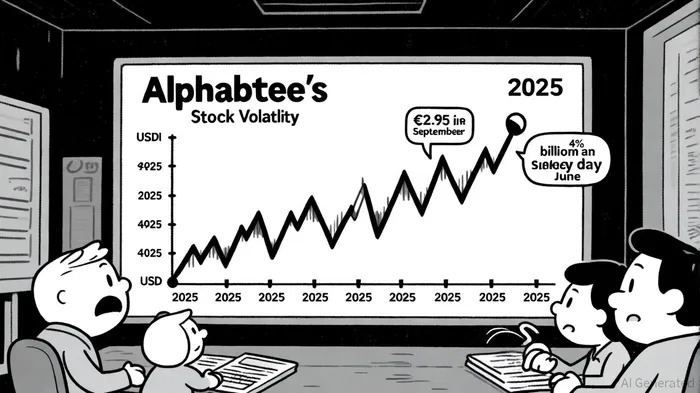
The EU's antitrust enforcement has already delivered a blow: a €2.95 billion fine for anti-competitive practices in the adtech market, which Google plans to appeal [2]. This penalty, coupled with ongoing DMA investigations, has introduced significant uncertainty. According to a report by CNBC, the fine was recorded as an accrual in Alphabet's Q3 2025 financials, though the company's leadership argues it will harm European businesses by stifling monetization opportunities [2]. The financial stakes are immense, with non-compliance risks under the DMA potentially exposing Alphabet to fines exceeding $12.5 billion annually, as highlighted by the Center for Competitive Innovation [3].
Yet, Alphabet's response has been twofold: contesting penalties while investing in compliance infrastructure. In June 2025, the company announced a $500 million compliance overhaul, including a board-level Trust and Compliance Council and expanded in-house teams [4]. This proactive approach aligns with broader trends in RegTech, where firms leverage technology to streamline compliance and reduce operational costs. As noted by Deloitte, such measures not only mitigate legal risks but also enhance investor trust by demonstrating a commitment to responsible governance [5].
Investor Sentiment and Stock Valuation Dynamics
The immediate impact on investor confidence has been mixed. In June 2025, Alphabet's stock plummeted nearly 4% in a single day amid fears of EU antitrust actions, closing at $166.64 [6]. However, analysts remain cautiously optimistic. Parameter.io reports that despite short-term volatility, Alphabet's AI-driven growth and robust financials-bolstered by a $70 billion share buyback program-have led some firms to raise price targets to $280 per share [7]. This duality reflects the broader tension between regulatory headwinds and Alphabet's strategic investments in cloud and AI, which remain cornerstones of its valuation.
The EU's regulatory "thicket"-over 100 internet laws since 2019-has also created a fragmented landscape. Debbie Weinstein, Google's president for Europe, Middle East, and Africa, has publicly called for harmonization, arguing that conflicting rules delay product launches and stifle innovation [8]. For instance, AI Overviews, a flagship feature, was delayed in Europe due to compliance uncertainties [8]. Such delays highlight how regulatory complexity can indirectly affect revenue streams, even as proactive compliance efforts aim to mitigate direct penalties.
Proactive Compliance as a Strategic Imperative
The data underscores a clear correlation between proactive compliance and investor confidence. Salesforce Europe notes that firms adopting RegTech solutions see reduced operational costs and improved real-time risk management, factors that enhance market stability [9]. Alphabet's $500 million compliance overhaul, while costly, signals a commitment to aligning with EU expectations-a move that could prevent future fines and reputational damage. Similarly, Google's signing of the EU Code of Practice for AI Act compliance demonstrates its willingness to engage with regulators, even as internal executives express concerns about innovation constraints [10].
However, the long-term success of these measures depends on their ability to balance compliance with competitiveness. The EU's regulatory approach, while ambitious, risks creating a "brain drain" as startups and smaller firms relocate to markets with less stringent rules [11]. For Alphabet, the challenge is to navigate this environment without sacrificing its technological edge.
Conclusion: Navigating the Regulatory Tightrope
Alphabet's experience in 2025 illustrates the dual-edged nature of EU regulation: while compliance costs and penalties pose immediate risks, proactive measures can stabilize investor sentiment and unlock long-term value. The €2.95 billion fine and stock volatility are symptoms of a broader shift in global tech governance, where regulatory scrutiny is no longer a peripheral concern but a core factor in valuation models. For investors, the key takeaway is that companies like Alphabet must continue to innovate not just in technology but in governance, ensuring that compliance becomes a strategic asset rather than a financial burden.





Comentarios
Aún no hay comentarios