
Google's EU Antitrust Scrutiny and AI Market Implications
The European Union's latest antitrust investigation into GoogleGOOGL-- represents a pivotal moment for the tech giant and the broader artificial intelligence (AI) sector. At stake is not only the company's compliance with EU competition rules but also the future of AI innovation, content licensing models, and the valuation dynamics of Big Tech. As regulators probe whether Google has unfairly leveraged online content to train its AI models, the case underscores the growing tension between regulatory oversight and technological progress.
Regulatory Risk and the AI Ecosystem
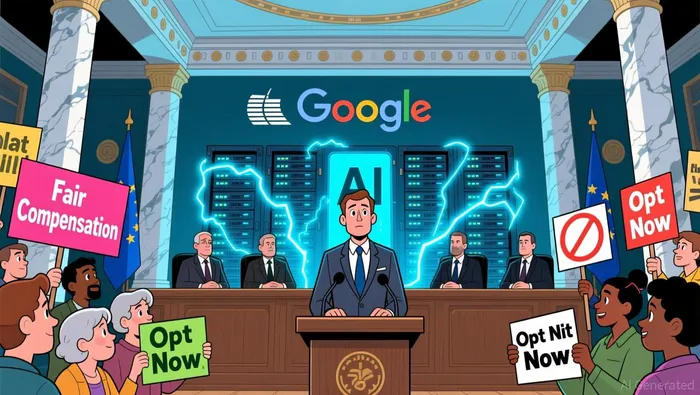
The EU's investigation centers on whether Google has imposed "unfair terms" on publishers and content creators by using their material to train AI systems like Gemini and AI Overviews without compensation or the option to opt out. This mirrors broader concerns about how AI firms access and monetize data, a critical input for generative models. If the European Commission finds Google in violation of competition laws, the company could face fines of up to 10% of its global revenue-potentially exceeding the $35 billion given Alphabet's 2024 earnings. Such penalties would not only strain Google's profitability but also send a signal to other AI developers about the risks of unregulated data aggregation.
 Historically, antitrust enforcement has had nuanced effects on innovation. For example, the Microsoft antitrust case in the early 2000s reshaped R&D incentives and market entry dynamics, though its long-term impact on innovation remains debated. In contrast, Google's recent antitrust ruling in September 2025-averted breakup of its Chrome and Android ecosystems-boosted its stock by 9.14% and added $234 billion in market value. This suggests that regulatory outcomes can be double-edged: while punitive measures risk stifling innovation, favorable rulings can reinforce market dominance.
Strategic Shifts in Content Licensing and Platform Governance
The EU probe is likely to accelerate strategic adaptations in how AI firms source and license training data. One emerging trend is the formation of licensing pools, inspired by historical models like Performing Rights Organizations (PROs) in the music industry. These pools aim to reduce transaction costs and ensure fair compensation for content creators while avoiding antitrust pitfalls such as price-fixing. However, their success hinges on balancing pro-competitive benefits with regulatory scrutiny.
Another key strategy is the rise of acquihire transactions, where AI firms acquire talent and intellectual property without full corporate control to sidestep antitrust constraints. For instance, Google's hiring of key R&D staff from failed acquisitions like OpenAI's Windsurf deal illustrates how firms navigate regulatory hurdles while securing critical resources. Such tactics, however, are under increasing scrutiny by U.S. and EU regulators, who fear they may be used to circumvent traditional antitrust frameworks.
Valuation Implications and Market Dynamics
The EU's focus on AI-related antitrust enforcement could reshape tech valuations by altering the cost structure of data acquisition and innovation. For Google, the potential requirement to share search data with competitors-mandated in the September 2025 ruling-represents a minor setback compared to the risk of structural penalties. Yet, the company's ability to retain key assets like Android and Chrome has bolstered investor confidence, highlighting the importance of regulatory outcomes in shaping market perceptions.
Historical precedents suggest that antitrust actions can introduce short-term volatility but also prompt long-term strategic realignments. Microsoft's stock, for example, fell 65% during its 1999–2001 antitrust trial but eventually recovered as the company adapted to regulatory constraints. Similarly, Google's AI-driven revenue growth-14% in Q2 2025-demonstrates that innovation can persist even under regulatory pressure, provided firms adjust their business models.
The Path Forward: Balancing Regulation and Innovation
The EU's probe into Google's AI practices reflects a broader global trend: regulators are increasingly prioritizing fair competition in AI, even as they grapple with the sector's rapid evolution. For investors, the key question is whether antitrust enforcement will foster a more equitable AI ecosystem or create compliance burdens that stifle progress.
Google's response-emphasizing collaboration with content creators and innovation-suggests a recognition of the need to align with regulatory expectations. However, the company's ability to maintain its competitive edge will depend on its capacity to navigate these challenges without compromising the data access that fuels its AI models. For the sector as a whole, the case underscores the importance of proactive governance strategies, such as transparent licensing frameworks and algorithmic accountability measures, to mitigate regulatory risks while sustaining innovation.
In conclusion, the EU's antitrust scrutiny of Google is a microcosm of the larger debate over the role of regulation in AI. While the immediate financial and operational risks are significant, the long-term implications will hinge on how effectively firms and regulators balance market competition with the imperatives of technological advancement.





Comentarios
Aún no hay comentarios