
Google and Eneco: Pioneering the Future of Renewable Energy and Digital Infrastructure Convergence
The convergence of renewable energy and digital infrastructure is reshaping global markets, and Google's strategic partnerships with Eneco and other industry leaders are emerging as a blueprint for sustainable growth. As artificial intelligence (AI) and data center demand surge, companies that align energy consumption with decarbonization goals are capturing significant market share. Google's collaborations with Eneco, Intersect Power, and TPG Rise Climate exemplify this trend, offering investors a compelling case study in innovation, scalability, and long-term value creation.
Eneco: A Cornerstone of Google's European Renewable Energy Strategy
Google's partnership with Eneco, a Dutch energy provider, has evolved into a cornerstone of its European sustainability strategy. In 2025, the two companies expanded their collaboration into Belgium, securing a Power Purchase Agreement (PPA) to supply Google's data centers with wind energy from three new wind farms totaling 54 MW, according to an Eneco news release (Eneco expands into Belgium). This builds on a decade-long relationship in the Netherlands, where Eneco's Fryslân and Kroningswind wind farms provide 0.5 TWh of renewable energy annually to Google's Eemshaven data center. By 2024, this arrangement will power 80% of the facility's energy needs, according to Eneco's Eemshaven update (Eemshaven update).
The strategic value of this partnership lies in its alignment with regional energy markets. Eneco's expertise in renewable energy procurement and grid integration complements Google's need for stable, low-cost power. For investors, this collaboration highlights the growing importance of localized energy solutions in Europe, where regulatory pressures and grid constraints are driving demand for corporate PPAs. According to a BloombergNEF report, corporate PPAs in Europe grew by 30% in 2024, with tech firms accounting for over 40% of new agreements (a BloombergNEF report).
Co-Location Strategy: Redefining Data Center Development
Beyond Europe, Google's partnership with Intersect Power and TPG Rise Climate is redefining how data centers are developed in the U.S. The trio's "power-first" model co-locates gigawatts of data center capacity with clean energy generation, reducing reliance on existing transmission infrastructure and accelerating deployment timelines. The first phase of this initiative, expected to be operational by 2026, will synchronize data center load growth with new solar, wind, and battery storage projects, minimizing grid strain and enhancing reliability.
This approach addresses a critical challenge: data centers are projected to consume 8.5% of U.S. power generation by 2027, according to an Ares fast take (Ares fast take). By co-locating energy generation and computing infrastructure, GoogleGOOGL-- not only secures predictable energy costs but also supports rural economic development. For example, the industrial parks envisioned under this partnership could create jobs and infrastructure in underutilized regions, aligning corporate sustainability goals with community benefits, as described in a Google blog post (Google blog post).
Financial Commitments and Market Implications
Google's $20 billion investment in renewable energy and data center infrastructure underscores its commitment to this dual strategy, according to a USA SolarCell article (USA SolarCell article). This funding supports projects like the Eneco PPAs, the Intersect-TPG collaboration, and modernization of hydropower facilities. Such investments are not merely environmental but also economic: they hedge against energy price volatility and position Google to lead in AI-driven markets, where energy efficiency is a competitive differentiator.
For investors, the implications are clear. Google's partnerships demonstrate how tech firms can leverage renewable energy to scale operations sustainably. According to Google's 2025 Environmental Report, the company achieved 66% carbon-free energy globally in 2024, up from 50% in 2023 (Google's 2025 Environmental Report). This trajectory suggests that its 2030 target is achievable-and that its energy strategy will continue to attract capital.
A Model for the Future
Google's approach with Eneco and its U.S. partners offers a replicable model for the tech and energy sectors. By prioritizing co-location, long-term PPAs, and rural development, the company is addressing both the supply and demand sides of the energy equation. For investors, this signals a shift toward integrated solutions that combine technological innovation with environmental stewardship.
Conclusion
As AI and digital infrastructure reshape global energy demand, Google's strategic partnerships with Eneco and others are setting a new standard for sustainability. These collaborations not only advance corporate goals but also create value for stakeholders by reducing costs, enhancing grid resilience, and fostering economic growth. For investors, the lesson is clear: the future belongs to companies that can harmonize energy and technology, and Google is leading the charge.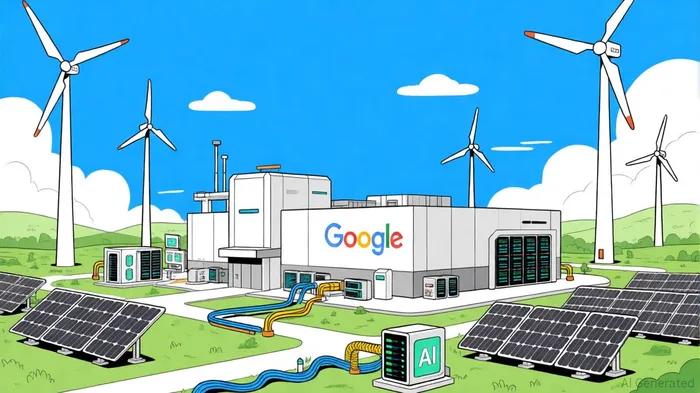





Comentarios
Aún no hay comentarios