
Google's AP2 Protocol and the Future of Stablecoins: Strategic Entry Points for Investors
The Rise of AI-Driven Payments and Stablecoins
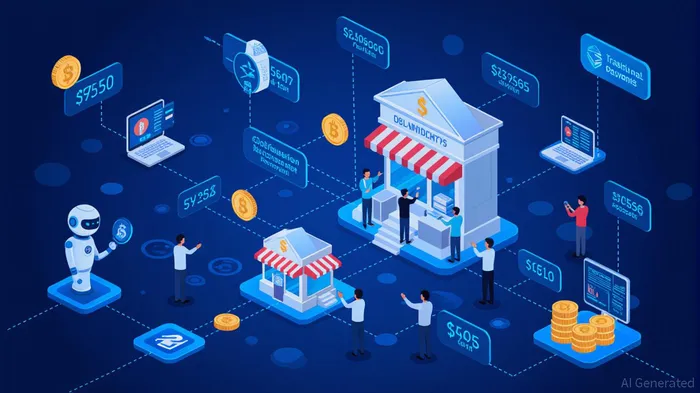
Google's Agent Payments Protocol (AP2), launched in September 2025, is a watershed moment for AI-driven financial infrastructure. By enabling AI agents to autonomously execute payments using stablecoins and traditional methods, AP2 bridges a critical gap in existing payment systems, which assume human involvement in every transaction[1]. The protocol's dual mandate system—comprising an “intent mandate” for negotiation and a “cart mandate” for final approval—ensures user control while enabling seamless automation[3]. This innovation is particularly significant for stablecoins, which offer low-cost, instant settlements and programmability, making them ideal for AI-driven commerce[5].
AP2's integration with Ethereum and stablecoins like USDC and PYUSD is no accident. GoogleGOOGL-- collaborated with CoinbaseCOIN--, the Ethereum Foundation, and over 60 institutions—including American ExpressAXP--, SalesforceCRM--, and Etsy—to build a framework that aligns with both legacy systems and emerging digital asset rails[2]. The result is a protocol that supports cross-border payments, B2B settlements, and even AI-generated personalized offers, all while maintaining auditable transaction trails[4].
Institutional Adoption: A Catalyst for Stablecoin Growth
The institutional adoption of AI-driven financial infrastructure is accelerating stablecoin usage in ways that were previously speculative. According to a report by Fireblocks, 49% of nearly 300 global institutions already use stablecoins, with another 41% in pilot or planning phases[3]. This shift is driven by regulatory clarity, such as the U.S. GENIUS Act and the EU's MiCA framework, which have provided a legal foundation for stablecoin issuance and custody[1]. Institutions are now treating stablecoins as cash equivalents with programmable yield capabilities, allocating 5–20% of their net asset value (NAV) to stablecoin yield strategies[3].
For example, JPMorgan's JPM Coin and tokenized representations of customer deposits are being used for real-time settlements, while PayPalPYPL-- and Stripe have embedded stablecoins into their platforms to reduce transaction fees and improve efficiency[2]. The broader market is responding: stablecoin transaction volumes reached $5 trillion in 2024, and the market cap grew from $205 billion in 2023 to $289 billion in 2025[5].
Strategic Entry Points for Investors
Investors seeking to capitalize on this shift should focus on three key areas:
Partnerships with AP2-Enabled Platforms
Google's collaboration with Coinbase to develop x402, a crypto-native payments infrastructure, positions Coinbase as a critical node in the AP2 ecosystem[6]. Similarly, infrastructure providers like Zerohash, which enable banks to integrate stablecoin capabilities, are gaining traction as institutional adoption scales[5]. Investors should prioritize firms with strong AI sector specialization and advanced analytics tools for portfolio optimization[2].High-Utility Stablecoins
USDC and PYUSD are leading the charge in institutional adoption due to their regulatory compliance and integration with AP2. For instance, Google Cloud now accepts payments in PYUSD, signaling broader acceptance in enterprise environments[1]. Investors should also consider stablecoins like sUSDe, which offer programmable yield features, and BUIDL, which is gaining traction for reserve stability[3].Hybrid AI-Human Infrastructure
While AI automates repetitive tasks and scales institutional knowledge, human oversight remains critical for high-value decisions[2]. Investors should look for platforms that combine AI-powered tools (e.g., automated deal screening, real-time risk dashboards) with transparent reporting and liquidity optionality[2]. This hybrid model ensures compliance and strategic alignment in volatile markets.
Regulatory Tailwinds and Market Momentum
Regulatory clarity is a key enabler of stablecoin adoption. The GENIUS Act, which mandates full reserve backing and monthly disclosures for stablecoins, has attracted both established players and new entrants[3]. Meanwhile, the EU's MiCA framework has provided clear licensing guidelines, further legitimizing stablecoins in mainstream finance[1]. These developments are creating a “Goldilocks” environment for institutional investors: stablecoins are neither too risky (due to regulatory guardrails) nor too conservative (due to their utility in cross-border and DeFi applications).
Conclusion: The New GoldNGD-- Standard
Google's AP2 protocol is not just a technical innovation—it's a catalyst for reimagining global finance. By enabling AI agents to execute stablecoin transactions with speed, security, and transparency, AP2 is accelerating the transition from legacy systems to digital-first infrastructure. For investors, the implications are clear: stablecoins are evolving from speculative assets to essential components of institutional portfolios. Strategic entry points lie in partnerships with AP2-enabled platforms, high-utility stablecoins, and hybrid AI-human infrastructure. As the market capitalization of stablecoins continues to grow, those who act early will find themselves at the forefront of a financial revolution.





Comentarios
Aún no hay comentarios