
Google's Antitrust Challenges: Valuation Risks and Strategic Opportunities in the Ad Tech Landscape
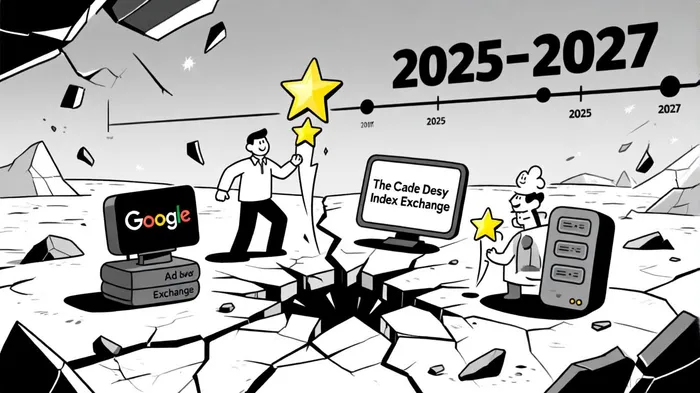
The U.S. Department of Justice's (DOJ) antitrust case against GoogleGOOGL-- has reached a pivotal juncture, with court rulings in both search and ad tech markets reshaping the competitive landscape. These developments, while short of a full breakup, signal a paradigm shift in antitrust enforcement—one that prioritizes structural remedies over behavioral constraints. For investors, the implications are twofold: a reassessment of Google's long-term valuation risks and an evaluation of opportunities for competitors poised to capitalize on a fragmented ad tech ecosystem.
Legal Developments and Market Impact
U.S. District Courts have ruled that Google monopolized both the search and ad tech markets through exclusionary practices. In the ad tech case, Judge Leonie Brinkema found that Google's integration of DoubleClick for Publishers (DFP) and Ad Exchange (AdX) suppressed competition by forcing publishers to use both platforms, effectively stifling header bidding alternatives[1]. The court mandated behavioral remedies, such as real-time bid data sharing and the elimination of preferential bidding rules, but stopped short of structural separation—though the DOJ continues to push for a 2027 divestiture of these assets[2].
Meanwhile, the search case, presided over by Judge Amit Mehta, barred Google from exclusive contracts with device manufacturers and required it to share search index data with rivals like MicrosoftMSFT-- and OpenAI[3]. While the ruling avoided breaking up core services like Chrome and Android, it exposed Google's reliance on $20 billion in annual payments to AppleAAPL-- for Safari's default search engine status—a revenue stream now under threat[4].
Financial Projections and Valuation Risks
Google's ad tech empire generates $95 billion annually, representing 15% of Alphabet's total revenue[5]. A forced divestiture of DFP and AdX could reduce Alphabet's operating cash flow by $29 billion per year, according to the DOJ's analysis[5]. However, the court's rejection of structural remedies in the search case provides a buffer, as Google retains control over its core advertising infrastructure.
The broader risk lies in the erosion of Google's data moat. By mandating data sharing with competitors, the court has weakened Google's ability to leverage user-interaction data for AI-driven ad targeting—a critical edge in the next phase of digital advertising[6]. While Google's Q1 2025 revenue of $90.2 billion exceeded expectations[7], analysts caution that long-term margins could face pressure as competitors gain access to previously proprietary datasets.
Competitor Opportunities and Market Shifts
The antitrust rulings have created a vacuum in the ad tech space, with independent platforms like The Trade DeskTTD--, Index Exchange, and MagniteMGNI-- positioned to gain market share. The Trade Desk, for instance, has already signaled that a more competitive landscape would “level the playing field,” potentially increasing its revenue from demand-side platform (DSP) services[8]. Magnite and PubMaticPUBM--, supply-side platforms (SSPs), could benefit from a 27% rise in header bidding win rates if Google's dominance is curtailed[5].
Financially, the ad tech market is projected to grow from $900 billion in 2025 to $1.46 trillion by 2030 at a 10.25% CAGR[9]. A fragmented Google ad tech stack could accelerate this growth by fostering innovation in privacy-focused ad solutions and AI-driven targeting. Cloud providers like AWS and Azure are also exploring opportunities to build competitive ad servers, further diversifying the ecosystem[10].
Strategic Considerations for Investors
For investors, the regulatory timeline is critical. The DOJ's remedies trial in September 2025 will determine whether structural separation becomes a reality. Until then, behavioral constraints—such as data sharing and contract restrictions—will dominate. Positioning portfolios to benefit from this transition requires a dual approach:
- Short-Term Hedging: Given the uncertainty around appeals and regulatory delays, investors should hedge against volatility in Alphabet's stock. The company's 7-8% post-ruling stock surge[7] may not reflect long-term fundamentals, particularly if structural remedies are enforced.
- Long-Term Positioning: Allocate capital to ad tech competitors with scalable infrastructure. The Trade Desk and Index Exchange, for example, are well-positioned to capture market share in a post-Google environment. Additionally, AI-focused firms like Perplexity and OpenAI could benefit from Google's data-sharing mandates[3].
Conclusion
Google's antitrust challenges mark a turning point in the digital advertising industry. While the company's core revenue streams remain intact, the court's emphasis on structural remedies signals a shift toward neo-Brandeisian antitrust principles—a trend likely to extend to other tech giants like MetaMETA-- and Amazon[11]. For investors, the key is to balance the risks of a weakened Google with the opportunities for a more competitive ad tech ecosystem. As the 2025-2027 regulatory window unfolds, agility in portfolio adjustments will be paramount.





Comentarios
Aún no hay comentarios