
Google's AI Revolution: Sundar Pichai Unveils 'Most Intelligent AI' Ever
Generado por agente de IAHarrison Brooks
miércoles, 26 de marzo de 2025, 2:52 am ET2 min de lectura
GOOGL--
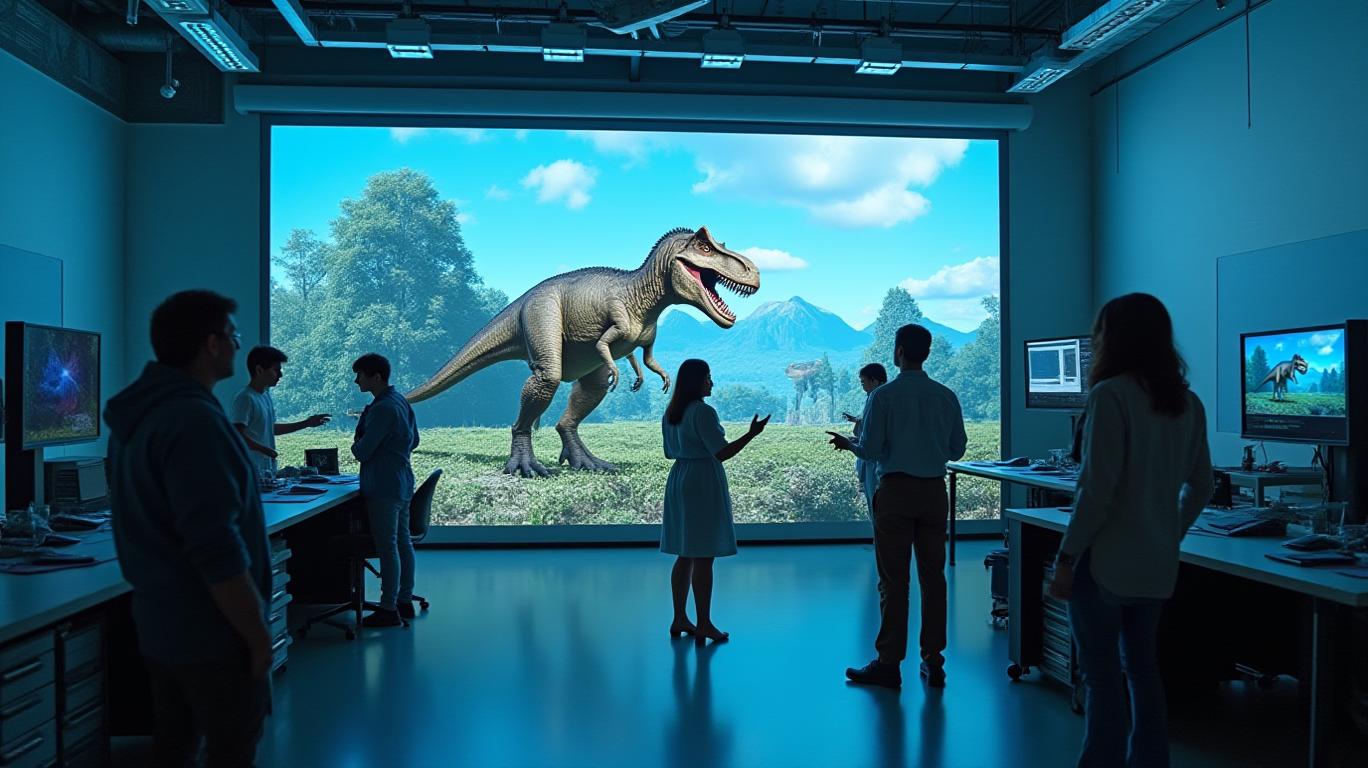
In the ever-evolving landscape of artificial intelligence, GoogleGOOGL-- CEO Sundar Pichai has once again pushed the boundaries of what is possible. At the AI Action Summit in Paris, Pichai showcased Google's latest AI technology, a system so advanced that it can create a dinosaur video game with a simple prompt. This isn't just a technological marvel; it's a glimpse into a future where AI could revolutionize industries from entertainment to healthcare.
Pichai's demonstration was a masterclass in the potential of AI. The technology, which he described as the "most intelligent AI" ever, can generate complex, interactive content from simple text inputs. Imagine typing a few words and having an AI create a fully functional video game, complete with graphics, sound effects, and gameplay mechanics. This isn't science fiction; it's the reality of Google's latest AI breakthrough.
The implications of this technology are vast. In the entertainment industry, AI could automate the creation of content, from scripts to special effects. This could lead to a surge in productivity and a new era of creativity, where AI and human artists collaborate to produce groundbreaking work. However, it also raises questions about job displacement and the future of creative professions. As Jonathan Taplin, director emeritus at the Annenberg Innovation Lab at USC, warned, "The way they train their models is by ingesting everything on the internet, with no concern for copyright." This highlights the need for responsible development and regulation of AI technologies.
But the potential applications of Google's AI go far beyond entertainment. In healthcare, AI could assist in diagnosing diseases, developing personalized treatment plans, and even performing surgeries. In education, it could provide personalized learning experiences, automate grading, and act as virtual tutors. In transportation, it could optimize routes, manage traffic, and even drive vehicles autonomously. The possibilities are endless, and the impact on society could be profound.
However, the implementation of such technologies also raises concerns about job displacement, privacy, and ethical considerations. As AI continues to improve, it will drive an explosion in knowledge, learning, creativity, and productivity that will shape the future in exciting ways. But it also raises concerns about the ethical use of AI and the potential for misuse. For example, social-media bots have been weaponized to spread propaganda and misinformation, and voice-activated devices like Google Assistant can be hijacked by bad actors. As AI technologies become more advanced, it will be crucial for the industry to address these challenges and ensure that AI is used responsibly and ethically.
In conclusion, Google's latest AI technology represents a significant leap forward in the capabilities of artificial intelligence. It has the potential to revolutionize industries and transform society in ways we can only begin to imagine. But it also raises important questions about the future of work, privacy, and ethics. As we continue to develop and implement AI technologies, it is crucial that we do so responsibly and ethically, ensuring that the benefits of AI are shared by all.
In the ever-evolving landscape of artificial intelligence, GoogleGOOGL-- CEO Sundar Pichai has once again pushed the boundaries of what is possible. At the AI Action Summit in Paris, Pichai showcased Google's latest AI technology, a system so advanced that it can create a dinosaur video game with a simple prompt. This isn't just a technological marvel; it's a glimpse into a future where AI could revolutionize industries from entertainment to healthcare.
Pichai's demonstration was a masterclass in the potential of AI. The technology, which he described as the "most intelligent AI" ever, can generate complex, interactive content from simple text inputs. Imagine typing a few words and having an AI create a fully functional video game, complete with graphics, sound effects, and gameplay mechanics. This isn't science fiction; it's the reality of Google's latest AI breakthrough.
The implications of this technology are vast. In the entertainment industry, AI could automate the creation of content, from scripts to special effects. This could lead to a surge in productivity and a new era of creativity, where AI and human artists collaborate to produce groundbreaking work. However, it also raises questions about job displacement and the future of creative professions. As Jonathan Taplin, director emeritus at the Annenberg Innovation Lab at USC, warned, "The way they train their models is by ingesting everything on the internet, with no concern for copyright." This highlights the need for responsible development and regulation of AI technologies.
But the potential applications of Google's AI go far beyond entertainment. In healthcare, AI could assist in diagnosing diseases, developing personalized treatment plans, and even performing surgeries. In education, it could provide personalized learning experiences, automate grading, and act as virtual tutors. In transportation, it could optimize routes, manage traffic, and even drive vehicles autonomously. The possibilities are endless, and the impact on society could be profound.
However, the implementation of such technologies also raises concerns about job displacement, privacy, and ethical considerations. As AI continues to improve, it will drive an explosion in knowledge, learning, creativity, and productivity that will shape the future in exciting ways. But it also raises concerns about the ethical use of AI and the potential for misuse. For example, social-media bots have been weaponized to spread propaganda and misinformation, and voice-activated devices like Google Assistant can be hijacked by bad actors. As AI technologies become more advanced, it will be crucial for the industry to address these challenges and ensure that AI is used responsibly and ethically.
In conclusion, Google's latest AI technology represents a significant leap forward in the capabilities of artificial intelligence. It has the potential to revolutionize industries and transform society in ways we can only begin to imagine. But it also raises important questions about the future of work, privacy, and ethics. As we continue to develop and implement AI technologies, it is crucial that we do so responsibly and ethically, ensuring that the benefits of AI are shared by all.

Divulgación editorial y transparencia de la IA: Ainvest News utiliza tecnología avanzada de Modelos de Lenguaje Largo (LLM) para sintetizar y analizar datos de mercado en tiempo real. Para garantizar los más altos estándares de integridad, cada artículo se somete a un riguroso proceso de verificación con participación humana.
Mientras la IA asiste en el procesamiento de datos y la redacción inicial, un miembro editorial profesional de Ainvest revisa, verifica y aprueba de forma independiente todo el contenido para garantizar su precisión y cumplimiento con los estándares editoriales de Ainvest Fintech Inc. Esta supervisión humana está diseñada para mitigar las alucinaciones de la IA y garantizar el contexto financiero.
Advertencia sobre inversiones: Este contenido se proporciona únicamente con fines informativos y no constituye asesoramiento profesional de inversión, legal o financiero. Los mercados conllevan riesgos inherentes. Se recomienda a los usuarios que realicen una investigación independiente o consulten a un asesor financiero certificado antes de tomar cualquier decisión. Ainvest Fintech Inc. se exime de toda responsabilidad por las acciones tomadas con base en esta información. ¿Encontró un error? Reportar un problema


SOBRE NOSOTROS
Nuestra historiaAutores de noticiasBase de conocimientosPolítica de privacidadTérmino de usoDescargo de responsabilidad de corretaje de tercerosTérminos de uso de AIMEDivulgaciones de riesgos de AInvest AICarrerasCONTÁCTENOS
Email: support@ainvest.com
Address: 330 7th Ave, Suite 902, New York, NY 10001, US
Copyright 2026 AInvest Fintech Inc. All rights reserved.


Comentarios
Aún no hay comentarios