
"Google's AI-Powered Visual Feed Challenges Social Media, Reshaping Luxury Retail E-Commerce"
Google Inc. is navigating a complex legal landscape while unveiling innovative AI-driven products that challenge industry leaders and reshape digital ecosystems. Recent developments highlight the company's strategic focus on AI technology, legal defenses against defamation claims, and competitive positioning in emerging markets. As the tech giant faces lawsuits and regulatory scrutiny, it simultaneously advances its AI capabilities across search, payments, and weather forecasting domains.
Legal Disputes and AI Liability
Google has filed a motion to dismiss a defamation lawsuit brought by conservative influencer , who alleged that the company's AI systems falsely labeled him as a "child rapist" and "serial sexual abuser." The lawsuit, which , mirrors a similar case Starbuck previously filed against Meta Platforms Inc., which was settled in August 2025. Google argues that Starbuck's claims stem from a "misuse of developer tools to induce hallucinations," emphasizing that the plaintiff failed to demonstrate any third party was misled by the AI-generated content. The case underscores broader legal uncertainties around AI accountability, as courts grapple with whether traditional defamation standards apply to generative AI systems.
AI-Powered Visual Discovery Challenges Social Media Giants
In a bid to capture Gen Z users, Google introduced a "Images" tab within its mobile app, offering a personalized visual feed that competes with Pinterest and TikTok. The feature, available to U.S. , allows users to search, save, and discover images without leaving the GoogleGOOGL-- app. By integrating AI-driven recommendations, the tab aims to boost engagement and create new monetization opportunities through ads and shopping integrations. , positioning the company to challenge platforms that dominate visual discovery and e-commerce.
Financial Partnerships Expand Digital Payments
Google expanded its global payment ecosystem by launching Google Pay in the Philippines in collaboration with Visa Inc. and FinTech Alliance. The service enables contactless payments via smartphone, utilizing tokenization to enhance security and prevent fraud. Visa Philippines country manager Jeffrey Navarro highlighted that the integration of Visa's network tokens ensures a seamless and secure experience for both consumers and merchants. The launch aligns with Google's broader strategy to digitize financial services, particularly in emerging markets where smartphone adoption outpaces traditional banking infrastructure.
AI Investments Fuel Stock Performance
Google's stock has , outperforming major benchmarks like the S&P 500 and NASDAQ-100. The growth is attributed to strong earnings performance and aggressive AI capital expenditures, . While free cash flow has declined due to high depreciation costs, analysts note that AI-driven revenue growth in the cloud segment has accelerated, suggesting long-term value creation. .
Weather Forecasting Breakthrough
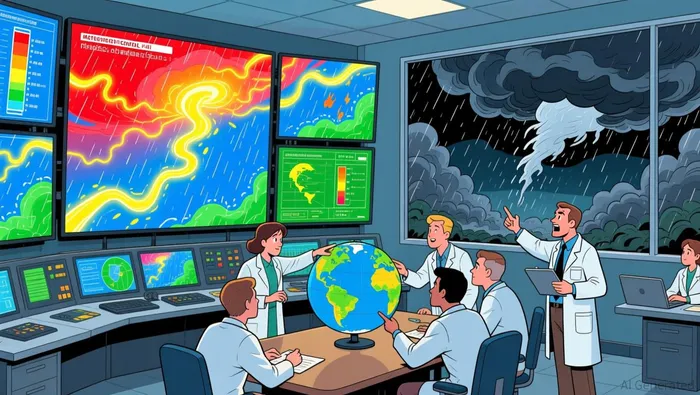
Google DeepMind unveiled WeatherNext 2, . The system and with hourly resolution, enabling real-time scenario modeling that traditional physics-based systems cannot match. The model is already integrated into Google Search, Gemini, and Pixel Weather, with Google Maps integration pending. This innovation underscores Google's commitment to AI-driven solutions in critical sectors like climate science and disaster preparedness.
Android Contact-Sharing Feature Mirrors Apple's NameDrop
Google is developing an Android counterpart to Apple's NameDrop feature, dubbed "Contact Exchange," which uses NFC to facilitate instant contact sharing between users. The feature allows users to selectively share or receive contact details, mirroring Apple's iOS 17 functionality. While details on data transfer methods remain unclear, the development highlights the ongoing cross-platform innovation race between Android and iOS. This feature could enhance user experience in social networking and business networking contexts, further blurring the lines between platform-specific innovations.





Comentarios
Aún no hay comentarios