
Goldman Sachs' Bullish Outlook on Indonesia's Energy Transition Potential
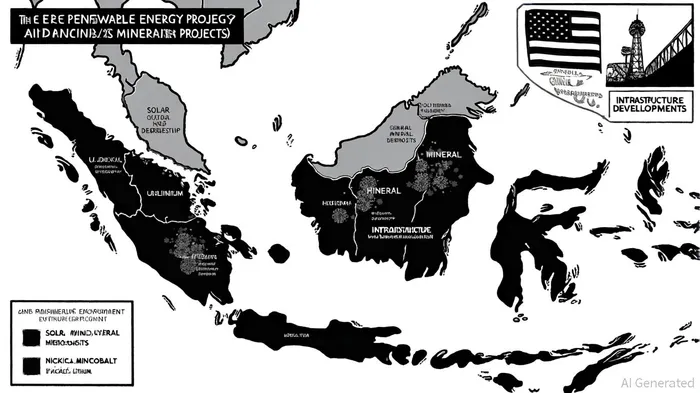
Goldman Sachs has positioned Indonesia as a pivotal player in the global energy transition, emphasizing strategic opportunities in both renewable energy and critical minerals. The firm's analysis underscores the nation's unique combination of natural resources, geopolitical significance, and policy ambitions, despite persistent challenges in execution.
Critical Minerals: A Strategic Pillar for Global Supply Chains
Indonesia's dominance in critical minerals, particularly nickel-accounting for 37% of global reserves-has drawn significant attention from investors and policymakers, an East Asia Forum analysis notes. The recent disruption at Freeport-McMoRan's Grasberg mine, the world's second-largest copper producer, has further highlighted the fragility of global mineral supply chains. A catastrophic mud flow in September 2025 forced a force majeure declaration, reducing output to 30-40% of capacity and projected to remove 525,000 metric tons of copper supply over two years, an Oliver Wyman analysis found. This event has pushed the global copper market into a deficit, with Goldman SachsGS-- forecasting prices to rise to $10,200–$10,500/ton by December 2025, Kitco reported.
The firm's broader analysis of critical minerals emphasizes the need for diversified supply chains, given China's dominance in processing 85-90% of rare earth elements and 68% of cobalt, a Goldman Sachs analysis emphasizes. Indonesia's strategic response-designating 47 critical minerals as national priorities and offering joint ventures with the U.S.-aligns with this imperative. The proposed partnership, facilitated by Indonesia's sovereign wealth fund Danantara Indonesia, aims to secure U.S. investment in nickel and cobalt processing while reducing reliance on Chinese infrastructure. This collaboration not only strengthens Indonesia's economic leverage but also addresses U.S. concerns over supply chain resilience for electric vehicles and renewable technologies, a Discovery Alert report noted.
Renewable Energy: Ambitions vs. Execution Challenges
Indonesia's renewable energy targets-23% of the national energy mix by 2025-remain aspirational, with installed capacity at just 12.3% as of 2022, Goldman Sachs notes. Goldman Sachs acknowledges the country's potential, citing 333 GW of financially viable renewable projects, but highlights systemic barriers: high interest rates (6.25%), lack of guaranteed offtake agreements, and a monopolistic state utility (PLN) that stifles private investment. The government's revised National Energy Policy, which lowered the 2025 target to 17-19%, reflects these challenges, an IESR report found.
However, progress is evident. Forty percent of organizations have already sourced over half their energy from renewables, according to East Asia Forum, and the government is investing $36.95 billion over five years to boost capacity to 8.2 GW by 2025. Site-specific projects, such as utility-scale solar-storage hybrids, are gaining traction by bypassing grid limitations and directly powering industrial demand, per Goldman Sachs. Goldman Sachs' Oliver Wyman reporting stresses that achieving these goals will require policy clarity, streamlined permitting, and risk-sharing mechanisms to attract private capital.
Strategic Opportunities for Investors
The intersection of critical minerals and renewables presents a compelling case for investors. Indonesia's critical mineral strategy-focusing on downstream processing and export value addition-mirrors global trends toward localized supply chains. For renewables, the firm advocates for projects with guaranteed offtake agreements and alignment with Indonesia's economic growth targets, particularly in industrial zones where grid constraints are less prohibitive.
Goldman Sachs also emphasizes the geopolitical dimension. By securing partnerships with the U.S. and other nations, Indonesia can leverage its mineral wealth to negotiate favorable trade terms while advancing its energy transition. This dual strategy-combining resource nationalism with international collaboration-positions Indonesia as a linchpin in the global shift toward clean energy.
Conclusion
While challenges persist, Goldman Sachs' bullish outlook on Indonesia's energy transition is grounded in its strategic assets and evolving policy landscape. The Grasberg mine disruption has underscored the urgency of diversifying mineral supply chains, while Indonesia's renewable ambitions, though lagging, offer long-term growth potential. For investors, the key lies in navigating regulatory uncertainties and capitalizing on Indonesia's unique position at the nexus of critical minerals and clean energy.





Comentarios
Aún no hay comentarios