
The Golden Arches Reinvented: McDonald’s New Global Team Strategy for Dominance in the QSR Arena
In a bold move to counter intensifying competition in the quick-service restaurant (QSR) sector, McDonald’s has unveiled its new Restaurant Experience Team—a structural overhaul aimed at revitalizing innovation, operational agility, and market share. By consolidating critical functions under a unified leadership structure, the company seeks to transform its approach to food, technology, and talent development. This analysis explores the strategic and financial implications of this shift and its potential to reignite growth for the global fast-food giant.
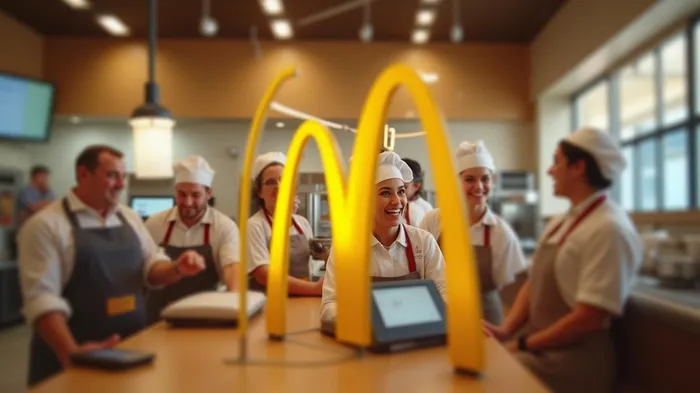
The Strategic Reorganization: A Play for Speed and Specialization
The Restaurant Experience Team merges operations, supply chain, franchising, and technology under a single umbrella, with three dedicated global Category Management teams focusing on beef, chicken, and beverages/desserts. This specialization mirrors the “specialist’s focus” of competitors like Chick-fil-A and Dutch Bros, which have carved out niches in chicken and beverages. By concentrating expertise in high-demand categories, McDonald’s aims to reclaim leadership in segments where rivals have eroded its dominance.
The integration also targets faster execution of innovations, such as limited-time offers (LTOs) like the Chicken Big Mac and Snack Wraps, while accelerating the rollout of tech solutions like delivery systems and Speedee Labs’ equipment. Historically, McDonald’s has faced criticism for slow decision-making and uneven global execution—this restructure is a direct response to those challenges.
Financial and Operational Outcomes: A Path to Profitability
The initiative aligns with McDonald’s “Accelerating the Arches” strategy, which has already driven $30 billion in 2024 systemwide sales through digital loyalty programs and expanded its digital user base to 175 million. The new team’s focus on “unit economics” aims to further improve profitability by streamlining operational costs and boosting efficiency. For instance, Speedee Labs’ technology, designed to reduce kitchen congestion and order times, could directly enhance restaurant throughput—a critical metric for profitability.
The talent development component is equally pivotal. By elevating leaders like Jill McDonald, newly appointed Chief Restaurant Experience Officer, McDonald’s signals its commitment to retaining and empowering in-house expertise. A workforce aligned with operational realities—such as the needs of franchisees and general managers—could reduce turnover and improve execution consistency.
Navigating Competitive Pressures: Market Share and Customer Engagement
Competitors like KFC and Chick-fil-A have surged by emphasizing quality and speed in specific categories. McDonald’s new structure positions it to replicate this specialization while leveraging its scale. The beverage and dessert team, for example, could innovate around premium drinks or desserts to compete with Dutch Bros’ coffee dominance. Meanwhile, chicken-focused initiatives may help recapture diners drawn to Chick-fil-A’s signature menu.
The integration of delivery systems and digital tools also addresses evolving consumer preferences. With 175 million digital users globally, McDonald’s has a robust platform to test hyper-localized LTOs and personalized promotions, potentially driving repeat visits.
Risks and Considerations
While the strategy is promising, execution hinges on cultural and structural changes. Franchisees, who operate 93% of McDonald’s locations, must adopt new systems without compromising consistency. Additionally, the global supply chain—already strained by inflation and logistics bottlenecks—requires meticulous coordination to avoid disruptions.
Conclusion: A Recipe for Sustainable Growth?
McDonald’s reorganization reflects a clear-eyed response to market challenges, combining operational streamlining with strategic specialization. By unifying critical functions under a single team and empowering category experts, the company aims to outpace rivals in both speed and innovation.
The data supports this optimism: the $30 billion in systemwide sales and 175 million digital users under the existing “Accelerating the Arches” strategy provide a strong foundation. If the new structure delivers on its promise of faster execution and enhanced unit economics, McDonald’s could sustain its growth trajectory.
Investors should monitor metrics like global same-store sales growth, franchisee satisfaction scores, and the adoption rate of Speedee Labs’ innovations. With a stock price that has outperformed Yum! Brands and Starbucks over the past three years—rising 40% versus YUM’s 20% and SBUX’s flat performance—McDonald’s appears poised to capitalize on its reinvention.
In a QSR landscape where speed and specialization are paramount, McDonald’s latest move may just be the catalyst to solidify its reign as the category’s undisputed titan.







Comentarios
Aún no hay comentarios