
Gold's Strategic Rally Amid Fed Rate Cuts and Policy Uncertainty in Late 2025: A Hedge Against Dollar Weakness and Central Bank Divergence
The U.S. dollar's prolonged weakness and the Federal Reserve's dovish pivot have catalyzed a historic surge in gold prices in late 2025, with the precious metal rising over 60% year-to-date. This rally reflects a confluence of factors: aggressive central bank gold purchases, geopolitical tensions, and the Fed's anticipated rate-cutting cycle. As the dollar falters and global central banks diversify away from U.S. assets, gold has emerged as a critical strategic hedge for investors navigating macroeconomic uncertainty.
Fed Policy Dovishness and Dollar Weakness
The Federal Reserve's October 2025 rate cut of 0.25% marked a pivotal shift in monetary policy, driven by soft labor market data and persistent inflationary pressures. With investors pricing in a 70% probability of an additional rate cut before year-end 2025, the Fed's accommodative stance has weakened the U.S. dollar. The U.S. Dollar Index (DXY) is projected to dip below 98.00 by year-end, pressured by delayed economic data releases due to a prolonged government shutdown and divergent global central bank policies.
This dollar weakness is further amplified by the European Central Bank's (ECB) stable policy trajectory, which has bolstered the euro against the greenback. As the Fed continues to prioritize rate cuts to avert a recession, the dollar's relative strength versus major currencies has deteriorated, creating a tailwind for gold-a traditional inverse correlate to the dollar.
Central Banks as Gold's New Vanguard
Central banks, particularly in emerging markets, have played a pivotal role in gold's 2025 rally. According to a report by BullionVault, institutions such as Poland's Narodowy Bank Polski (NBP) have accelerated gold purchases, accumulating 96 tonnes in 2025 alone.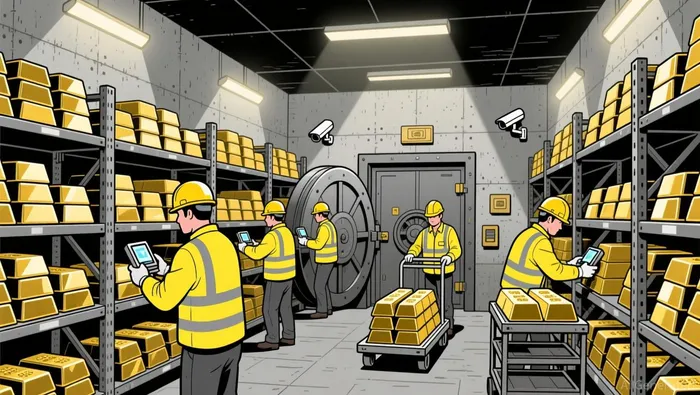 China, Brazil, and Uzbekistan have similarly joined the trend, viewing gold as a "pure USA hedge" against dollar volatility and geopolitical risks.
This surge in central bank demand has pushed global gold holdings to record levels, with ETF inflows adding further momentum. The shift reflects a broader reallocation of reserves away from dollar-denominated assets, driven by concerns over U.S. fiscal policy and rising trade tensions. As Crescentpw notes, this trend is expected to persist into 2026, with gold's role as a safe-haven asset solidifying amid escalating global economic fragmentation.
Gold's Performance: A Macro-Driven Rally
Gold's 60% surge in 2025 is underpinned by three key drivers:
1. The Fed's rate cuts have reduced the opportunity cost of holding non-yielding assets like gold, making it more attractive to investors.
2. Record gold purchases by emerging-market central banks have injected structural demand into the market.
3. Escalating tensions, including the Russia-Ukraine conflict, have reinforced gold's status as a safe-haven asset.
Looking ahead, analysts remain divided on gold's 2026 trajectory. A report by ING Think suggests that sustained central bank demand and macroeconomic uncertainty could push prices higher, while risks such as a stronger U.S. recovery or resurgent inflation may cap gains. However, Gold.org's 2026 outlook emphasizes that further rate cuts and dollar weakness could extend the bull run, particularly if global growth remains fragile.
Strategic Implications for Investors
For investors, gold's 2025 rally underscores its enduring role as a hedge against Fed policy divergence and dollar weakness. As central banks continue to diversify reserves and the Fed's rate-cutting cycle unfolds, gold offers a unique combination of inflation protection, liquidity, and geopolitical risk mitigation. However, the metal's performance in 2026 will hinge on macroeconomic outcomes, including the trajectory of U.S. fiscal policy and global trade dynamics.
In a world of divergent monetary policies and geopolitical volatility, gold's strategic value is unlikely to wane. Investors seeking to hedge against dollar depreciation and central bank uncertainty would be wise to maintain exposure to the precious metal-a timeless store of value in an increasingly unpredictable world.







Comentarios
Aún no hay comentarios