
Gold's Strategic Outlook Amid US Trade Uncertainty and Fed Rate Cut Prospects
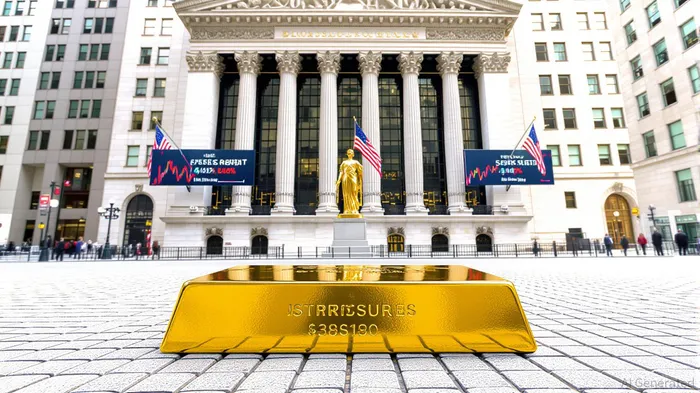
The macroeconomic landscape in 2025 is a tapestry of contradictions: a weakening U.S. dollar, tepid growth, and persistent geopolitical tensions are colliding with expectations of Federal Reserve rate cuts. For investors, this volatility creates a unique opportunity to position gold not just as a defensive asset but as a strategic growth vehicle. The World Gold Council's (WGC) analysis of the first half of 2025 reveals a 26% surge in gold prices, driven by a confluence of factors that underscore its evolving role in a reordering global economy.
The Drivers of Gold's Resurgence
Gold's performance in 2025 is anchored by three pillars: dollar weakness, rate-cut expectations, and geopolitical risk premiums. The U.S. dollar's worst annual start since 1973 has eroded the appeal of dollar-denominated assets, while the Fed's anticipated 50-basis-point rate cuts by year-end have reduced the opportunity cost of holding non-yielding gold. Meanwhile, U.S. trade tensions and global instability—ranging from China-EU supply chain shifts to Middle Eastern conflicts—have amplified demand for safe-haven assets.
The WGC's Gold Return Attribution Model (GRAM) breaks down gold's returns into actionable components:
- Risk and uncertainty (4%): Geopolitical tensions and trade policy shifts directly boost gold's hedging appeal.
- Opportunity cost (7%): A weaker dollar and lower yields make gold more attractive relative to bonds and cash.
- Momentum (5%): Record ETF inflows (up 41% to $383 billion AUM) and central bank purchases (397 tonnes added in H1 2025) reinforce price action.
A case in point: When Federal Reserve Governor Christopher Waller hinted at a potential July rate cut in early July 2025, gold prices surged 0.7% to $3,353.59 per ounce. This sensitivity to monetary policy signals highlights gold's dual role as both a hedge and a speculative asset.
Positioning Gold in a Shifting Macro Environment
The WGC outlines three scenarios for the second half of 2025, each with distinct implications for gold:
- Prevailing Scenario (Base Case):
- Gold Outlook: Range-bound, closing 0%–5% higher by year-end (25%–30% annualized return).
- Drivers: Cautious Fed cuts, sideways GDP, and elevated geopolitical risks.
Investment Thesis: Gold remains a tactical hedge, particularly for portfolios exposed to dollar weakness and inflation.
Bullish Scenario (Stagflation/Recession):
- Gold Outlook: 10%–15% rally in H2, closing the year up nearly 40%.
- Drivers: A U.S. labor market collapse, tariff-driven inflation, and central bank diversification from dollar reserves.
Investment Thesis: Gold becomes a core holding as stagflationary pressures erode fiat currencies and corporate profits.
Bearish Scenario (Geopolitical De-escalation):
- Gold Outlook: 12%–17% pullback in H2, ending the year with a muted double-digit return.
- Drivers: Reduced risk premiums and a stronger dollar from higher yields.
- Investment Thesis: A tactical exit into equities or high-yield bonds may be warranted, though gold's long-term fundamentals remain intact.
Strategic Positioning: Hedge or Growth Asset?
Gold's duality as both a hedge and a growth asset hinges on how investors align it with their risk profiles and time horizons:
- Tactical Hedging: For portfolios overexposed to U.S. equities or Treasuries, allocating 5%–10% to gold ETFs (e.g., SPDR GoldGLD-- Shares, GLD) or physical bullion can mitigate tail risks. The WGC notes that gold's correlation with equities has historically inverted during market stress, making it a dynamic counterbalance.
- Growth Allocation: In a stagflationary environment, gold's role as a real-asset proxy (like equities or commodities) becomes more pronounced. Investors should consider overweighting gold in multi-asset strategies, particularly if central banks continue purchasing gold at a clip of 500+ tonnes annually.
- Structural Shifts: As emerging markets (e.g., China, India) and institutional players (e.g., Chinese insurance companies) enter the gold market, structural demand could outpace supply, creating a secular bull case.
The Road Ahead: Balancing Certainty and Uncertainty
While the WGC forecasts a range-bound second half under base-case assumptions, the risk of a more turbulent geopolitical or economic environment cannot be ignored. For example, a U.S.-China trade war escalation or a global energy shock could trigger a 20%+ rally in gold, mirroring its performance during the 2008 financial crisis. Conversely, a resolution of tensions—say, through a U.S.-China trade deal or a Fed-led rate-cut cycle—could temporarily weaken gold's appeal.
Investment Advice:
- Short-Term (H2 2025): Maintain a defensive allocation to gold as a hedge against dollar volatility and geopolitical shocks.
- Long-Term (2026–2027): Consider increasing exposure to gold if central bank purchases exceed 600 tonnes annually and inflation remains above 5%.
- Portfolio Construction: Pair gold with high-quality equities (e.g., tech or infrastructure) and short-dated bonds to balance growth and protection.
In a world where macroeconomic certainty is a relic, gold's strategic value lies in its ability to adapt. Whether as a hedge, a growth asset, or a cornerstone of reserve diversification, gold remains a linchpin in the evolving financial order. For investors, the key is to align their positioning with the shifting tides of policy, politics, and markets.





Comentarios
Aún no hay comentarios