
Gold as a Strategic Hedge Against Geopolitical Risk
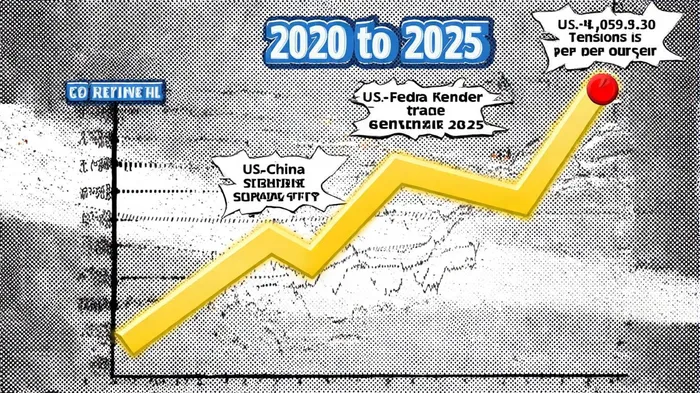
In an era defined by escalating U.S.-China trade conflicts and pervasive macroeconomic uncertainty, gold has reasserted itself as a critical strategic asset for investors. As of October 2025, spot gold reached an unprecedented $4,059.30 per ounce, driven by a confluence of geopolitical tensions and expectations of U.S. Federal Reserve rate cuts, according to an FXStreet report. This surge underscores gold's enduring role as a safe-haven asset, particularly during periods of systemic risk.
Historical Precedent: Gold's Resilience in Geopolitical Crises
Gold's performance during the 2025 trade war echoes patterns observed in prior conflicts. For instance, during the 2018–2019 U.S.-China trade war, gold prices rose approximately 18% amid tariff escalations and supply chain disruptions, according to a Discovery Alert analysis. Similarly, the 2025 escalation-marked by 100% tariffs on Chinese goods under President Trump's administration-triggered a flight to safety, with gold outperforming traditional assets like equities and bonds, as reported by FXStreet. This historical consistency reinforces gold's utility as a hedge against geopolitical volatility.
The World Gold Council further validates this trend, noting that gold has delivered positive returns in 8 of the last 10 major market downturns, averaging gains of 12.5%. Such data positions gold not merely as a speculative play but as a statistically robust counterbalance to systemic risks.
Macroeconomic Uncertainty and Gold's Dual Role
Beyond geopolitical factors, macroeconomic instability has amplified gold's appeal. The 2025 rally coincided with widespread expectations of Fed rate cuts, a policy shift that typically boosts gold's allure as an inflation hedge, according to FXStreet. While central banks have historically used interest rates to manage economic cycles, the interplay between monetary policy and gold's price dynamics remains complex. For instance, during periods of high inflation, gold often outperforms fiat currencies, while rate cuts reduce the opportunity cost of holding non-yielding assets like gold, as noted in the Discovery Alert analysis.
This dual role-as both an inflation hedge and a geopolitical risk buffer-makes gold uniquely positioned in today's environment. According to a World Bank blog, gold's performance during geopolitical crises is further amplified by its inverse correlation with equities, offering diversification benefits that are critical in volatile markets.
Strategic Portfolio Positioning
For investors seeking to mitigate risks from U.S.-China tensions and macroeconomic shocks, allocating a portion of portfolios to gold is prudent. A 5–10% allocation to physical gold or gold-backed ETFs can provide downside protection without sacrificing long-term growth potential. Historical data suggests that such allocations can reduce portfolio volatility during crises while participating in broader market recoveries, as highlighted in the Discovery Alert analysis.
However, strategic positioning requires balancing gold's defensive qualities with its lack of income generation. Unlike bonds or dividend-paying stocks, gold does not produce cash flow, necessitating complementary holdings in yield-generating assets. This hybrid approach ensures portfolios remain both resilient and dynamic.
Conclusion
As U.S.-China tensions and macroeconomic uncertainty dominate the global landscape, gold's role as a strategic hedge has never been more relevant. Its historical performance during crises, coupled with its inverse relationship to equities and sensitivity to monetary policy, makes it an indispensable tool for risk management. For investors navigating an increasingly fragmented world, gold is not just a commodity-it is a cornerstone of strategic asset allocation.







Comentarios
Aún no hay comentarios