
Gold's Strategic Case in a Shifting Rate Outlook
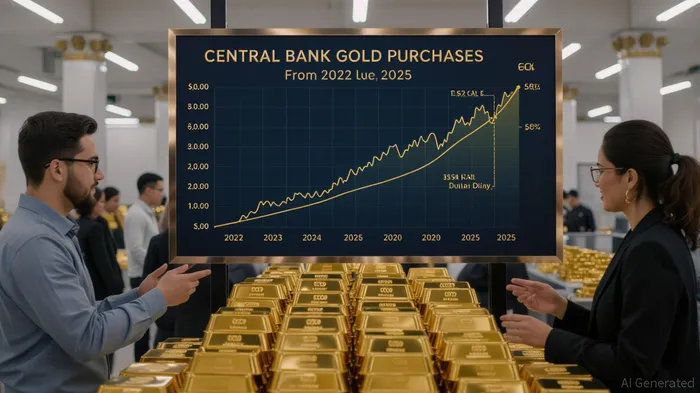
In 2025, gold861123-- has emerged as a linchpin of portfolio strategy, driven by a confluence of soft U.S. Producer Price Index (PPI) data, central bank policy shifts, and geopolitical tailwinds. While inflationary pressures have eased—reflected in subdued PPI readings—the strategic case for gold remains robust, underpinned by central banks' aggressive diversification efforts and the erosion of the U.S. dollar's hegemony. This analysis explores how these dynamics justify a rebalancing toward precious metals for investors navigating an increasingly fragmented global economy.
Soft PPI Data: A Double-Edged Sword for Gold
The U.S. PPI, a key gauge of producer-level inflation, has trended lower in 2025, signaling moderation in cost-push pressures[1]. On the surface, this might weaken gold's traditional role as an inflation hedge. However, the broader macroeconomic context reveals a more nuanced picture. A weaker PPI has coincided with central banks' reluctance to implement aggressive rate cuts, creating a “low-rate-for-longer” environment[2]. This policy stance has kept real interest rates elevated, historically a headwind for non-yielding assets like gold. Yet, gold's performance in 2025 defies this logic, surging to record highs amid dollar weakness and geopolitical volatility.
Central Bank Policy: A Tailwind for Gold Demand
Central banks have become the most critical drivers of gold's strategic case. According to the World Gold Council, annual net gold purchases by central banks have exceeded 1,000 tonnes since 2022, with Q2 2025 alone seeing additions of 166 tonnes[3]. This surge reflects a deliberate shift toward reserve diversification, as policymakers hedge against U.S. dollar risks and geopolitical uncertainties. For instance, emerging-market central banks—particularly in Asia and the Middle East—have accelerated gold acquisitions to reduce exposure to Western financial systems amid the de-dollarization trend.
The strategic rationale is clear: gold offers a non-sovereign, liquid asset that transcends geopolitical boundaries. As stated by PGIM, “Central banks are increasingly viewing gold as a counterbalance to currency risks and a store of value in an era of fragmented global governance”. This demand has not only propped up gold prices but also signaled a structural shift in how official sector actors perceive the metal's role in reserve management.
Investment Implications: Rebalancing Toward Precious Metals
For private investors, the central bank-driven gold rally presents a compelling case for portfolio reallocation. Gold-backed ETFs have seen sustained inflows in 2025, with assets under management rising by 22% year-to-date[3]. This trend is not merely speculative; it mirrors the hedging behavior of central banks. As geopolitical tensions—ranging from U.S.-China trade frictions to regional conflicts—persist, gold's safe-haven appeal has intensified. Analysts at Advisorperspectives note that “gold's role as a systemic risk hedge has become more pronounced, particularly in environments where traditional safe assets face currency-specific vulnerabilities”[1].
Moreover, the interplay between soft PPI data and central bank policy creates a unique inflection point. With inflation receding but rate cuts delayed, the opportunity cost of holding gold has diminished. Meanwhile, the dollar's relative weakness—exacerbated by divergent monetary policies—has made gold more attractive in non-U.S. currencies, further broadening its demand base[2].
Conclusion: A Strategic Rebalance Is Justified
The 2025 gold rally is not a fleeting phenomenon but a reflection of deepening structural trends. Soft PPI data has alleviated short-term inflation concerns, yet central banks' gold purchases and the de-dollarization narrative have created a long-term tailwind for the metal. For investors, this duality—lower inflationary risk coexisting with heightened geopolitical and currency risks—justifies a strategic rebalancing toward precious metals. As central banks continue to fortify their reserves with gold, the asset's role as a cornerstone of diversified portfolios will only strengthen.







Comentarios
Aún no hay comentarios