
From Gold to Steel: How Geopolitical Calm Fuels Base Metal Opportunities
The temporary Iran-Israel ceasefire, brokered in June 2025, has unleashed a wave of uncertainty in global markets. While headlines fixate on the fragility of the agreement, investors should look beyond the noise to uncover a compelling contrarian opportunity: a pivot from gold to industrial metals. The de-escalation has weakened gold's safe-haven appeal, but it has also cleared the path for a resurgence in infrastructure spending, particularly in Australia's Pilbara region, where Rio TintoRIO-- and Gina Rinehart's $1.6 billion Hope Downs 2 project is poised to reshape the commodities landscape.
The Gold Conundrum: Safe-Haven Demand Eases, but Risks Remain
The ceasefire has dented gold's allure as a haven asset. Short-term traders have rushed to unwind positions, pushing prices down 8% since mid-June. The reveals a clear divergence: industrial metals have gained 5% in the same period. Yet, this move is overdone. Geopolitical risks are far from resolved—remember Iran's post-ceasefire missile threats and the U.S. sanctions dance with China.
More importantly, the Federal Reserve's dual dilemma looms large. Even as markets price in rate cuts to combat slowing growth, inflation remains stubbornly above the 2% target. Base metals may thrive in the near term, but gold's long-term case is bolstered by persistent inflationary pressures. Investors should avoid abandoning gold entirely, but now is the time to rebalance portfolios toward metals with structural growth.
The Pilbara Play: Infrastructure Spending Meets Iron Ore Demand
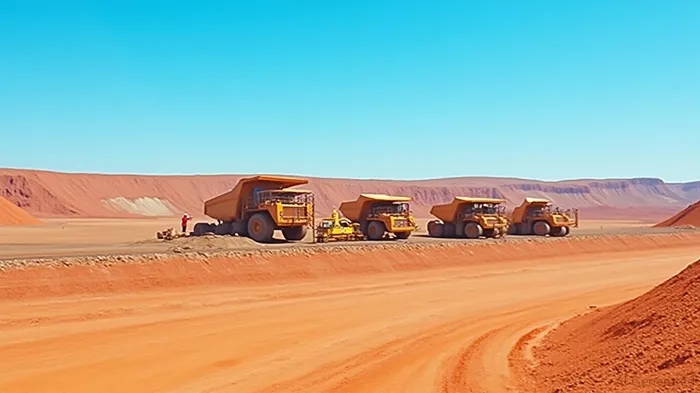
The Hope Downs 2 project, a 50/50 venture between RioRIO-- Tinto (RIO) and Hancock Prospecting, epitomizes the shift toward industrial metals. This $1.6 billion venture aims to add 31 million tonnes of iron ore capacity by 2027, part of a broader $13 billion Pilbara infrastructure push through 2027. The project's show a company in capital discipline mode—reinvesting in high-margin projects while maintaining a 6.5% dividend yield.
Why does this matter? Three reasons:
1. Global Steel Demand Growth: Emerging markets like India and Southeast Asia are urbanizing at breakneck speed. The World Steel Association forecasts 4–5% annual steel consumption growth in these regions, outpacing China's slowdown.
2. Green Steel's Hidden Demand: The rise of hydrogen-based direct reduced iron (DRI) technology requires high-grade iron ore—exactly what the Pilbara's 62% iron content delivers.
3. Supply-Side Restraints: Aging mines in Australia and Brazil are closing, and the Pilbara's above-water-table pits offer a rare combination of low costs ($25/tonne) and scalability.

Why Base Metals Will Outperform in 2025–2026
The Pilbara project isn't an isolated story. Consider these catalysts:
- U.S. Infrastructure Spending: The Bipartisan Infrastructure Law's $550 billion allocation will boost copper and aluminum demand.
- Renewables Buildout: Every wind turbine and EV battery relies on base metals. The International Energy Agency estimates a 30% rise in copper demand by 2030 for renewables alone.
- China's Policy Pivot: Beijing's focus on “internal circulation” and green tech subsidies will drive steel demand for high-speed rail and smart cities.
Meanwhile, gold's near-term headwinds are real. The U.S. dollar's post-ceasefire rally, coupled with falling inflation expectations, has sapped momentum. But gold's historical beta to real interest rates means it could rebound if the Fed pauses rate cuts too late. For now, the focus should be on metals with tangible growth drivers.
Investment Strategy: Rotate from GLD to Industrial Metals Exposure
- Buy Rio Tinto (RIO): Its Pilbara dominance and dividend yield offer a leveraged play on infrastructure demand.
- Add Global X Copper ETF (COPX): Copper's role in renewables and EVs is irreplaceable.
- Hedge with a Smaller Gold Position: Maintain a 5–10% gold allocation (e.g., SPDR Gold Shares (GLD)) to guard against Fed missteps.
Avoid overexposure to gold miners (e.g., Newmont (NEM)) unless geopolitical risks spike anew. The base metals rally is real—and it's just beginning.
Conclusion: The Geopolitical Calm is a False Flag
Markets may be celebrating the ceasefire, but the Iran-Israel conflict is a symptom of a broader, unstable world. However, for investors, the de-escalation has created a rare opening: a chance to profit from the real economy's comeback. The Pilbara's iron ore boom, paired with global infrastructure spending, offers a safer, higher-growth alternative to gold. Don't be fooled by the calm—this is the time to bet on steel.





Comentarios
Aún no hay comentarios