
The Gold-Silver Ratio at a 10-Year Low: Is Silver Outpacing Gold as a Strategic Investment?
The gold-silver ratio, a critical barometer for precious metals investors, has undergone a dramatic transformation in 2025. By late December 2025, the ratio stood at 65.4, a stark departure from its May 2025 peak of 99.7 and a level not seen since the early 2010s according to market analysis. This decline signals a potential inflection point in the relative value of gold and silver, raising the question: Is silver outpacing gold as a strategic investment in today's rebalancing market?
A Decade of Volatility and Structural Shifts
The 10-year trend (2015–2025) reveals a pattern of pronounced volatility in the gold-silver ratio. For much of the decade, the ratio hovered above 70:1, peaking at 105.85 in April 2025 as gold prices surged past $3,500 per ounce. However, by late 2025, silver's meteoric rise-driven by industrial demand and speculative inflows-compressed the ratio to 65.4, a 34% decline from its mid-year high. This shift aligns with historical benchmarks: a ratio above 80:1 typically suggests silver is undervalued, while a ratio below 50:1 implies gold is undervalued. At 65.4, the market appears to be recalibrating, favoring silver's dual role as both an industrial commodity and a monetary hedge.
Industrial Demand and Supply Constraints: The Silver Surge
The 2025 surge in silver prices is underpinned by structural supply deficits and robust industrial demand. Mine production stagnated at 813 million ounces in 2025, failing to meet record consumption levels driven by photovoltaics, electronics, and electric vehicles. The green energy transition alone accounted for a significant portion of this demand, with solar panel deployment requiring silver paste for photovoltaic cells.
Meanwhile, the cumulative supply deficit over the past five years reached nearly 800 million ounces, intensifying upward pressure on prices. By December 2025, silver prices climbed above $70 per ounce, with analysts projecting potential targets as high as $100 per ounce in 2026 due to persistent inflationary pressures and geopolitical uncertainties.
Investment Flows and Portfolio Rebalancing 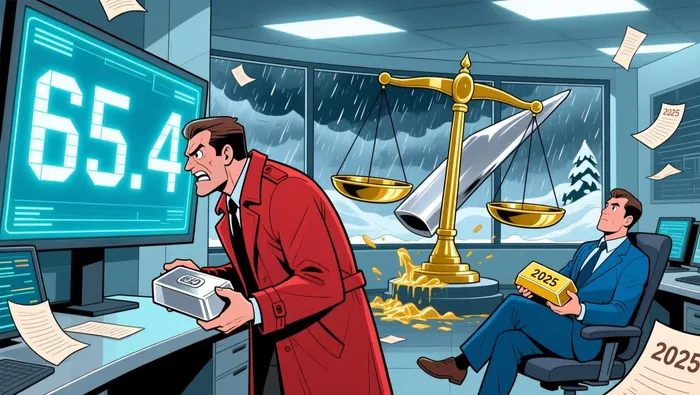
The shift in investor sentiment is equally striking. Global inflows into silver-backed ETFs surpassed 95 million ounces mid-year 2025, reflecting a growing recognition of silver's strategic value. This trend contrasts with gold's dominance in the first half of the decade, when central bank purchases and inflation hedging drove its price to record highs. The gold-silver ratio's compression to 65.4 suggests a reallocation of capital toward silver, particularly as its industrial applications and supply constraints position it for continued outperformance.
Strategic Implications for Portfolios
For investors, the evolving gold-silver ratio presents a compelling case for portfolio rebalancing. A report by Bloomberg highlights that a 60/20/20 portfolio strategy-allocating 20% to gold and silver-has gained traction in 2025 as a resilient hedge against economic uncertainty. Eric Sprott, a prominent advocate for precious metals, emphasizes silver's potential for explosive gains if the ratio continues to compress. Meanwhile, Morgan Stanley's Michael Wilson notes that silver's industrial demand and supply dynamics make it a more dynamic asset in a diversified portfolio compared to gold's relatively stable safe-haven role.
Conclusion: A New Equilibrium in Precious Metals
The gold-silver ratio's 10-year low in late 2025 underscores a fundamental shift in the precious metals market. Silver's surge, fueled by industrial demand, supply deficits, and speculative inflows, has outpaced gold's traditional safe-haven appeal. For investors, this rebalancing offers an opportunity to capitalize on silver's undervaluation while mitigating risk through strategic allocation. As the green energy transition accelerates and geopolitical uncertainties persist, the gold-silver ratio may serve as a key indicator of broader market dynamics-and a roadmap for portfolio reallocation in the years ahead.







Comentarios
Aún no hay comentarios