
Gold Shines as Dollar Retreats Amid Shift to Risk Assets Post-Jobs Report
The price of gold surged this week as the U.S. dollar weakened following the release of a robust April jobs report, underscoring the complex interplay between economic data, investor sentiment, and asset allocation strategies. While the report’s strong headline—343,000 jobs added, well above consensus expectations—typically would have buoyed the dollar, traders instead turned their focus to the broader implications of a resilient labor market, shifting toward riskier assets and away from the greenback. This pivot highlights a key dynamic in today’s markets: even positive economic news can lead to divergent outcomes depending on how investors weigh near-term growth against long-term risks like inflation or policy shifts.
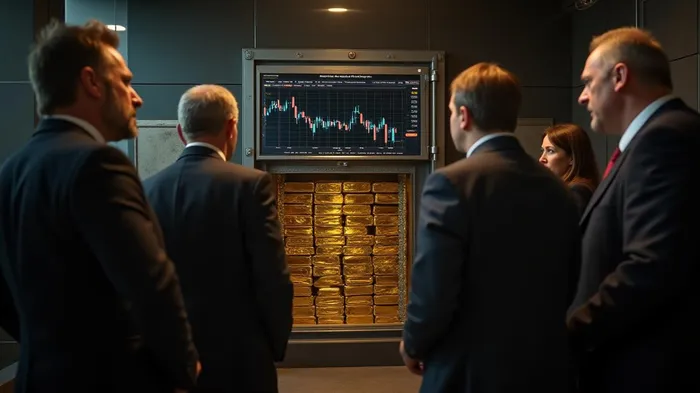
The inverse relationship between gold and the dollar has long been a staple of macroeconomic analysis. When the dollar weakens, gold often gains as it becomes cheaper for investors holding other currencies. This week’s moves exemplify that dynamic: the Dollar Index (^DXY) fell to its lowest level in nearly three months, while gold (GC=F) climbed to $2,000 per ounce for the first time since January. The decline in the dollar reflects not just the jobs data but also shifting expectations about Federal Reserve policy. Even as the report reinforced the economy’s strength, traders are pricing in a pause in rate hikes by year-end, reducing the dollar’s appeal as a yield-driven asset.
The April jobs report’s nuances further complicate the picture. While the headline number was strong, wage growth—a key inflation signal—slowed to 4.3% year-over-year, easing some fears of overheating. This moderation, combined with a slight uptick in the unemployment rate to 3.6%, may have signaled to investors that the labor market’s tightness is easing, reducing the urgency for the Fed to tighten further. Such a shift encourages risk-taking, as capital flows into equities and away from traditional safe havens like the dollar.
The S&P 500 (SPY) rose to a fresh record high this week, a stark contrast to the dollar’s retreat, illustrating the risk-on sentiment. This rotation has created a favorable environment for gold, which benefits both from dollar weakness and its status as a hedge against inflation and geopolitical risks. Historically, gold has performed well in environments of dollar depreciation, with a 10-year correlation coefficient of -0.65 between gold prices and the Dollar Index, according to Bloomberg data.
Looking ahead, the trajectory of gold and the dollar hinges on two critical factors: the Fed’s next moves and global inflation trends. If the dollar continues to weaken due to expectations of a Fed pause, gold could approach its 2023 highs near $2,070. Conversely, a surprise hawkish pivot from the Fed or a resurgence in inflation could reignite dollar demand. Investors should also monitor the yield on the 10-year Treasury note (US10Y), which has dipped below 3.7%, a level that reduces the opportunity cost of holding non-yielding assets like gold.
In conclusion, gold’s recent rally underscores its role as a dual beneficiary of dollar weakness and shifting risk appetites. With the Fed’s policy path uncertain and the dollar’s dominance waning, investors seeking diversification may find gold an attractive hedge. However, the metal’s gains are not guaranteed—its performance will ultimately depend on how the interplay between inflation, Fed policy, and global growth unfolds. For now, the market’s embrace of risk and the dollar’s retreat have positioned gold as a standout performer, a trend that could persist unless the economic narrative shifts abruptly.







Comentarios
Aún no hay comentarios