
The Gold Rush Dilemma: Mercury Trafficking and the Rise of Sustainable Mining Technologies in the Amazon
The AmazonAMZN-- rainforest, a symbol of ecological resilience, is now a battleground for a hidden crisis: mercury trafficking linked to illegal gold mining. Recent data from the Environmental Investigation Agency (EIA) reveals a staggering 200 tons of mercury smuggled from Mexico to countries like Bolivia, Colombia, and Peru between 2019 and 2025. This surge, driven by record gold prices (peaking at $3,500 per ounce in April 2025), has created a toxic web of environmental degradation and public health risks. Yet, this crisis also unveils a critical investment opportunity—mercury-free gold extraction technologies and ESG-focused mining solutions that align with global environmental frameworks like the Minamata Convention.
The Toxic Gold Rush: A Growing Crisis
Mercury, a neurotoxin, is used in artisanal and small-scale gold mining (ASGM) to separate gold from sediment. The process releases 800 tons of mercury annually into the Amazon, contaminating rivers, forests, and Indigenous communities. In Peru, mercury levels in fish exceed safe limits in 75% of Madre de Dios rivers, while deforestation linked to illegal mining has erased 2 million hectares of rainforest by 2024. The World Gold Council estimates 30% of global gold refining involves untraceable sources, creating a $12 billion black market.
The EIA's 2025 report highlights how transnational cartels like Mexico's Jalisco New Generation Cartel and Colombia's Gulf Clan have monopolized mercury trafficking, using sophisticated methods to smuggle mercury disguised as gravel. Peru's 2025 seizure of 4 tons of mercury at Callao port—a record—exposes the scale of the problem. However, enforcement alone is insufficient. Without addressing the root demand for mercury and the lack of viable alternatives, the crisis will persist.
Mercury-Free Technologies: A Sustainable Path Forward
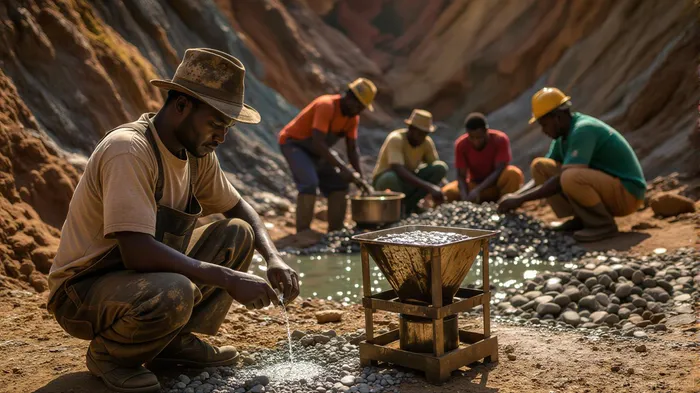
The solution lies in mercury-free gold extraction methods and ESG-aligned innovation. Gravity separation devices like the Gold Kacha and Gold Konka concentrators, distributed in Ghana's Agyapa Ye Mine, have demonstrated 90% gold recovery rates without mercury. These tools reduce labor intensity and health risks while improving community livelihoods. Similarly, bioleaching and water recycling technologies are gaining traction among major miners like NewmontNEM-- and Barrick Gold, which have integrated mercury-free processes into their operations.
Investors should also consider the rise of green bonds and sustainability-linked loans in the mining sector. In 2025, green bond issuance is projected to exceed $600 billion, with mining-specific projects now eligible under the ICMA's Green Enabling Projects Guidance. For example, AngloGold Ashanti's $150 million green bond in 2024 funded renewable energy and water recycling initiatives, reducing carbon emissions by 12%.
ESG Investing: Aligning Profit with Planetary Health
The Minamata Convention, ratified by 128 countries, mandates a phase-out of mercury use in ASGM by 2032. While gaps remain—such as Mexico's legal mercury mining until 2032—the treaty provides a framework for investors to prioritize compliance. ESG-focused funds are increasingly scrutinizing supply chains, with the Impact Facility and UNEP supporting projects like Uganda's formalized artisanal mines, which adopted mercury-free shaking tables and pay-per-use financing models.
For investors, the key is to back companies and funds that:
1. Develop mercury-free technologies: Prioritize firms like AngloGold AshantiAU--, Newmont, and Barrick Gold, which have integrated sustainable extraction methods.
2. Support Minamata Convention compliance: Invest in ESG ETFs such as the iShares Global Clean Energy Transition UCITS ETF or the Amundi MSCIMSCI-- USA ESG Broad Transition UCITS ETF, which exclude high-mercury-use jurisdictions.
3. Finance community-led solutions: Green bonds and impact funds (e.g., the GEF-supported planetGOLD program) are critical for scaling mercury-free practices in regions like the Amazon.
The Investor's Role in a Post-Mercury Future
The surge in mercury trafficking and gold prices underscores a paradox: the same resource that drives economic growth is also a catalyst for ecological collapse. However, this crisis also presents an opportunity to invest in solutions that align with both planetary health and financial returns. By channeling capital into mercury-free technologies, green bonds, and ESG-compliant mining firms, investors can mitigate reputational risks, capitalize on regulatory trends, and support communities disproportionately affected by mercury contamination.
As the 6th Minamata Convention Conference of the Parties approaches in November 2025, the call to close mercury loopholes and enforce phase-out timelines grows louder. Investors who act now—by divesting from high-risk jurisdictions and funding sustainable alternatives—will not only future-proof their portfolios but also contribute to a cleaner, healthier Amazon.
In an era where ESG criteria define investment success, the choice is clear: the next gold rush must be one of innovation, not toxicity.





Comentarios
Aún no hay comentarios