
The Gold Rush of the 21st Century: How Scarcity, Culture, and Story Drive Exponential Returns in Rare Collectibles
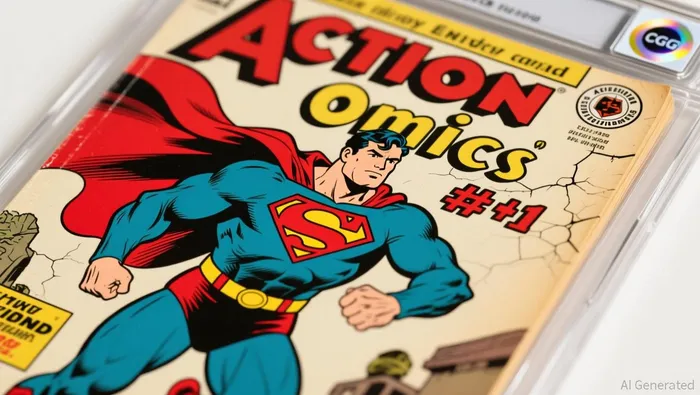
In the world of alternative assets, few stories capture the imagination-and wallets-like the sale of Action Comics #1, the legendary comic book that introduced Superman to the world. In January 2026, a CGC-certified 9.0 copy of this iconic issue, once owned and stolen from Nicolas Cage, sold for a record-breaking $15 million. This price eclipsed the previous benchmark of $9.12 million set in November 2025 for a high-grade Superman #1 according to CGC reports. These transactions aren't just about nostalgia; they're a masterclass in how scarcity, cultural significance, and narrative value combine to create exponential returns in rare collectibles.
Scarcity: The Foundation of Value
Scarcity is the bedrock of any collectible's worth. Action Comics #1 was printed in 1938 with an estimated original run of 1,000 copies, but only about 150–200 survive today. The CGC 9.0 grade further narrows this pool: only a handful of copies achieve this near-mint condition. According to data from CGC, high-grade copies of the comic have appreciated at a compound annual growth rate (CAGR) exceeding 25% over the past decade.
Cage's copy exemplifies this dynamic. He purchased it in 1996 for $150,000, a price already reflecting its rarity. After its 2011 recovery from a 2000 theft, it sold for $2.16 million-a 940% return in just a decade. By 2026, its value had surged another 620%, underscoring how scarcity compounds over time, especially when paired with other value drivers.
Cultural Significance: The Superpower of Endurance
Superman isn't just a character; he's a cultural institution. Action Comics #1 is the genesis of a global franchise spanning films, TV, video games, and merchandise worth billions. As Heritage Auctions stated, "The introduction of Superman in 1938 marked a turning point in popular culture, creating the superhero archetype that dominates entertainment today."
This cultural gravity elevates the comic's status beyond a mere artifact. It's a historical touchstone. The same logic applies to other collectibles: the Mona Lisa's theft in 1911, for instance, amplified its mystique and value. Similarly, Cage's Action Comics #1 became a narrative asset after its 2000 theft and 2011 recovery, transforming it into a "story within a story" that collectors and investors find irresistible.
Narrative Value: The Emotional Premium
Narratives are the secret sauce of collectibles. The provenance of Cage's Action Comics #1-from his 1996 acquisition, to its theft, recovery, and eventual sale-added layers of intrigue that transcended its physical attributes. As Bloomberg noted, "Provenance and history can add a 30–50% premium to high-value collectibles, particularly when the story resonates with broader cultural themes."
The theft-recovery saga mirrored the mythos of Superman himself: a hero's journey of loss and triumph. This emotional resonance attracted not just comic enthusiasts but also institutional investors and celebrities, broadening the market. The 2026 sale, negotiated by Metropolis Collectibles, was a private transaction, but its price signaled that the narrative-driven value of rare collectibles now competes with traditional assets like art and fine wine.
The Bigger Picture: Collectibles as a Hedge Against the Unpredictable
The Action Comics #1 case isn't an outlier. In 2025, a Superman #1 sold for $9.12 million after being discovered in an attic. These prices reflect a growing trend: investors are diversifying into assets that combine tangible scarcity with intangible cultural capital. According to a 2024 report by ArtTactic, the collectibles market grew by 18% annually between 2020 and 2025, outpacing traditional asset classes like stocks and bonds during periods of macroeconomic uncertainty.
However, this space isn't for the faint of heart. The market is illiquid, volatile, and requires deep expertise. Yet for those who understand the interplay of scarcity, culture, and storytelling, the returns can be staggering. Cage's comic, for instance, delivered a 6,400% return over 30 years-a performance that would make even the most aggressive tech stocks blush.
Conclusion: The Future of Alternative Assets
Rare collectibles are no longer niche. They're a legitimate asset class for those who can decode their value drivers. The Action Comics #1 sale proves that scarcity alone isn't enough; it's the combination of rarity, cultural relevance, and a compelling narrative that unlocks exponential returns. As the line between entertainment and investment blurs, collectors and investors must think like storytellers-and vice versa.
In a world where the next "Superman" could emerge from a forgotten attic or a celebrity's vault, the lesson is clear: the best assets aren't just bought-they're discovered, preserved, and, above all, narrated.







Comentarios
Aún no hay comentarios