
Gold's Record-Breaking Rally Amid Fed Rate-Cut Optimism: A New Era for Safe-Haven Demand
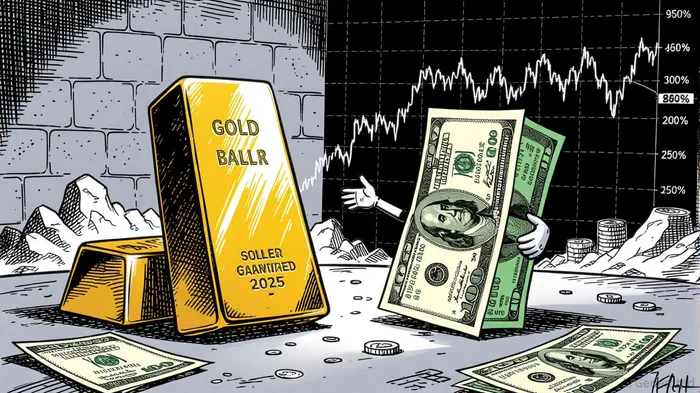
The U.S. 's dovish pivot in Q3 2025 has ignited a seismic shift in global capital flows, . This rally is not merely a function of monetary policy but a reflection of deepening structural imbalances in the global financial system. As investors recalibrate their portfolios in response to Fed rate-cut expectations, U.S. dollar weakness, and the confirmed absence of on gold, the precious metal is emerging as the ultimate safe-haven asset. But is this a sustainable bull trend or a speculative surge driven by short-term volatility?
The Fed's Dovish Pivot and Gold's Opportunity Cost
The Federal Reserve's September 2025 FOMC meeting marked a pivotal moment. , the central bank's accommodative stance has reduced the of holding non-yielding assets like gold. Historically, gold's appeal wanes in , as investors favor income-generating assets. However, , gold's role as an and store of value has become irreplaceable.
The U.S. dollar's structural weakness—driven by the Fed's easing cycle and global diversification away from dollar assets—has further amplified gold's ascent. , its lowest level since early 2023, making gold more affordable for international buyers. This dynamic is critical: a weaker dollar reduces the cost of gold for emerging markets, .
Trump-Era Tariffs: A Resolved Uncertainty
The Trump administration's August 2025 executive order exempting gold from global tariffs removed a key overhang that had previously driven volatility. Earlier in the year, a mistaken CBP ruling suggesting a 39% tariff on gold bullion had triggered a sharp spike in gold futures, but the exemption normalized market sentiment. This policy clarity has reinforced gold's status as a , eliminating regulatory friction for global bullion markets.
The absence of tariffs has also recalibrated investor behavior. Gold's exemption from protectionist measures underscores its role as a universal reserve asset, unencumbered by geopolitical fragmentation. For instance, Switzerland—a major gold producer—benefited directly from the policy shift, as cross-border bullion trade resumed without disruption.
Structural Tailwinds: Central Banks and Inflation
, particularly in emerging markets, are now the largest buyers of gold. Their purchases have created a price floor, . This trend is not cyclical but structural: as nations diversify away from U.S. Treasuries, gold's demand as a non-sovereign asset is set to grow.
Inflation remains a tailwind. , , according to Discovery Alert. With energy and commodity prices still volatile and global supply chains fragile, gold's role as a hedge against purchasing power erosion is more relevant than ever.
Is This a Sustainable Bull Trend?
The confluence of , dollar weakness, and geopolitical uncertainty suggests a multi-year bull case for gold. , . However, risks remain: a surprise Fed tightening cycle or a resolution of U.S.-China trade tensions could dampen demand.
For investors, the key is to balance exposure. Gold's low correlation with equities makes it an essential , but its price is also sensitive to liquidity conditions. A diversified approach—combining physical gold, ETFs, and mining equities—can mitigate volatility while capturing long-term gains.
Conclusion: A New Paradigm for Safe-Haven Assets
Gold's record-breaking rally is not a fleeting phenomenon but a response to a reordering of global financial priorities. As the Fed's rate-cut cycle unfolds and the dollar's dominance wanes, gold is reasserting itself as the ultimate safe-haven asset. For investors, the question is not whether gold will rise further, but how to position portfolios to withstand the next wave of volatility. In a world of fragmented trade policies and uncertain monetary regimes, gold's time has come—and it may not be going anywhere soon.







Comentarios
Aún no hay comentarios