
Gold's Rally Amid Falling US Inflation: A Safe Haven Play in Uncertain Times?
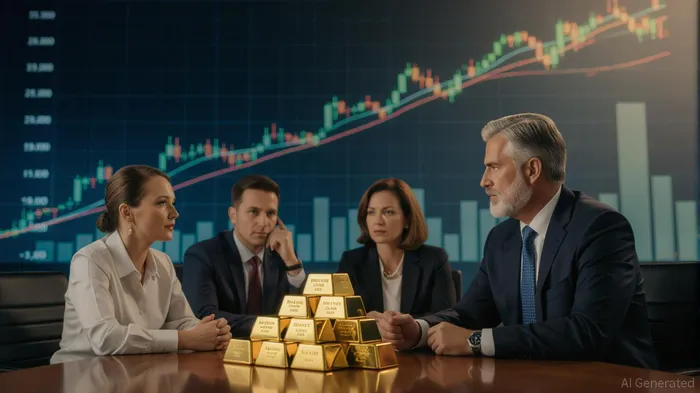
The year 2025 has witnessed a paradox in global markets: a record-breaking rally in gold prices despite a gradual decline in US inflation. By September 2025, gold had surged to $3,600 per ounce, a level not seen since the 1980s[3], even as headline inflation fell to 2.7% and core inflation stabilized at 3.1%[1]. This apparent contradiction invites a deeper examination of macroeconomic shifts and gold's evolving role as a hedge against policy uncertainty.
The Inflation Narrative: Moderation, Not Collapse
While headline inflation has retreated from the double-digit peaks of 2022–2023, core inflation remains stubbornly above the Federal Reserve's 2% target[1]. This divergence reflects structural pressures in goods and services, exacerbated by tariffs on household furnishings and transportation services[2]. According to a report by J.P. Morgan, these policy-driven distortions are expected to keep inflation elevated in the second half of 2025[3]. The Fed's cautious approach to rate cuts—prioritizing labor market stability over aggressive easing—has created a "rangebound" environment for interest rates[3], reducing the opportunity cost of holding non-yielding assets like gold.
Gold's Macroeconomic Drivers: Diversification and Distrust
Gold's 2025 rally is underpinned by three interrelated factors: a weaker US dollar, geopolitical risk, and central bank demand. The inverse correlation between gold and the dollar index has strengthened as the greenback faces headwinds from trade deficits and dollar-debt overhang[1]. Meanwhile, geopolitical tensions—from the Russia-Ukraine conflict to unresolved trade negotiations—have amplified demand for safe-haven assets. The World Gold Council notes that BRICS+ nations added 800 tonnes of gold to reserves between 2023 and mid-2025[2], signaling a shift in global monetary power and diversification away from dollar-centric systems.
Policy Uncertainty: The Invisible Catalyst
Gold's performance in 2025 underscores its role as a hedge against policy uncertainty. The Federal Reserve's delayed response to inflation, coupled with the potential for stagflationary pressures, has left investors wary of fixed-income assets. As real yields on Treasuries fell to -1.2% by mid-2025[2], gold's appeal as a zero-coupon, inflation-protected store of value intensified. Additionally, the risk of protectionist trade policies—already visible in rising prices for household goods[2]—has reinforced gold's status as a "currency hedge" against systemic shocks.
Outlook: A Tale of Two Scenarios
The future trajectory of gold hinges on macroeconomic and geopolitical outcomes. If trade tensions ease and the Fed delivers its anticipated rate cuts, gold could consolidate gains with modest upside (0–5%)[1]. However, a deterioration in global stability—whether through renewed conflict or stagflation—could propel prices 10–15% higher[1]. Conversely, a resolution of key geopolitical flashpoints might trigger a 12–17% correction[1], underscoring the asset's sensitivity to risk sentiment.
For investors, the key takeaway is clear: gold's 2025 rally is not a fleeting anomaly but a reflection of deepening structural uncertainties. As central banks continue to rebalance their reserves and the Fed navigates a fragile inflationary landscape, gold remains a critical component of a diversified portfolio.







Comentarios
Aún no hay comentarios