
Gold Futures Slip as Trump Decides Against Immediate Tariffs
Generado por agente de IAWesley Park
martes, 21 de enero de 2025, 6:56 am ET2 min de lectura
TASK--
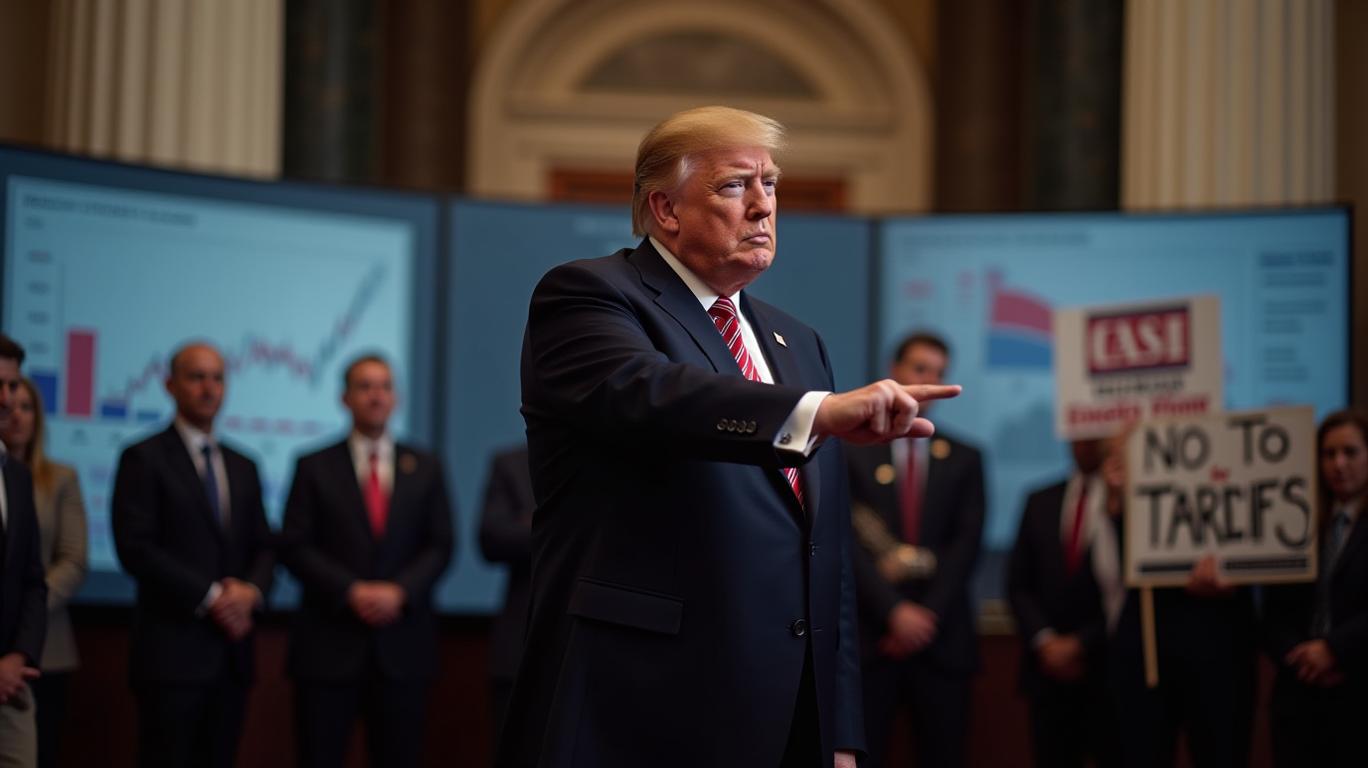
Gold futures prices slipped on Tuesday as President Donald Trump decided against imposing immediate tariffs on Canada and Mexico. The decision, which was announced during his first day in office, caught traders by surprise and led to a knee-jerk fall in the Canadian Dollar (CAD) and Mexican Peso (MXN). The market reaction was a result of the unexpected decision, as the Wall Street Journal had already published a story on Monday where tariffs were postponed until a task force was formed first.
The delay in tariff implementation has had both short-term and long-term impacts on the gold market. In the short term, the relief rally in global stocks and pressure on the U.S. dollar made gold more attractive to foreign buyers. This shift in market sentiment drove a rebound in gold prices after they hit a six-day low. However, the uncertainty surrounding the potential trade war and its impact on global markets led investors to seek refuge in safe-haven assets like gold, contributing to the short-term price rebound.
In the long term, inflationary pressures and interest rates will continue to influence gold's performance. Trump's policies are seen as inflationary, which could lead the Federal Reserve to maintain higher interest rates. This, in turn, affects gold's appeal, as the non-yielding bullion tends to thrive in a low-interest rate environment. However, the degree to which the incoming administration implements Trump's policy pledges will significantly influence the future direction of U.S. interest rates and, consequently, gold prices.
Geopolitical tensions and risk sentiment will also play a role in gold's long-term performance. The potential for a global trade war and geopolitical tensions, such as those between Israel and Lebanon, can dent risk sentiment and ramp up safe-haven flows into gold. These long-term factors can contribute to sustained demand for gold, supporting its price performance.
Gold futures' price dynamics have shown a strong correlation with other precious metals like silver and platinum in response to Trump's trade decisions. Both gold and silver are considered safe-haven assets, and their prices tend to move in tandem during times of uncertainty. When Trump announced tariffs on Mexico and Canada, gold and silver prices both surged. The correlation between gold and silver is evident in their price movements, with a correlation coefficient of 0.78 from January 2017 to December 2019.
Platinum is also a precious metal that can be affected by geopolitical events and trade policies. When Trump's trade policies were announced, platinum prices also reacted. The correlation between gold and platinum is not as strong as that between gold and silver, but there is still a positive relationship, with a correlation coefficient of 0.57 from January 2017 to December 2019.
In conclusion, gold futures' price dynamics have been influenced by Trump's trade policies and geopolitical tensions. The delay in tariff implementation led to a short-term rebound in gold prices due to a relief rally in stocks, pressure on the U.S. dollar, and increased uncertainty driving safe-haven demand. In the long term, inflationary pressures, interest rates, geopolitical tensions, and risk sentiment will continue to influence gold's performance. Gold futures' price dynamics have shown a strong correlation with other precious metals like silver and platinum in response to Trump's trade decisions.
Gold futures prices slipped on Tuesday as President Donald Trump decided against imposing immediate tariffs on Canada and Mexico. The decision, which was announced during his first day in office, caught traders by surprise and led to a knee-jerk fall in the Canadian Dollar (CAD) and Mexican Peso (MXN). The market reaction was a result of the unexpected decision, as the Wall Street Journal had already published a story on Monday where tariffs were postponed until a task force was formed first.
The delay in tariff implementation has had both short-term and long-term impacts on the gold market. In the short term, the relief rally in global stocks and pressure on the U.S. dollar made gold more attractive to foreign buyers. This shift in market sentiment drove a rebound in gold prices after they hit a six-day low. However, the uncertainty surrounding the potential trade war and its impact on global markets led investors to seek refuge in safe-haven assets like gold, contributing to the short-term price rebound.
In the long term, inflationary pressures and interest rates will continue to influence gold's performance. Trump's policies are seen as inflationary, which could lead the Federal Reserve to maintain higher interest rates. This, in turn, affects gold's appeal, as the non-yielding bullion tends to thrive in a low-interest rate environment. However, the degree to which the incoming administration implements Trump's policy pledges will significantly influence the future direction of U.S. interest rates and, consequently, gold prices.
Geopolitical tensions and risk sentiment will also play a role in gold's long-term performance. The potential for a global trade war and geopolitical tensions, such as those between Israel and Lebanon, can dent risk sentiment and ramp up safe-haven flows into gold. These long-term factors can contribute to sustained demand for gold, supporting its price performance.
Gold futures' price dynamics have shown a strong correlation with other precious metals like silver and platinum in response to Trump's trade decisions. Both gold and silver are considered safe-haven assets, and their prices tend to move in tandem during times of uncertainty. When Trump announced tariffs on Mexico and Canada, gold and silver prices both surged. The correlation between gold and silver is evident in their price movements, with a correlation coefficient of 0.78 from January 2017 to December 2019.
Platinum is also a precious metal that can be affected by geopolitical events and trade policies. When Trump's trade policies were announced, platinum prices also reacted. The correlation between gold and platinum is not as strong as that between gold and silver, but there is still a positive relationship, with a correlation coefficient of 0.57 from January 2017 to December 2019.
In conclusion, gold futures' price dynamics have been influenced by Trump's trade policies and geopolitical tensions. The delay in tariff implementation led to a short-term rebound in gold prices due to a relief rally in stocks, pressure on the U.S. dollar, and increased uncertainty driving safe-haven demand. In the long term, inflationary pressures, interest rates, geopolitical tensions, and risk sentiment will continue to influence gold's performance. Gold futures' price dynamics have shown a strong correlation with other precious metals like silver and platinum in response to Trump's trade decisions.

Divulgación editorial y transparencia de la IA: Ainvest News utiliza tecnología avanzada de Modelos de Lenguaje Largo (LLM) para sintetizar y analizar datos de mercado en tiempo real. Para garantizar los más altos estándares de integridad, cada artículo se somete a un riguroso proceso de verificación con participación humana.
Mientras la IA asiste en el procesamiento de datos y la redacción inicial, un miembro editorial profesional de Ainvest revisa, verifica y aprueba de forma independiente todo el contenido para garantizar su precisión y cumplimiento con los estándares editoriales de Ainvest Fintech Inc. Esta supervisión humana está diseñada para mitigar las alucinaciones de la IA y garantizar el contexto financiero.
Advertencia sobre inversiones: Este contenido se proporciona únicamente con fines informativos y no constituye asesoramiento profesional de inversión, legal o financiero. Los mercados conllevan riesgos inherentes. Se recomienda a los usuarios que realicen una investigación independiente o consulten a un asesor financiero certificado antes de tomar cualquier decisión. Ainvest Fintech Inc. se exime de toda responsabilidad por las acciones tomadas con base en esta información. ¿Encontró un error? Reportar un problema




Comentarios
Aún no hay comentarios