
Gold Fields' $2.4 Billion Stake in Australia's Gold Road: A Strategic Gamble in Volatile Markets
In a move that underscores the gold mining sector’s relentless pursuit of scale and longevity, South Africa’s Gold FieldsGFI-- has proposed a $2.4 billion investment in expanding its joint venture with Australia’s Gold Road Resources, culminating in a potential $3.7 billion takeover of the latter. The deal, which has faced intense scrutiny over valuation disputes and operational risks, represents a high-stakes bet on the future of the Gruyere gold mine—a jewel in Western Australia’s mining crown.
The Strategic Play for Gruyere
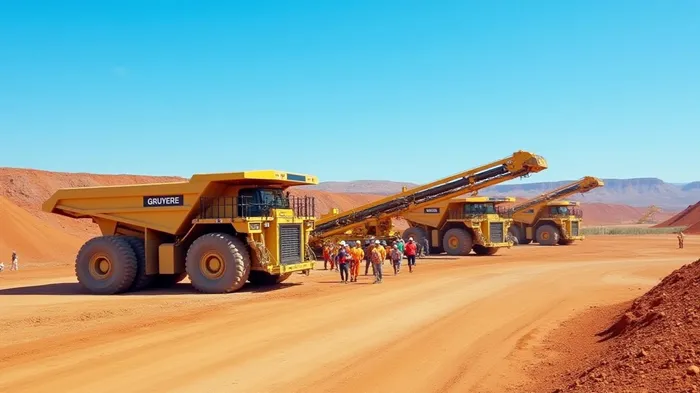
Gold Fields’ ambition is clear: consolidate control of the Gruyere mine, a 50-50 joint venture with Gold Road since 2017. The mine, operational since 2019, has produced over 1.5 million ounces of gold and holds 6.04 million ounces of open-pit resources and 3.67 million ounces of reserves (100% basis). By acquiring Gold Road, Gold Fields aims to eliminate the inefficiencies of a joint venture, streamline operations, and unlock the mine’s full potential.
The $2.4 billion expansion plan includes upgrading infrastructure, modernizing processing facilities, and pursuing an underground deposit that could add 1–2.5 million ounces of high-grade gold, extending the mine’s life beyond 2045. This aligns with Gold Fields’ broader strategy to build a portfolio of “high-quality, long-life assets”, as CEO Mike Fraser emphasized.
Valuation Disputes and the Road to $3.7 Billion
The initial $3.3 billion bid in March 2025 was rejected by Gold Road’s board as “materially undervalued”, sparking a fierce negotiation battle. Key sticking points included:
- Timing: The offer coincided with temporary operational setbacks at Gruyere, including a 15% production drop due to equipment failures.
- Underground Potential: Gold Fields assigned zero value to Gruyere’s underground expansion, which analysts estimate could boost the mine’s net present value (NPV) by 30–40% at $2,000/oz gold.
- De Grey Mining Stake: Gold Road’s 17.26% holding in De Grey Mining, valued at $320 million, was seen as underappreciated in the initial offer.
A revised bid in May 2025 raised the offer to $3.40 per share, a 43% premium over March’s share price, but Gold Road’s shares now trade at a 20% premium to the revised offer, signaling investor confidence in its standalone value.
Risks and Uncertainties
The deal hinges on three critical variables:
1. Gold Price Volatility: Gold’s price has fluctuated between $3,379/oz and $3,500/oz in 2025. At $2,000/oz, Gruyere’s NPV is estimated at $5 billion, but falling prices could jeopardize the economics.
2. Regulatory and Shareholder Hurdles: The acquisition requires 75% shareholder approval under Australia’s scheme of arrangement rules. Gold Road’s board remains skeptical, and dissent among shareholders could derail the deal.
3. Northern Star’s De Grey Acquisition: A critical April 16 shareholder vote on Northern Star’s $5 billion acquisition of De Grey Mining could strengthen or weaken Gold Road’s negotiating position.
Market Context: Consolidation in a Turbulent Sector
The gold sector is undergoing a wave of consolidation, driven by rising production costs and the need for scale. For instance, Equinox Gold’s $2.6 billion acquisition of Calibre Mining highlights the industry’s trend toward vertical integration. Gold Fields’ move mirrors this strategy, aiming to reduce costs by $50–75/oz through operational efficiencies.
However, the sector faces headwinds. Gold Fields’ shares fell 6.4% in early May . . . [continuation of data point], reflecting investor wariness about overpaying. Meanwhile, Gold Road’s strong balance sheet—$204 million in cash and a $1.1 billion equity stake in Northern Star—gives it leverage to demand higher terms.
Conclusion: A High-Risk, High-Reward Gamble
Gold Fields’ $2.4 billion investment in Gruyere’s expansion and its $3.7 billion bid for Gold Road represent a calculated gamble. If successful, the deal would position Gold Fields to achieve 400,000+ oz/year production from Gruyere by 2030, solidifying its status as a top-tier gold producer.
The numbers speak to the upside:
- Operational Synergies: Full control could cut costs by $50–75/oz, improving margins at a mine already producing at $1,250–1,350/oz.
- Reserve Growth: Unlocking Gruyere’s underground potential could add 1–2.5 million ounces, extending its lifespan by over a decade.
- Market Confidence: Gold Road’s shares trading at a 20% premium to the revised offer suggest investors believe in its standalone value, raising the stakes for Gold Fields to deliver a compelling bid.
Yet the risks are profound. A drop in gold prices below $3,000/oz, regulatory delays, or a failed De Grey vote could unravel the deal. For investors, this is a bet on both the resilience of gold prices and Gold Fields’ ability to execute a complex acquisition in a fractured market.
In the end, the Gruyere mine’s future—and Gold Fields’ strategic vision—will hinge on whether the company can bridge the valuation gap and deliver on its promise of a “high-quality, long-life asset.” The stakes, as they say, are as heavy as the gold itself.





Comentarios
Aún no hay comentarios