
Gold's Crossroads: Trade Optimism and Fed Policy Test Safe-Haven Appeal
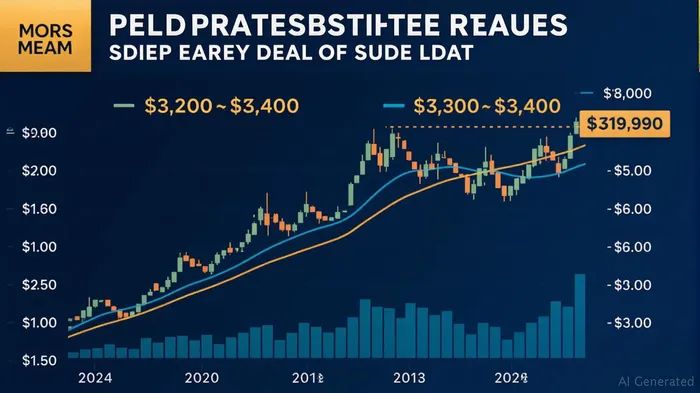
The price of gold, a perennial barometer of global risk, sits at a critical juncture. As of June 19, 2025, it trades at $3,373 per ounce—up 30% year-over-year but down slightly from its June 17 peak of $3,387. This tug-of-war reflects a broader macroeconomic landscape where fading geopolitical tensions, delayed trade disputes, and shifting Federal Reserve expectations are eroding gold's safe-haven allure. Yet beneath the surface, persistent inflation risks and central bank demand suggest gold remains a long-term hedge. Here's how to navigate this crossroads.
The Bearish Near-Term Catalyst: Trade Deal Optimism and Fed Policy
Gold's recent retreat—from $3,387 to $3,373—aligns with a broader trend of reduced risk aversion. Key drivers include:
- Trade Deal Optimism: The easing of U.S.-China trade tensions, including delayed tariff hikes and renewed dialogue over semiconductor exports, has dampened demand for gold as a refuge. Investors are reallocating funds toward equities and currencies tied to growth, rather than the “anti-asset” gold.
- Fed's Rate Policy Shift: The Federal Reserve's insistence on holding rates at 4.25–4.50%—with only modest cuts expected by year-end—has curtailed inflation fears. Lower inflation expectations reduce gold's appeal as an inflation hedge.
The Fed's stance is critical. Historically, gold thrives in environments where rates are falling or inflation is rising. With the Fed signaling patience, and the U.S. dollar index up 2% month-to-date, gold faces headwinds. A stronger dollar directly pressures gold, as it makes the metal more expensive for non-U.S. buyers.
The Countervailing Bullish Pressures: Inflation and Central Banks
While near-term risks are bearish, two factors justify a long-term bullish stance:
- Inflation Lingering in Services Sectors: Despite easing goods inflation, services prices—driven by labor shortages and fiscal stimulus—are sticky. For example, U.S. shelter costs remain elevated, and the Fed's delayed rate cuts may not keep up with rising wage pressures. This creates a “goldilocks” scenario for gold: low enough inflation to avoid hawkish surprises, but enough to justify its inflation-hedging role.
- Central Bank Buying: Emerging markets' central banks, particularly in Asia and the Middle East, are continuing their gold purchases. These institutions see gold as a diversifier against dollar reserves amid geopolitical uncertainty. For instance, India's central bank added 15 tons in Q1 2025, a trend likely to persist.
Technical Levels: The $3,200–$3,400 Range as a Litmus Test
Gold's current price hovers near the upper end of its recent trading band. Technical analysts highlight:
- Resistance at $3,400: A break above this level would signal renewed momentum, potentially toward $3,500.
- Support at $3,200: A sustained drop below this threshold could trigger further selling, with the next key support at $3,000.
The June 27 dip to $3,274.54 (a 3% pullback from June highs) underscores the market's sensitivity to Fed and trade news. Traders should monitor this range closely.
Investment Strategy: Short-Term Bearish, Long-Term Bullish
- Near-Term Play:
- Sell or Trim Positions if gold approaches $3,400, capitalizing on profit-taking ahead of potential Fed communication or trade deal milestones.
Use Options: Consider selling call options at $3,400 strikes to capitalize on volatility.
Long-Term Hedge:
- Hold Physical or ETFs: Maintain a 5–10% allocation to gold via ETFs like GLDGLD-- or physical bullion for portfolio diversification.
- Monitor Central Bank Purchases: A surge in central bank buying above 500 tons annually (as seen in 2024) would validate gold's structural demand.
Risks to the Outlook
- Geopolitical Flare-Ups: Renewed Israel-Iran conflict or U.S.-China trade escalation could revive gold's safe-haven demand.
- Fed Policy Surprise: A faster-than-expected rate cut or hawkish pivot would upend current dynamics.
Conclusion
Gold's near-term path is clouded by trade optimism and Fed patience, but its long-term fundamentals remain intact. Investors should treat the $3,200–$3,400 range as a battleground: use dips to hedge, but avoid chasing rallies until macro risks reaccelerate. In a world of fiscal overhang and geopolitical fragility, gold's role as a stabilizer isn't dead—it's just taking a breather.
Stay disciplined, and keep one eye on the Fed, the other on the Fed.
[Disclaimer: This analysis is for informational purposes only. Always consult with a financial advisor before making investment decisions.]





Comentarios
Aún no hay comentarios