
Gold's 2025 Rally and 2026 Outlook: A Strategic Case for Allocation
The year 2025 has marked a pivotal turning point for gold, as the metal surged to record highs amid a confluence of macroeconomic pressures and shifting investor sentiment. With U.S. federal debt reaching unprecedented levels and inflationary expectations lingering above central bank targets, gold has reasserted itself as a critical tool for portfolio diversification. This analysis examines the drivers behind gold's 2025 rally, evaluates its role in mitigating risks posed by U.S. fiscal dynamics and inflation, and outlines a compelling case for its strategic allocation in 2026.
The 2025 Rally: A Confluence of Structural and Cyclical Forces
Gold's performance in 2025 has been underpinned by a unique alignment of structural and cyclical factors. According to a report by SSGA, the structural bull cycle for gold is being fueled by U.S. Federal Reserve easing, robust central bank demand, and ETF inflows. Central banks, particularly in emerging markets, have increasingly viewed gold as a hedge against currency debasement and a means to diversify reserves away from the U.S. dollar. Meanwhile, Western investors have returned to gold through ETFs, tightening market balances and amplifying its outperformance.
The U.S. fiscal landscape has further reinforced gold's appeal. The 2025 federal deficit reached $1.8 trillion, driven by rising outlays for entitlement programs and interest payments on the national debt, which climbed to $1 trillion for the first time. These developments have heightened concerns about long-term fiscal sustainability, pushing investors toward assets perceived as stores of value.
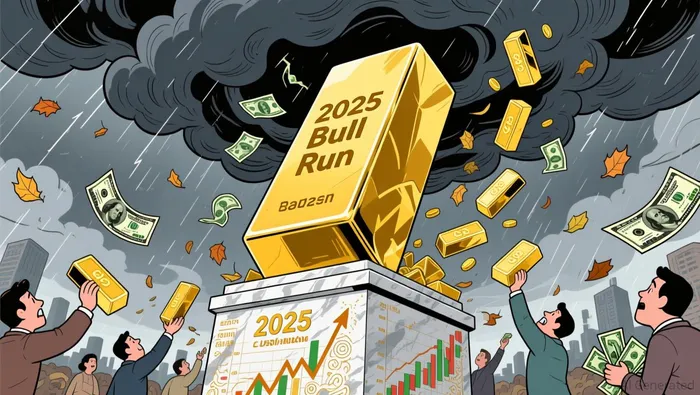
U.S. Debt and Inflation: A Dual Tailwind for Gold
The interplay between U.S. debt and inflation has created a fertile environment for gold. Data from the Bipartisan Policy Center indicates that the 2025 deficit was exacerbated by an 8% increase in spending on Social Security, Medicare, and Medicaid, reflecting demographic pressures and cost-of-living adjustments. Simultaneously, inflation expectations, while moderating from earlier peaks, remain elevated. Firms in the U.S. projected a 2.6% price increase for Q4 2025–Q4 2026, with median 10-year expectations rising to 4.0%. These dynamics underscore persistent inflationary risks, which gold has historically mitigated.
Gold's role as a hedge is further validated by its performance during periods of high debt and inflation. Morgan Stanley notes that gold prices in 2025 surged over 2.5 times since October 2022, defying its traditional inverse relationship with stocks. This shift reflects broader market anxieties, including concerns over an AI-driven speculative bubble in equities and global debt accumulation.
Historical Precedent and Portfolio Implications
Historical data reinforces gold's utility in volatile environments. During the 2020 pandemic, gold prices soared amid global uncertainty, reaffirming its status as a safe-haven asset. Studies also highlight its low correlation with traditional financial assets, making it a valuable diversifier during stagflationary periods and currency depreciation cycles. For instance, central banks have been net buyers of gold since 2010, signaling a structural shift in reserve management.
From a portfolio construction perspective, gold's uncorrelated returns enhance risk-adjusted performance. As stated by Hartford Funds, gold's ability to preserve capital during financial crises and currency crises makes it indispensable in diversified portfolios. In 2025, this role has been amplified by rising geopolitical tensions and a potential realignment of global currency regimes.
2026 Outlook: Sustaining the Bull Cycle
Looking ahead, structural factors suggest gold's bull cycle will persist into 2026. SSGA projects that prices could reach $5,000 per ounce, driven by continued Federal Reserve easing, ETF inflows, and global capital reallocation. Central bank demand, particularly from non-dollar economies, is expected to remain robust as nations seek to insulate themselves from U.S. fiscal risks.
Investors should also consider macroeconomic tailwinds. With U.S. debt servicing costs climbing and inflation expectations anchored above 2%, gold's appeal as a hedge against currency debasement is likely to endure. Moreover, the decoupling of gold from traditional asset classes-evidenced by its recent correlation with stocks-highlights its evolving role in modern portfolios.
Conclusion: A Strategic Allocation in a Fragmented World
Gold's 2025 rally underscores its enduring relevance in an era of U.S. debt concerns and inflationary pressures. As central banks and investors increasingly prioritize resilience over returns, gold offers a unique combination of liquidity, diversification, and risk mitigation. For 2026, a strategic allocation to gold is not merely a speculative bet but a prudent response to a world grappling with fiscal imbalances, currency volatility, and geopolitical uncertainty.







Comentarios
Aún no hay comentarios