
GMARS: A Strategic Investment in Next-Generation Defense Platforms for NATO Alliances
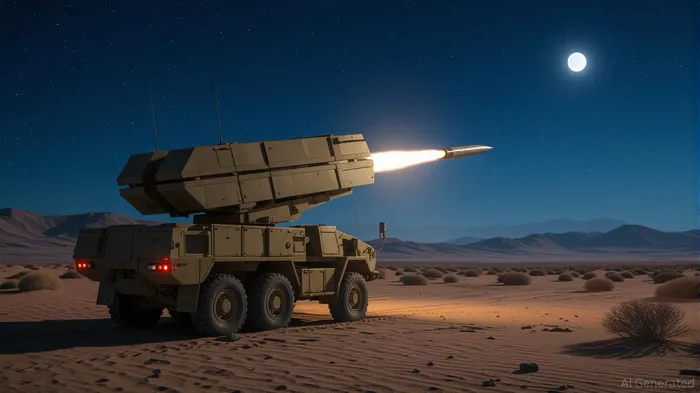
The global defense landscape is undergoing a seismic shift. As NATO alliances grapple with escalating geopolitical tensions, the demand for next-generation platforms like the Global Mobile Artillery Rocket System (GMARS) is surging. Developed by a transatlantic partnership between Rheinmetall (DE:RHM) and Lockheed MartinLMT-- (LMT), GMARS represents more than just a technological leap—it embodies a strategic recalibration of European and U.S. defense industrial ecosystems. For investors, this convergence of geopolitical urgency, industrial collaboration, and technological innovation presents a compelling opportunity to capitalize on a sector poised for sustained growth.
The Geopolitical Catalyst: A Market Shaped by Necessity
The war in Ukraine has accelerated a paradigm shift in military strategy, emphasizing the criticality of long-range precision fires and rapid deployment capabilities. NATO's 2025 Strategic Concept reaffirms the need for systems like GMARS, which bridge the gap between traditional artillery and air-delivered munitions. With Russia's advancements in hypersonic and anti-access/area denial (A2/AD) systems, the ability to strike at operational and strategic depths while minimizing exposure has become a non-negotiable requirement. GMARS, with its 400+ km reach via PrSM and its "shoot and scoot" agility, directly addresses these challenges.
European defense budgets are now expanding at a historic pace. The EU's ReARM Europe Plan aims to mobilize €800 billion in defense investments by 2030, with a 40% target for collaborative procurement by 2030. This shift is not merely about quantity—it reflects a recognition that fragmented national programs are unsustainable in an era of multi-domain warfare. GMARS's interoperability with HIMARS and M270 systems, coupled with its modular design, positions it as a linchpin for NATO's modernization agenda.
Industrial Synergy: The Rheinmetall-Lockheed Martin Partnership
The GMARS partnership between Rheinmetall and Lockheed Martin is a masterclass in industrial synergy. Rheinmetall's expertise in mobility and platform integration—evidenced by its HX 8×8 series—complements Lockheed Martin's dominance in guided missile systems. This collaboration reduces R&D costs while accelerating time-to-market, a critical factor in a sector where operational readiness often determines strategic outcomes.
A key differentiator is GMARS's open architecture, which allows for future integration of cruise missiles and AI-enhanced targeting systems. This adaptability ensures the platform remains relevant amid evolving threats, from hypersonic countermeasures to autonomous drone swarms. For investors, the partnership's ability to leverage existing NATO supply chains—such as shared maintenance protocols and joint training programs—reduces operational friction and enhances scalability.
Market Dynamics: From Procurement to Profit
The European defense market is no longer a fragmented patchwork of national priorities but a unified, demand-driven ecosystem. The EU's Security Action for Europe (SAFE) instrument, a €150 billion loan facility under Article 122 of the TFEU, is a game-changer. By enabling Member States to fund joint projects like GMARS, SAFE creates a financial tailwind for companies that can deliver cross-border solutions.
Moreover, the EU's push for a "true EU-wide defense market" through streamlined procurement rules and the proposed Defence Omnibus Simplification (due June 2025) will further lower barriers for industrial collaboration. For GMARS, this means faster adoption cycles and reduced bureaucratic hurdles. The system's compatibility with existing NATO logistics infrastructure also minimizes integration costs, a key consideration for cash-strapped militaries.
Investment Thesis: Positioning for the Long Game
While GMARS is still in its early deployment phase, the underlying fundamentals are robust. The system's live fire trials at White Sands Missile Range and its showcase at Eurosatory 2024 have already generated significant international interest. With 14 countries attending the 2025 international summit, GMARS is on track to become a cornerstone of NATO's long-range precision fires.
For investors, the focus should be on the ecosystem, not just the platform. Rheinmetall and Lockheed Martin are not only building a product but a network of industrial partners, including European centers of excellence for missile manufacturing. These hubs will drive recurring revenue streams through maintenance, upgrades, and component sales. Additionally, the EU's emphasis on strategic stockpiles and readiness pools ensures sustained demand for GMARS-related services.
Risks and Mitigations
As with any defense investment, risks exist. Geopolitical volatility could delay procurement timelines, and the high R&D costs of next-gen systems pose liquidity challenges. However, GMARS's modular design and existing NATO compatibility mitigate these risks. The partnership's shared cost structure and access to SAFE funding also provide a financial safety net.
Conclusion: A Strategic Bet on the Future of Warfare
GMARS is more than a platform—it's a symbol of the new era in defense. As NATO alliances pivot toward integrated, multi-domain operations, the demand for systems like GMARS will only grow. For investors, this represents a unique opportunity to align with a sector that is both geopolitically essential and economically resilient. The key lies in identifying companies that can navigate the complexities of modern warfare while delivering scalable, interoperable solutions. Rheinmetall and Lockheed Martin have already laid the groundwork. Now, the market must decide whether to follow.





Comentarios
Aún no hay comentarios